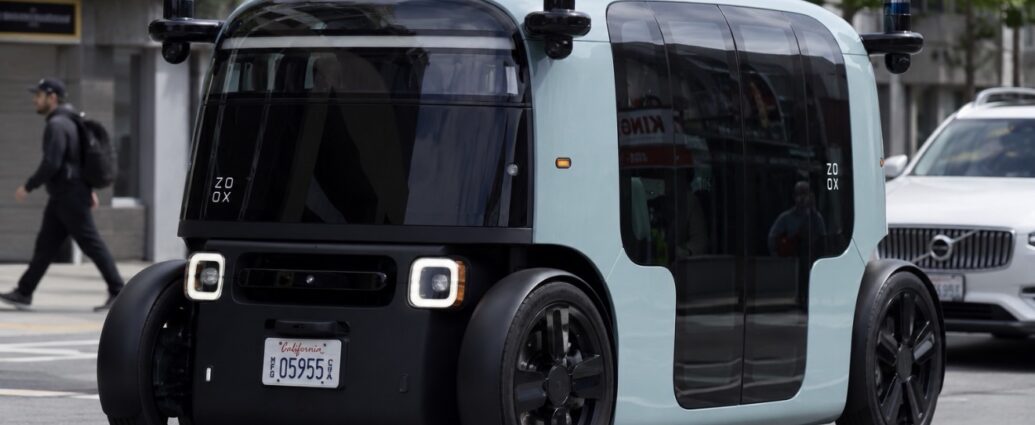
The National Highway Traffic Safety Administration (NHTSA) and Zoox, Amazon’s autonomous vehicle subsidiary, announced on Friday, July 17, 2026, that the company has begun recalling a portion of its self-driving robotaxi fleet following the discovery of a software issue that could increase the risk of a crash under certain driving conditions. The recall is being addressed through an over-the-air software update, underscoring both the promise and the continuing safety challenges facing autonomous transportation as driverless vehicles expand into American cities.
The action comes as autonomous vehicle technology moves from limited pilot programs toward broader commercial deployment. Unlike conventional vehicle recalls that often require owners to schedule service appointments for mechanical repairs, this recall involves software governing how the vehicle interprets traffic situations and responds to surrounding vehicles. The update can be transmitted remotely to affected vehicles, allowing the company to correct the issue without bringing each vehicle into a repair facility.
Zoox, which was acquired by Amazon in 2020 for more than $1.2 billion, has spent years developing a purpose-built autonomous vehicle designed specifically for ride-hailing rather than adapting traditional automobiles. Its distinctive bidirectional robotaxi has no steering wheel or pedals, relying instead on an array of cameras, radar, lidar sensors, artificial intelligence, and onboard computers to navigate city streets without a human driver.
According to federal safety documents, engineers identified conditions in which the vehicle’s automated driving software could make an incorrect driving decision during certain complex traffic interactions. While the issue does not affect every driving scenario, federal regulators determined that the software should be updated to reduce the possibility of collisions before additional vehicles are placed into service.
The recall highlights one of the defining characteristics of modern vehicles: software has become just as important as engines, transmissions, and braking systems. Today’s vehicles often contain hundreds of millions of lines of computer code controlling everything from adaptive cruise control and emergency braking to navigation and battery management. As a result, recalls increasingly involve software corrections rather than replacement of physical components.
For consumers, the recall also illustrates how autonomous vehicles differ from conventional automobiles. Instead of requiring drivers to visit a dealership, many software-based recalls can now be completed remotely through secure over-the-air updates, similar to updates performed on smartphones or personal computers. Manufacturers argue that this capability allows safety improvements to be deployed much faster than traditional recall campaigns.
The autonomous vehicle industry has been under increasing scrutiny from federal regulators as robotaxis expand into more cities. Companies developing self-driving technology must demonstrate that their systems can safely respond to pedestrians, bicyclists, emergency vehicles, construction zones, changing weather conditions, and unpredictable actions by other motorists. Even relatively minor software issues are receiving close attention because they could affect public confidence in driverless transportation.
Amazon has made autonomous mobility a long-term strategic investment through Zoox. The company envisions a future in which fleets of autonomous vehicles provide on-demand transportation in urban areas while eventually supporting portions of its broader logistics and delivery ecosystem. Although commercial deployment has progressed more slowly than many technology companies initially predicted several years ago, investment in autonomous transportation remains substantial throughout the industry.
The recall also reflects the evolving relationship between regulators and technology companies. Rather than waiting for widespread failures to occur, manufacturers are increasingly working with federal agencies to identify software issues early and deploy corrective updates before they become larger safety concerns. Industry analysts say this proactive approach is likely to become increasingly common as software controls more aspects of vehicle operation.
Competition within the autonomous vehicle sector has intensified as multiple companies race to commercialize self-driving technology. Several firms have already launched limited robotaxi services in select metropolitan markets, while others continue conducting testing under state permits. Each software update, regulatory review, and safety investigation contributes to the industry’s growing body of operational experience.
Transportation experts note that recalls should not necessarily be interpreted as evidence that autonomous vehicle technology is failing. Traditional automakers collectively announce hundreds of recalls every year affecting millions of vehicles, many involving software, electronics, or safety systems. Instead, regulators say the willingness to identify defects and promptly issue corrective actions remains a critical component of vehicle safety regardless of whether a vehicle is driven by a human or a computer.
Consumers considering future autonomous ride services are unlikely to notice any immediate operational changes resulting from the recall. The software update is designed to improve system performance while allowing affected vehicles to continue operating once the correction has been installed. Nevertheless, the action serves as another reminder that autonomous transportation remains an evolving technology undergoing continuous refinement through testing, regulatory oversight, and real-world experience.
As driverless vehicles gradually become a more familiar sight on American roads, recalls such as this one are expected to remain part of the industry’s maturation process. Federal regulators have emphasized that manufacturers will continue to be held to the same safety standards expected of every vehicle operating on public roadways, regardless of whether a human or an artificial intelligence system is behind the wheel.
JBizNews Desk | Washington
© JBizNews.com All Rights Reserved. Reproduction or distribution without written permission is prohibited.