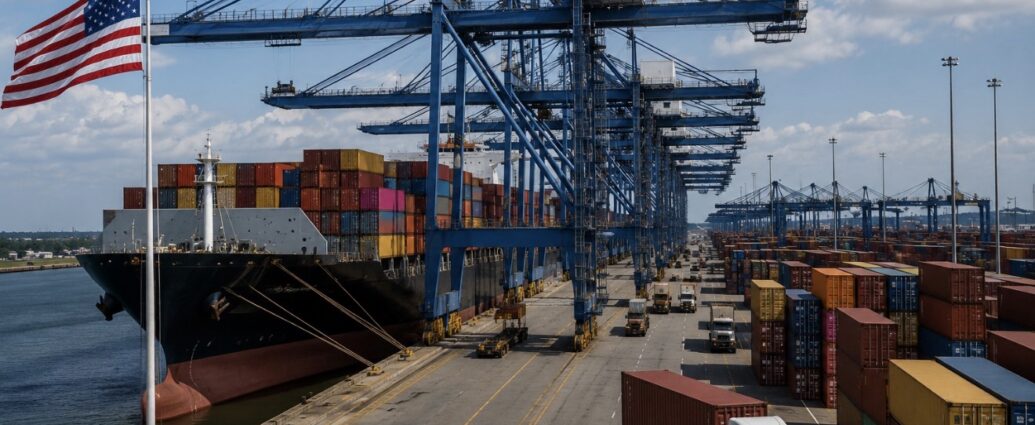
The U.S. Bureau of Labor Statistics reported Friday, July 17, that prices paid for goods imported into the United States unexpectedly rose again in June, providing fresh evidence that tariff costs are continuing to move through American supply chains even as broader consumer inflation temporarily cooled. The Import Price Index increased 0.3% in June after rising a revised 1.7% in May, while import prices stood 7.1% higher than one year earlier, the largest annual increase since August 2022. The figures place manufacturers, retailers, distributors and small businesses under renewed pressure to either absorb higher costs or pass them on to customers.
The increase was especially significant because economists had expected import prices to decline. Lower fuel and food costs were not enough to offset higher prices for capital equipment, consumer products and other goods entering the country. Excluding food and fuel, import prices rose 0.4% during June and 4.6% from a year earlier, showing that the pressure has spread beyond volatile energy markets.
The latest data strengthens the connection between tariffs and the prices American businesses are paying at the border. Tariffs are collected from the U.S. importer when merchandise enters the country, meaning the immediate financial obligation generally falls on the American company receiving the goods rather than the foreign government or producer.
Businesses then have several choices, none of them painless. They can absorb the additional cost and accept lower margins, negotiate lower prices from overseas suppliers, shift production or sourcing to another country, redesign products to use different materials, or raise prices for wholesalers, retailers and consumers.
Many companies are using a combination of those strategies.
Large corporations with substantial purchasing power may be able to pressure suppliers, spread costs across product lines or move production between countries. Small businesses typically have fewer options. They often purchase in smaller quantities, maintain less inventory, have weaker negotiating leverage and lack the resources needed to rebuild a supply chain quickly.
The Federal Reserve has estimated that tariffs implemented through November 2025 raised core goods prices substantially through early 2026 and accounted for the excess inflation in that category compared with pre-pandemic trends. The analysis found that tariffs also added to the broader core inflation measure, illustrating how duties imposed at the border can eventually reach household budgets.
The effect does not always appear immediately. Many businesses purchase goods months in advance, operate under fixed contracts or carry inventories acquired before a tariff takes effect. That can delay price increases until lower-cost inventory is depleted and new shipments begin arriving with higher duty bills.
That lag is one reason tariff-related price pressure can continue long after the original policy announcement. Businesses may initially protect customers by absorbing the cost, only to raise prices later when margins become unsustainable.
Recent regional business surveys from the Federal Reserve Bank of New York found that many companies are still planning additional tariff-related price increases. Manufacturers and service firms reported that they had already absorbed a large share of the added costs, but many expected consumers to shoulder a greater portion over time.
Retailers and manufacturers have been among the most exposed sectors because of their reliance on imported merchandise, components, machinery and packaging. Businesses selling furniture, electronics, clothing, footwear, household goods, tools and industrial equipment are particularly sensitive to changes in import duties.
The impact extends well beyond finished products displayed on store shelves.
A U.S. manufacturer may import motors, circuit boards, steel parts, chemicals, specialized machinery or packaging materials used to produce an American-made product. Tariffs on those inputs can raise the cost of domestic production, weakening the manufacturer’s ability to compete with foreign companies that may source similar materials at lower prices.
Capital-goods prices rose 0.4% in June, partly reflecting strong demand for technology equipment as companies continue spending heavily on artificial intelligence, data centers and automation. Consumer-goods import prices excluding automobiles also increased 0.3%, creating potential pressure on retail prices later this year.
Imported fuel prices fell modestly during June after surging in May, but they remained more than 44% above their level one year earlier. That remains a major concern for transportation, logistics, agriculture, construction and manufacturing companies because energy costs affect nearly every stage of the supply chain.
Companies are also paying more to manage uncertainty itself.
Importers are hiring customs specialists, reviewing product classifications, renegotiating supplier agreements and maintaining larger inventories to protect against sudden policy changes. Some businesses have accelerated shipments ahead of expected tariff increases, contributing to a sharp rise in container imports during June.
Bringing goods into the country early may temporarily protect a company from a future duty, but it creates other costs. Businesses must finance the additional inventory, pay for warehouse space and accept the risk that demand will weaken before the goods are sold.
Tariffs are not the only factor affecting import prices. Currency movements, shipping expenses, commodity prices, global demand and geopolitical disruptions also influence what companies pay. However, the continued rise in nonfuel import costs shows that pricing pressure is becoming increasingly broad.
The development also complicates the outlook for the Federal Reserve. Consumer inflation fell during June as gasoline prices declined, but higher import costs could begin appearing in retail prices during the coming months. That could make it more difficult for policymakers to determine whether the inflation slowdown is durable.
For businesses, the central question is no longer whether tariffs carry a cost. It is who will ultimately pay it.
Companies have absorbed a substantial portion so far, protecting customers while reducing profitability. But as higher-cost inventory replaces older goods and additional tariffs take effect, more businesses are likely to raise prices, reduce discounts, shrink product offerings or delay investment.
The next several months will show how quickly those increases reach consumers. Friday’s import-price report suggests that the pressure is already building at the beginning of the supply chain.
JBizNews Desk | Washington
© JBizNews.com All Rights Reserved. Reproduction or distribution without written permission is prohibited.