
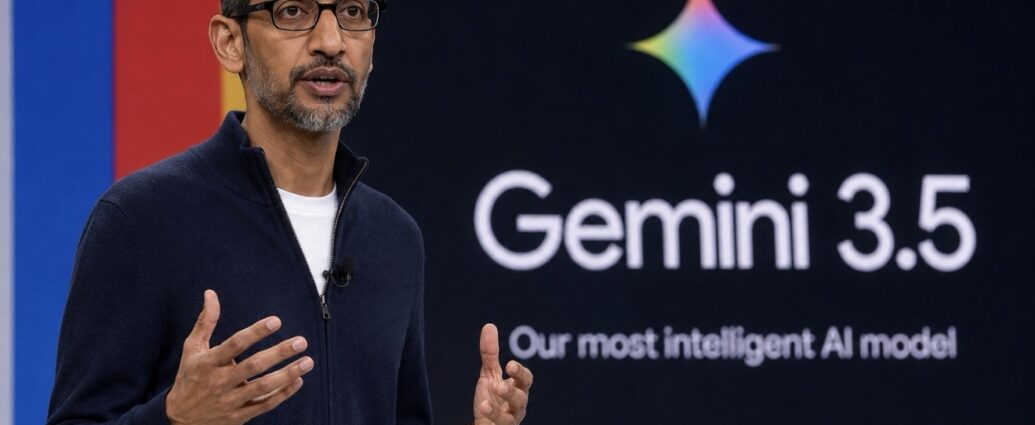
According to Google’s public announcements, Gemini 3.5 Flash became available following Google I/O, while Gemini 3.5 Pro has yet to receive a general release despite months of industry anticipation. The prolonged delay has become more than another postponed technology launch—it is a reminder that businesses should base purchasing and deployment decisions on official product releases rather than expectations built from unofficial timelines.
When Google introduced the Gemini 3.5 family at its annual developer conference in May, executives positioned the Pro version as the company’s next flagship reasoning model while releasing Flash first. At the event, CEO Sundar Pichai indicated that Pro would follow later, but Google never publicly committed to a specific general availability date.
Over the following weeks, however, July 17 emerged throughout the artificial intelligence industry as the expected launch date. Software developers, enterprise customers, analysts and technology publications increasingly referenced the date as companies planned product rollouts, procurement decisions and AI integration projects.
The unusual aspect of the story is that Google never officially confirmed that date.
Instead, the expected launch spread through industry reporting, enterprise discussions and developer planning, eventually becoming accepted as conventional wisdom despite the absence of a formal Google announcement. As July 17 arrived without a release, the AI industry found itself reacting to the disappearance of a deadline that had never actually been established by the company.
Recent reporting indicates Google delayed Gemini 3.5 Pro because the model had not yet achieved internal performance objectives, particularly in coding and other enterprise capabilities that customers increasingly expect from frontier AI systems. Google has acknowledged that testing continues with partners while declining to discuss specific launch timing.
For businesses, the implications extend beyond one product launch.
Enterprise technology projects increasingly depend on foundation models for software development, customer service, document analysis and workflow automation. Many organizations evaluate infrastructure, budgets and staffing months before deploying new AI platforms. When unofficial release expectations become accepted as fact, companies risk delaying projects or making investment decisions around products that are not yet commercially available.
The episode reinforces a procurement principle that has existed long before artificial intelligence.
A product roadmap is not a contract.
Businesses should evaluate vendors based on published specifications, documented pricing, available APIs and production-ready services rather than anticipated capabilities discussed through industry leaks or analyst expectations.
Meanwhile, competition in artificial intelligence has continued moving rapidly.
While Google refined Gemini 3.5 Pro, rival developers introduced new frontier models, expanded enterprise offerings and intensified competition across coding, reasoning and business productivity applications. Every delayed launch gives competitors additional opportunities to strengthen customer relationships and capture enterprise workloads.
That does not diminish Google’s broader competitive position.
The company continues to possess one of the world’s largest AI distribution networks through Google Search, Workspace, Android, Cloud and Vertex AI. Millions of businesses already rely on Google’s infrastructure, creating significant long-term advantages regardless of the timing of any individual model release.
But enterprise customers ultimately purchase products that can be deployed—not products that are expected to arrive.
Organizations evaluating AI platforms require documented pricing, service-level commitments, technical support, compliance information and production availability before integrating models into critical business operations.
The Gemini episode illustrates how quickly expectations can become perceived commitments in today’s AI marketplace. A release date discussed across the technology industry became influential enough to shape procurement conversations despite never appearing in an official Google announcement.
That lesson extends well beyond artificial intelligence.
As technology companies compete to announce future capabilities earlier in the development cycle, businesses must distinguish between confirmed commercial offerings and anticipated products still undergoing testing.
For executives making technology investments, the practical approach remains straightforward: build strategies around products that vendors have officially released—not around products the market assumes will soon arrive.
Google’s Gemini 3.5 Pro may ultimately prove to be one of the industry’s strongest AI models when it reaches general availability. Until Google publishes official release information, pricing and technical documentation, however, businesses should view it as an upcoming technology rather than an operational dependency.
The most revealing aspect of the past several weeks was not simply that a flagship AI model was delayed.
It was that an entire industry organized itself around a launch date the company itself never officially announced.
JBizNews Desk | New York
© JBizNews.com All Rights Reserved. Reproduction or distribution without written permission is prohibited.




