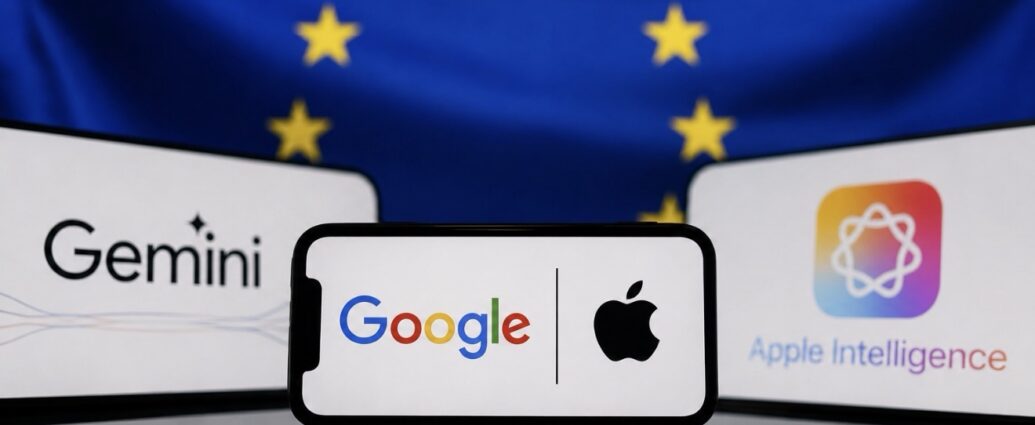
As businesses prepare for another week of technology and artificial intelligence developments on Monday, July 20, 2026, a growing dispute between Alphabet’s Google and Apple and the European Union is escalating into one of the most consequential regulatory battles in the AI era. At issue is whether smartphone operating systems must give competing AI assistants the same deep access currently enjoyed by Google’s Gemini and Apple’s Siri, a decision that could reshape how billions of consumers interact with artificial intelligence. The European Commission’s latest decisions under the Digital Markets Act (DMA) require Google to provide rival AI assistants and search providers greater access to Android while expanding data-sharing obligations designed to increase competition.
The European Union argues that consumers should be free to choose whichever AI assistant they prefer without being limited by the smartphone manufacturer. Under the Commission’s interoperability requirements, qualifying competitors could eventually perform many of the same functions as Google’s own AI assistant on Android devices, including handling voice commands, launching applications and completing everyday tasks, subject to security and privacy safeguards. Google has until July 2027 to implement many of the required Android interoperability changes, while search data-sharing obligations begin earlier in January 2027.
Google has strongly criticized the measures, arguing that opening deeper access to third-party AI assistants could increase cybersecurity and privacy risks while reducing its ability to protect users from malicious applications. The company maintains that it should retain the ability to evaluate competitors before granting access to sensitive system functions and user data. European regulators respond that only qualifying companies meeting strict security standards will receive access and that stronger competition will ultimately benefit consumers through greater innovation and choice.
Apple finds itself in a different but related dispute. The company has delayed the European rollout of several advanced Apple Intelligence features, including its next-generation Siri experience, arguing that complying with the DMA’s interoperability requirements raises significant privacy and security concerns. European officials reject that explanation, maintaining the rules are intended to promote competition rather than weaken user protections. Earlier this month, EU Technology Commissioner Henna Virkkunen described discussions with Apple Chief Executive Tim Cook as constructive but confirmed that the Commission expects compliance with existing law.
For businesses, the outcome extends far beyond smartphones. AI assistants are increasingly becoming the gateway to search, scheduling, shopping, travel bookings, customer service and enterprise software. Companies developing AI products—including OpenAI, Anthropic and Perplexity—could gain broader access to mobile users if interoperability rules expand the role of third-party assistants across major smartphone platforms. At the same time, Google and Apple risk losing part of the competitive advantage created by controlling the operating systems powering billions of devices worldwide.
The dispute also reflects Europe’s broader effort to reduce dependence on a handful of dominant technology companies while encouraging a more competitive AI ecosystem. European regulators believe requiring large platform operators to share certain capabilities can lower barriers for new entrants and accelerate innovation. Google and Apple counter that forced interoperability may reduce product quality, slow innovation and expose users to additional security vulnerabilities.
Investors are watching closely because artificial intelligence is expected to become one of the largest long-term drivers of technology spending. Decisions affecting mobile operating systems, AI assistants and search platforms could influence future revenue opportunities across software, cloud computing, digital advertising and consumer electronics. Any significant change to how consumers access AI services may alter competitive dynamics throughout the technology sector for years to come.
While implementation deadlines remain months away, the confrontation underscores a broader reality: regulators are no longer focused solely on search engines and app stores. Increasingly, they are turning their attention to artificial intelligence, positioning AI assistants as the next major battleground between governments seeking greater competition and technology companies seeking to preserve tightly integrated ecosystems.
JBizNews Desk | Brussels
© JBizNews.com All Rights Reserved. Reproduction or distribution without written permission is prohibited.