
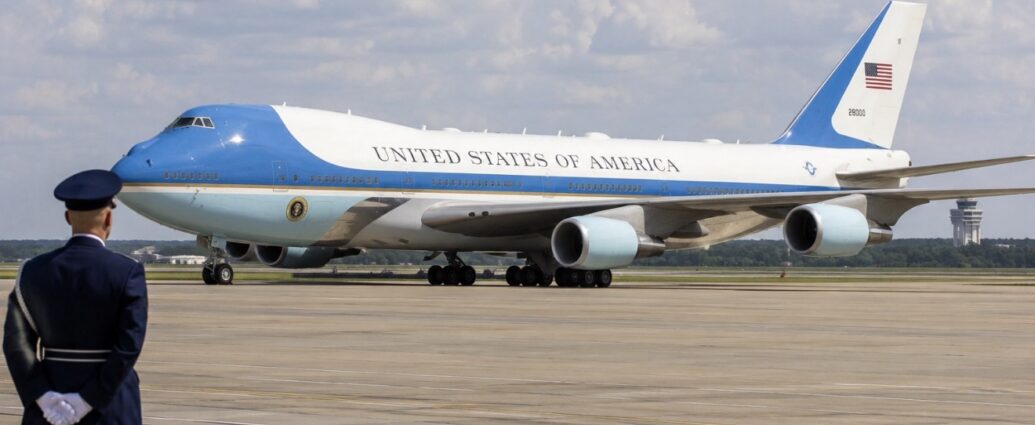
According to statements made by Boeing Defense, Space & Security leadership ahead of the Farnborough International Airshow as markets open on Monday, July 20, 2026, Boeing said it remains on schedule to deliver the next generation of Air Force One aircraft in 2028, while acknowledging the program will require additional spending as engineers complete complex wiring, structural modifications and certification work on one of the company’s most challenging government contracts.
The update provides investors with the clearest indication in months that Boeing continues making progress on one of its highest-profile defense programs despite years of delays and billions of dollars in unexpected costs. The company was awarded the fixed-price contract in 2018 to convert two Boeing 747-8 aircraft into highly specialized presidential aircraft equipped with advanced communications, defensive systems and secure command capabilities.
Since receiving the contract, however, the program has become one of Boeing’s most expensive defense projects. Originally valued at $3.9 billion, costs have now exceeded $5 billion, forcing Boeing to absorb billions of dollars in losses because of the contract’s fixed-price structure. Company executives indicated additional cost growth is still expected before the aircraft complete testing and certification.
The Air Force One program requires far more than assembling a commercial aircraft. Engineers must install secure communications systems, classified defensive technologies, electromagnetic shielding and other specialized capabilities that effectively transform a Boeing 747 into a flying White House capable of operating during national emergencies. Those extensive modifications have made the project significantly more complicated than originally anticipated.
Boeing expects the first aircraft to begin flight testing next year, an important milestone before final delivery. Even if the company achieves its revised schedule, the aircraft will arrive approximately four years later than originally planned, underscoring the complexity of the modernization effort.
The delays have required the federal government to rely on interim solutions while waiting for the permanent replacement fleet. The existing Air Force One aircraft entered service in 1990 and continue to require increasing maintenance as they approach four decades of operation. A Boeing 747 previously owned by Qatar has also been added as a temporary presidential aircraft while Boeing completes the new fleet.
For Boeing, successful completion of the Air Force One program represents more than fulfilling a government contract. The project has become symbolic of the company’s broader effort to restore confidence following years of manufacturing challenges, certification delays and financial losses across both its commercial and defense businesses.
Recent developments have shown signs of improvement. The Federal Aviation Administration recently restored Boeing’s authority to issue airworthiness certificates for certain commercial aircraft after determining the company’s manufacturing quality had improved under enhanced regulatory oversight. Investors are watching closely for additional evidence that Boeing’s operational turnaround is gaining momentum.
Defense remains one of Boeing’s three core business segments alongside commercial airplanes and global services. Although defense margins have been pressured by several fixed-price contracts, the business continues generating significant long-term revenue through military aircraft, satellites, weapons systems and government support programs.
The Air Force One update also comes as Boeing prepares for the Farnborough International Airshow, where aerospace manufacturers traditionally announce new aircraft orders, defense partnerships and technological developments that help shape investor expectations for the remainder of the year.
While additional costs are still anticipated, Boeing’s reaffirmation of its 2028 delivery schedule offers an important signal that one of the company’s most closely watched defense programs continues moving toward completion. For investors, execution may now matter more than new orders as Boeing works to rebuild profitability, strengthen manufacturing performance and restore confidence across its commercial and defense operations.
JBizNews Desk | London
© JBizNews.com All Rights Reserved. Reproduction or distribution without written permission is prohibited.




