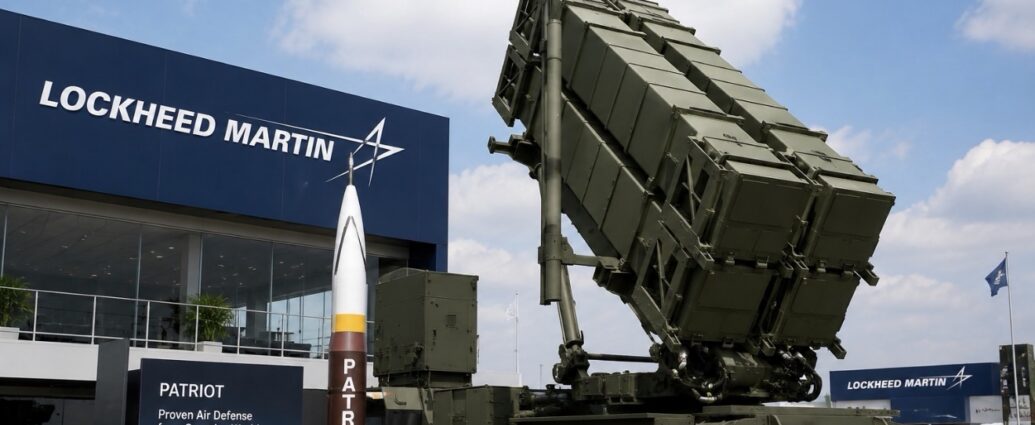
Lockheed Martin announced on Monday, July 20, that it is developing a lower-cost version of its Patriot interceptor designed to help the United States and allied nations rebuild rapidly shrinking missile inventories while significantly reducing procurement costs. The new PAC-3 Adapted Capability Effector (ACE) interceptor is expected to cost less than half the price of the current PAC-3 Missile Segment Enhancement (MSE) missile, according to company officials speaking ahead of the Farnborough International Airshow.
The announcement comes as governments around the world are dramatically increasing investments in air and missile defense. Military stockpiles have been depleted by years of heightened global tensions and the growing use of sophisticated drones, cruise missiles, and ballistic missiles. Defense manufacturers are now under increasing pressure not only to expand production but also to deliver systems that are affordable enough to sustain long-term procurement.
Unlike the PAC-3 MSE interceptor, which is designed to defeat advanced ballistic missile threats, the new ACE missile is intended for a broader range of missions, including defending against drones, cruise missiles, aircraft, and other lower-cost aerial threats. Military planners increasingly favor a layered defense strategy that matches the cost of the interceptor to the threat being engaged rather than relying on multi-million-dollar missiles for every incoming target.
Lockheed Martin said the new interceptor will remain fully compatible with existing Patriot launchers already deployed across the United States and dozens of allied countries. That compatibility allows militaries to expand missile inventories without replacing existing launch systems or investing in new infrastructure, reducing overall procurement costs while accelerating deployment.
The company expects the missile to enter production within approximately three years through an expanded manufacturing network involving both American and European suppliers. Increasing production capacity has become a priority across the defense industry as governments seek to replenish inventories while preparing for future security challenges.
The Patriot air defense system has become one of the world’s most sought-after military platforms, protecting military installations, critical infrastructure, airports, energy facilities, and civilian population centers. Orders have accelerated over the past several years as NATO members and allied governments increase defense budgets in response to evolving geopolitical risks.
For the defense industry, the ACE interceptor represents a shift toward balancing advanced capability with affordability. Modern conflicts have demonstrated that defending against large numbers of inexpensive drones and cruise missiles requires interceptors that can be produced quickly and at sustainable costs. Lower-priced interceptors also enable governments to maintain larger stockpiles without significantly increasing defense budgets.
The announcement carries important business implications for Lockheed Martin and its global supply chain. Expanding production while lowering unit costs could broaden international demand for Patriot systems, particularly among allies seeking enhanced air defense capabilities but facing budget constraints.
Investors will also be watching how quickly the company can move the ACE interceptor from development into production. If successful, the program could strengthen Lockheed Martin’s position in one of the fastest-growing segments of the global defense market while helping allied nations address one of the industry’s most pressing challenges—rebuilding missile inventories at a pace that matches rising demand.
JBizNews Desk | Farnborough, United Kingdom
© JBizNews.com All Rights Reserved. Reproduction or distribution without written permission is prohibited.