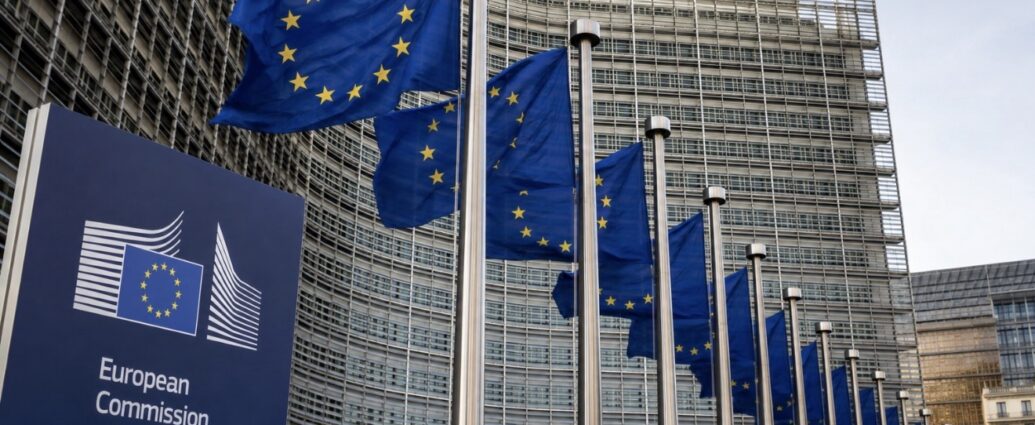
European governments and major financial institutions are accelerating efforts to build a homegrown digital payments network designed to reduce the continent’s dependence on Visa and Mastercard, marking one of the European Union’s most significant financial infrastructure initiatives in decades. The latest milestone came with an agreement between the European Payments Initiative (EPI) and the EuroPA alliance, expanding interoperability among national payment systems and laying the foundation for a broader European alternative built on instant bank transfers.
The agreement connects leading payment platforms across Europe, including Bizum in Spain, Bancomat in Italy, MB WAY in Portugal, and Vipps MobilePay across the Nordic countries. Combined with the EPI’s Wero digital wallet, the network is expected to serve approximately 130 million users across 13 European countries, covering much of the European Union and Norway. Initial cross-border person-to-person payments are expected to expand first, with online commerce and in-store retail transactions scheduled to follow over the coming years.
European policymakers increasingly view payment infrastructure as a matter of economic sovereignty rather than simply consumer convenience. Officials argue that relying heavily on foreign-owned payment networks exposes Europe to geopolitical and commercial risks while limiting its control over transaction processing, financial data, and future payment innovation. The initiative reflects a broader strategy to strengthen Europe’s financial independence following recent efforts to diversify energy supplies, semiconductor manufacturing, and critical technologies.
Visa and Mastercard currently dominate much of Europe’s card-payment market, processing trillions of dollars in annual global transactions while handling the majority of international card payments across the continent. In many European countries, consumers have no meaningful domestic card alternative, making international payment networks essential for both retail commerce and cross-border trade.
Supporters of the European initiative argue that a locally controlled payments infrastructure could reduce costs for merchants, improve competition, strengthen cybersecurity, and keep more payment-related data within European jurisdiction. The system is built on existing instant bank-transfer networks rather than traditional credit-card rails, allowing money to move directly between financial institutions without relying on international card processors.
European Central Bank officials have repeatedly emphasized the importance of establishing a competitive European payments ecosystem. Senior policymakers have warned that financial infrastructure should be considered strategic national infrastructure, particularly as digital commerce becomes increasingly central to economic growth. Several European lawmakers have compared the initiative to the creation of Airbus, calling for a unified continental competitor capable of challenging established global market leaders.
Despite growing political support, significant commercial hurdles remain. Visa and Mastercard benefit from decades of consumer familiarity, broad merchant acceptance, sophisticated fraud detection, buyer protection programs, and well-established dispute resolution systems. Convincing consumers to change payment habits may prove difficult when existing card systems already function efficiently across Europe.
Banks also face mixed incentives. Traditional card payments generate interchange and processing revenue that direct account-to-account payment systems may not fully replace. Financial institutions will need to balance support for greater European payment independence with the economics of existing card-based businesses.
Businesses across Europe are watching the initiative closely. A successful rollout could increase competition among payment providers, potentially lowering merchant transaction costs while encouraging additional innovation in digital commerce. At the same time, Visa and Mastercard are expected to continue investing heavily in new payment technologies and security capabilities as competition intensifies.
While the long-term success of Europe’s payments strategy remains uncertain, the initiative represents one of the most coordinated attempts yet to reshape the global payments landscape. Whether consumers ultimately adopt the new platforms in large numbers or simply benefit from stronger competition, Europe’s largest financial markets are signaling that greater control over payment infrastructure has become a strategic economic priority.
JBizNews Desk | Brussels
© JBizNews.com All Rights Reserved. Reproduction or distribution without written permission is prohibited.