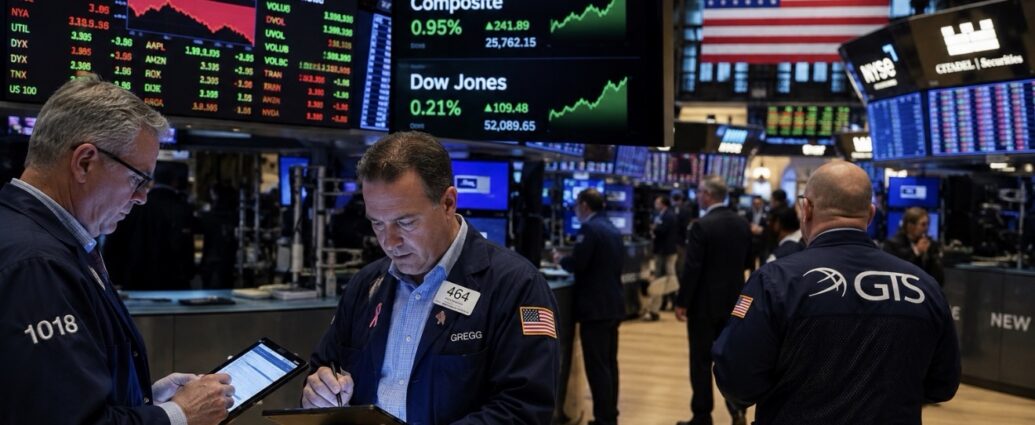
NEW YORK — U.S. stocks closed lower Monday, July 20, as investors weighed a rebound in semiconductor shares against mounting concerns over higher oil prices, rising Treasury yields, and one of the most important weeks of corporate earnings this year. Today’s trading was driven less by economic data than by positioning ahead of major technology earnings and growing fears that geopolitical tensions could reignite inflation.
The Dow Jones Industrial Average fell 307.16 points (0.59%) to 51,839.26, while the S&P 500 declined 0.20% to 7,443.28. The Nasdaq Composite slipped just 0.1% to 25,508.07, outperforming thanks to a rebound in semiconductor stocks. The Russell 2000 lost 0.7%, reflecting continued weakness in smaller companies.
The biggest force hanging over markets remained energy prices. Brent crude briefly traded above $90 a barrel before easing, while U.S. crude also remained elevated as traders continued pricing in the risk of disruptions to global oil supplies from tensions surrounding the Strait of Hormuz. Investors fear sustained higher energy prices could reverse recent progress on inflation, pressure consumer spending, and force the Federal Reserve to keep interest rates higher for longer.
Higher oil prices immediately spilled into the bond market. The yield on the benchmark 10-year U.S. Treasury climbed to roughly 4.60%, increasing borrowing costs throughout the economy. Rising yields typically reduce the appeal of high-growth stocks because future earnings become less valuable when discounted at higher interest rates. Interest-rate-sensitive sectors including utilities, real estate and smaller companies came under renewed pressure.
Technology shares, however, showed signs of stabilizing after last week’s sharp AI-driven selloff. Semiconductor companies recovered part of their recent losses, helping limit declines in the Nasdaq. Investors viewed the move as selective bargain hunting rather than a broad return to risk, with many portfolio managers choosing to wait for earnings before making larger commitments.
Corporate earnings are now the market’s primary catalyst. This week brings quarterly reports from several of America’s largest companies, including Alphabet, Tesla, Intel, IBM, General Motors, AT&T, and American Express. Investors will closely examine spending on artificial intelligence, cloud computing, digital advertising, consumer demand, and corporate outlooks. The results are expected to determine whether this year’s AI-led rally resumes or broadens into a wider market correction.
Market breadth painted a weaker picture than the major indexes suggested. Declining stocks outnumbered advancing issues across much of the session, indicating that investors continued rotating toward defensive areas rather than broadly buying equities. Energy remained among the strongest-performing sectors, while many cyclical industries struggled under the weight of higher borrowing costs and inflation concerns.
Currency markets also reflected the shift toward caution. The U.S. dollar strengthened as investors sought safer assets amid geopolitical uncertainty and higher Treasury yields. A stronger dollar can reduce the overseas earnings of multinational companies while making imports cheaper for American consumers.
For businesses and households, today’s market action reinforces several risks developing simultaneously. Higher crude oil prices threaten to raise gasoline, transportation and manufacturing costs. Rising Treasury yields increase borrowing expenses for mortgages, auto loans, credit cards and commercial financing. If those trends continue, inflation could remain elevated longer than expected, delaying potential Federal Reserve interest-rate cuts and weighing on economic growth.
Investors now enter the remainder of the week focused on five key themes: whether oil remains above the $90 level, whether Treasury yields continue climbing, the outlook provided by Big Tech earnings, any further escalation in Middle East tensions, and signs that corporate America is maintaining spending despite higher financing costs. Together, those factors are likely to determine Wall Street’s direction over the coming weeks.
JBizNews Desk | New York
© JBizNews.com All Rights Reserved. Reproduction or distribution without written permission is prohibited.