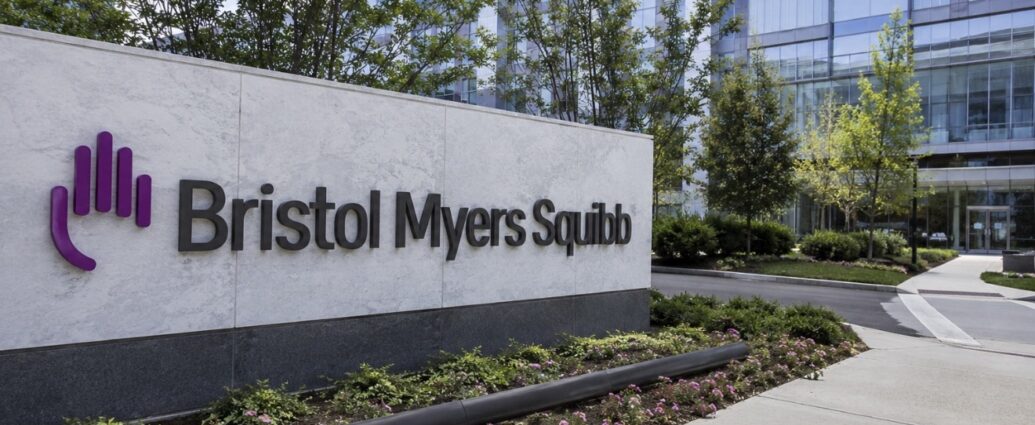
PRINCETON, N.J. — Bristol Myers Squibb on Monday announced a major expansion of its artificial intelligence infrastructure, becoming the first life sciences company to deploy NVIDIA’s next-generation DGX SuperPOD powered by the new Vera Rubin architecture. The investment is designed to accelerate drug discovery, shorten development timelines and expand AI across nearly every stage of the company’s research operations.
The new computing platform represents a significant leap over Bristol Myers’ existing AI systems. Company executives said the Vera Rubin-based infrastructure delivers substantially greater computing capacity while using far less energy, allowing researchers to evaluate many more potential drug candidates simultaneously without proportionally increasing operating costs.
Artificial intelligence has become increasingly central to pharmaceutical research as companies race to reduce the cost and time required to bring new medicines to market. Rather than relying solely on traditional laboratory screening, AI models can analyze enormous biological datasets, predict how molecules may behave, identify promising drug targets, and eliminate weaker candidates much earlier in the research process.
Bristol Myers executives said those benefits are already producing measurable results. The company estimates AI has reduced portions of its drug discovery process by roughly 20% to 30%, with expectations that future advances could shorten some development timelines by as much as half. Researchers also credited AI with helping identify an experimental treatment for sickle cell disease that may not have been discovered through conventional methods alone.
The expansion also reflects the rapidly escalating competition among pharmaceutical companies to secure advanced AI computing resources. As larger AI models require exponentially greater processing power, drugmakers are increasingly investing in dedicated supercomputing infrastructure rather than relying solely on outside cloud providers.
For NVIDIA, the announcement provides another high-profile commercial deployment of its newest AI architecture beyond traditional technology customers. Healthcare has emerged as one of the fastest-growing applications for advanced AI computing, with pharmaceutical companies using increasingly sophisticated models to accelerate research, improve clinical trial design, and identify new therapies.
For businesses, the investment underscores how AI is moving beyond productivity software into mission-critical research and development. Companies across industries are making larger investments in specialized computing infrastructure as AI becomes an essential competitive advantage rather than an experimental technology.
JBizNews Desk | Princeton, New Jersey
© JBizNews.com All Rights Reserved. Reproduction or distribution without written permission is prohibited.