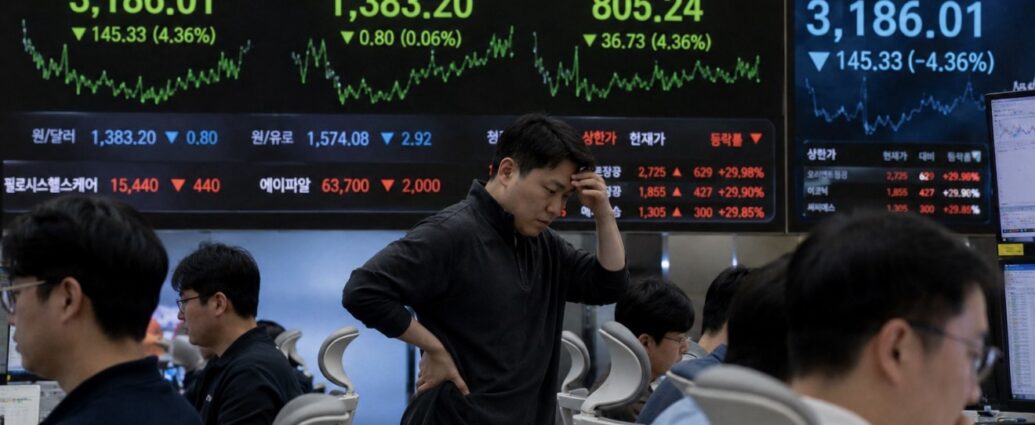
HONG KONG — Asian markets finished mixed Monday as investors poured back into Chinese technology shares while continuing to dump semiconductor stocks in South Korea, underscoring a sharp shift in global AI investment strategies ahead of a pivotal week of corporate earnings.
The biggest catalyst came from China’s artificial intelligence sector. Alibaba rallied after introducing its flagship Qwen 3.8 Max large-language model, helping ignite a broad advance in Hong Kong technology shares. Investors also continued buying companies tied to Moonshot AI, whose recently launched Kimi K3 model has fueled renewed optimism that Chinese AI firms are becoming increasingly competitive on the global stage. The enthusiasm pushed the Hang Seng Index more than 2% higher, while the technology sector led the market’s advance.
Mainland China also finished firmly higher. The CSI 300 gained approximately 1.5%, while the Shanghai Composite added nearly 1% as investors rotated into artificial intelligence developers, software companies and advanced technology manufacturers. Strong gains from companies including Zhongji Innolight, which recently secured approval for its Hong Kong listing, added momentum to the rally and reinforced confidence that China’s technology sector continues attracting investment despite broader global uncertainty.
South Korea experienced the opposite story.
The KOSPI plunged roughly 4.5%, marking one of the region’s steepest declines as investors continued selling artificial intelligence and semiconductor stocks. Market heavyweights Samsung Electronics and SK Hynix each lost more than 4%, dragging the broader market sharply lower. Selling became so intense that exchange volatility controls were temporarily triggered during trading before markets stabilized.
The selloff reflected growing concerns that AI-related semiconductor companies have become richly valued after months of exceptional gains. Rather than signaling weakening demand for artificial intelligence, investors instead rotated away from the companies building AI infrastructure and toward firms developing AI software and applications that could benefit from lower computing costs. That shift helped explain why Chinese technology companies advanced while many chipmakers continued declining.
Australia’s S&P/ASX 200 ended little changed as higher oil prices lifted energy producers, offsetting weakness across technology shares. Rising crude prices continued supporting companies tied to energy production as traders monitored ongoing tensions in the Middle East and the potential impact on global fuel supplies.
Japan’s markets remained closed for the Marine Day holiday, leaving Hong Kong and Seoul as the primary drivers of regional trading activity.
For U.S. investors and businesses, Monday’s session highlighted an important change in market leadership. Capital is no longer flowing indiscriminately into every company connected to artificial intelligence. Instead, investors are increasingly distinguishing between businesses building AI infrastructure, software developers, cloud providers and semiconductor manufacturers. With several major U.S. technology companies reporting earnings this week, global markets will be watching closely to determine whether the AI investment cycle continues broadening or whether valuation concerns spread further across the technology sector.
JBizNews Desk | Hong Kong
© JBizNews.com All Rights Reserved. Reproduction or distribution without written permission is prohibited.