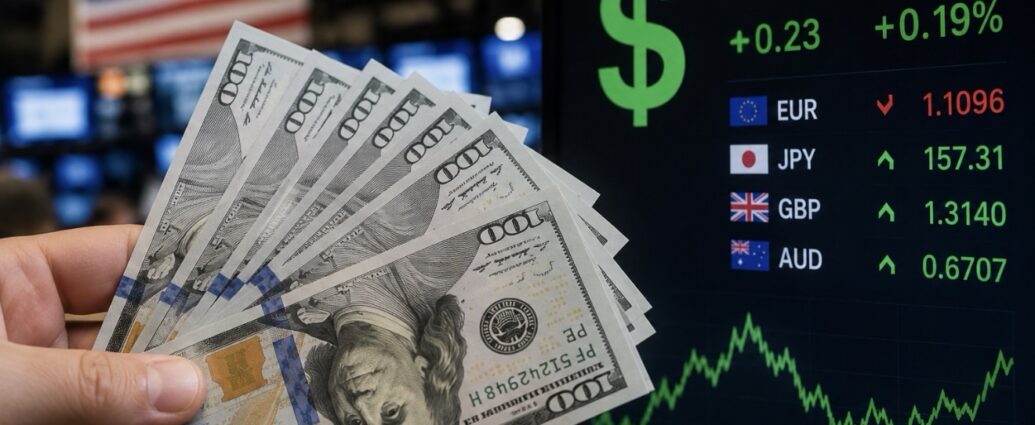
NEW YORK — The U.S. dollar traded little changed Tuesday as investors balanced easing geopolitical tensions in the Middle East against expectations for the Federal Reserve’s next interest-rate decision. Currency markets remained cautious as traders assessed whether recent diplomatic efforts would help stabilize global energy supplies and ease inflation pressures.
The dollar index hovered near recent levels after a volatile stretch driven by swings in oil prices and renewed uncertainty over global growth. Safe-haven demand has supported the U.S. currency in recent weeks as investors sought protection from geopolitical risks, even as expectations for future Federal Reserve policy continued to evolve.
Much of the market’s attention remains centered on the Middle East. Any disruption to oil exports through the Strait of Hormuz could quickly lift crude prices, feeding inflation and potentially delaying future interest-rate cuts by the Federal Reserve. Conversely, signs of easing tensions could reduce inflation concerns and weaken demand for the dollar as investors shift toward higher-risk assets.
Currency traders are also preparing for a pivotal week of corporate earnings from major U.S. technology companies, along with upcoming economic data that could influence the Fed’s policy path. Stronger-than-expected growth or persistent inflation would likely reinforce expectations that interest rates remain elevated, supporting the dollar against many major currencies.
The dollar’s direction carries broad implications beyond foreign exchange markets. A stronger dollar can make imports cheaper for American consumers but can also reduce the overseas earnings of multinational companies when foreign revenues are converted back into U.S. currency. It can also pressure commodity prices and emerging-market economies that borrow heavily in dollars.
For businesses, continued currency stability provides some certainty for international trade and investment planning. However, analysts caution that the dollar remains highly sensitive to geopolitical developments, energy markets, and shifts in Federal Reserve expectations.
With investors watching every headline from both Washington and the Middle East, currency markets are expected to remain volatile throughout the week as global events continue shaping expectations for inflation, interest rates and economic growth.
JBizNews Desk | New York
© JBizNews.com All Rights Reserved. Reproduction or distribution without written permission is prohibited.