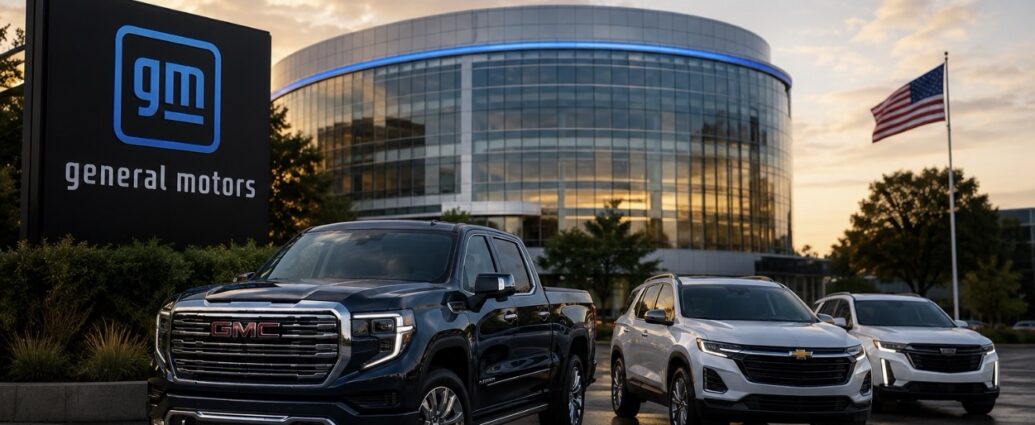
DETROIT — General Motors raised its full-year profit outlook Tuesday after stronger-than-expected demand for its pickup trucks and sport utility vehicles helped offset higher tariff costs and continued investment in electric vehicles, another sign that American consumers remain willing to spend on big-ticket purchases despite broader economic uncertainty. The improved forecast accompanied the automaker’s second-quarter earnings report and filings released to investors, reflecting management’s growing confidence in North American demand.
The Detroit automaker reported $48.0 billion in second-quarter revenue and adjusted EBIT of $3.9 billion, prompting it to increase its 2026 adjusted earnings guidance to $14 billion to $16 billion, up from its previous forecast. The company also lifted its expectations for adjusted earnings per share and automotive free cash flow as sales of its most profitable vehicles continued to outperform expectations.
Much of that strength came from GM’s full-size truck and SUV lineup, including the Chevrolet Silverado, GMC Sierra, and several Cadillac models, where pricing has remained resilient even as higher interest rates continue to pressure affordability. Consumers have become more selective in their spending this year, but the latest results suggest many buyers are still prioritizing vehicle purchases they consider long-term investments.
Chief Executive Mary Barra said the company continues to benefit from disciplined pricing, manufacturing efficiencies and steady retail demand across North America while maintaining its long-term commitment to electric vehicles. GM also said its EV business continues to improve as production becomes better aligned with market demand.
The stronger outlook comes as automakers navigate a challenging environment marked by tariffs, shifting trade policies, evolving EV incentives and higher raw material costs. Even so, GM’s ability to raise guidance at this stage of the year sets it apart from many manufacturers that have remained cautious about the second half of 2026.
Investors welcomed the report, viewing it as another indication that the U.S. consumer has proven more resilient than many economists anticipated. Alexander Potter, an auto analyst with Piper Sandler, has previously noted that GM’s profitability continues to be driven by its leadership in higher-margin trucks and SUVs, giving the company greater flexibility as the industry transitions toward electrification.
The results also reinforce a broader trend emerging across corporate America this earnings season: while households have become more cautious about everyday discretionary purchases, demand for products viewed as essential or high value—including automobiles—has remained comparatively strong.
For consumers, GM’s report suggests automakers are likely to continue emphasizing their most profitable truck and SUV models while carefully managing incentives and production levels rather than engaging in widespread price discounting. That strategy could help support vehicle values but may also keep new-car prices elevated heading into the fall selling season.
JBizNews Desk | Detroit
© JBizNews.com All Rights Reserved. Reproduction or distribution without written permission is prohibited.