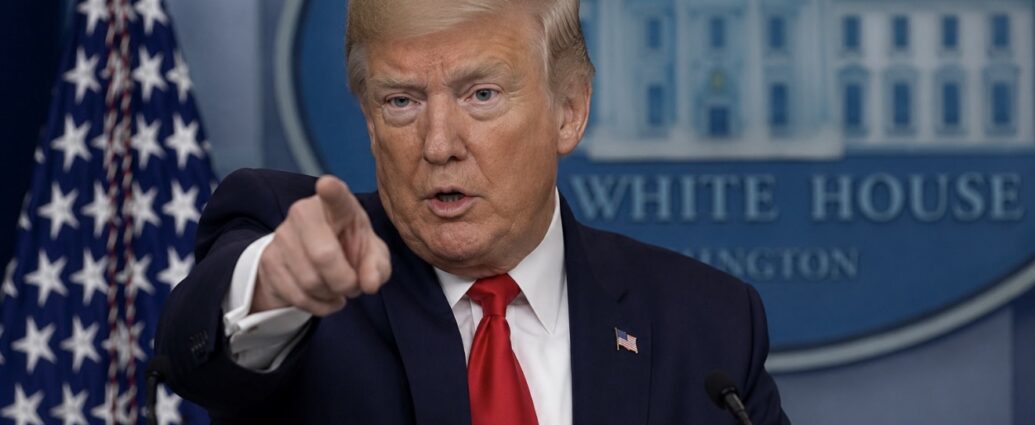
President Trump on Tuesday tamped down expectations for a diplomatic breakthrough with Iran, even as Tehran’s threat to a second critical oil chokepoint kept energy markets on edge nearly five months into a conflict that has already reshaped global crude flows.
The renewed uncertainty centers on the Bab el-Mandeb, the narrow passage at the southern end of the Red Sea that has become the oil market’s relief valve since the Strait of Hormuz was effectively shut early in the war. Iran has asked the Houthis in Yemen to stand ready to close the Red Sea route if the U.S. strikes Iranian power infrastructure, a threat that has repeatedly pushed crude higher this month. With one of the region’s two primary export arteries already disrupted, traders are pricing in the risk that both could be constrained at once.
The stakes are substantial. Petroleum moving through Bab el-Mandeb totaled roughly 7.4 million barrels a day in June, about 7% of global output, up sharply from 4.2 million barrels a day a year earlier—a jump that reflects how heavily producers have leaned on the Red Sea since Hormuz seized up. Saudi Arabia has surged barrels through its East-West pipeline to the Red Sea, helping offset lost supply to buyers in Japan and South Korea. Cutting the southern route would strip away that workaround.
Analysts tracking the shipping picture warn that a simultaneous squeeze would ripple well beyond the price at the pump. Constraints hitting Hormuz and Bab el-Mandeb together would amplify supply-chain stress, tighten tanker availability, and drive insurance premiums higher. Those freight and coverage costs feed directly into landed fuel prices for importers already navigating a disrupted map.
There have been intermittent signs of de-escalation. Iran’s release of a U.S. citizen was read by some traders as a possible path away from all-out war, briefly easing prices, and supply has crept back elsewhere: Iraqi crude loadings more than doubled to roughly 1.2 million barrels a day in the first half of July as exports accelerated. But those gains have done little to offset the structural loss of Hormuz volumes.
Price action has tracked the diplomatic mood swings closely. Brent jumped nearly 4% to break $90 a barrel after the U.S. confirmed at least three service members had died in recent fighting, then eased when Iran’s foreign ministry signaled negotiations could still be pursued. For American households, the war premium has been steady: the national average pump price sat near $3.94 a gallon in recent days.
The conflict, which began Feb. 28, has turned energy logistics into the central economic story of 2026. Every threat to a waterway now carries an immediate cost, and Trump’s cool tone toward talks suggests the market’s risk premium is unlikely to unwind soon.
JBizNews Desk | Washington
© JBizNews.com All Rights Reserved. Reproduction or distribution without written permission is prohibited.