Alphabet opened Magnificent Seven earnings season with a decisive beat Wednesday, reporting second-quarter revenue of $119.8 billion, up 24% from a year earlier and ahead of the roughly $116.9 billion analysts had modeled. The result answered, at least for one quarter, the question hanging over the entire AI trade: whether the company’s enormous spending is translating into growth investors can see.
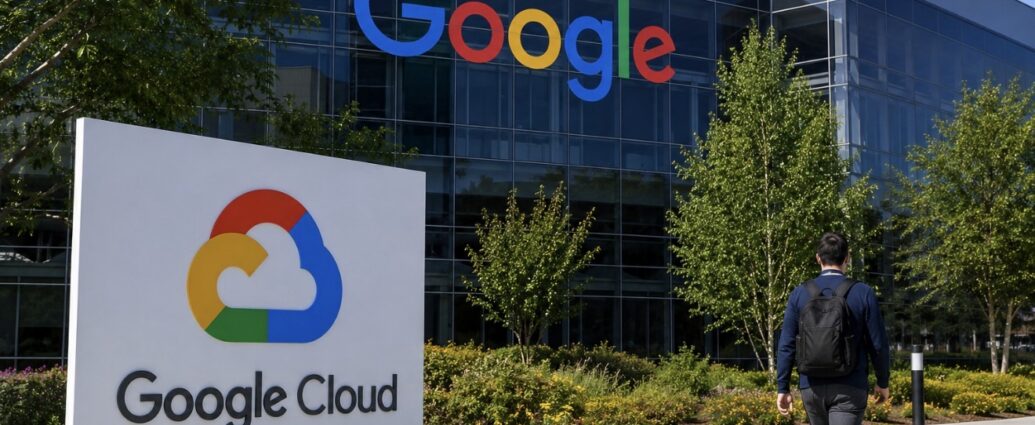
The clearest evidence came from Google Cloud, which generated $24.77 billion in revenue and grew 82% year over year — a sharp acceleration from the 63% pace it posted in the first quarter and comfortably above expectations. The unit has become the pivot point of the Alphabet story, the place where the AI infrastructure buildout either justifies itself or doesn’t. This quarter it did, with the segment’s contracted backlog swelling to $514 billion, well beyond the $488 billion Wall Street expected and a sign that demand is being booked faster than it can be recognized.
The advertising business, still the company’s foundation, held firm. Search and its related properties, together with YouTube, produced $81.63 billion in ad revenue, edging past estimates and easing worries that AI-driven answers might erode the core search franchise rather than strengthen it. Chief Executive Sundar Pichai framed the period as a standout across the board, pointing to accelerating cloud demand tied directly to enterprise appetite for AI infrastructure and tools.
One figure demands a caveat. Alphabet’s reported earnings came in at $9.11 per share, a number that dwarfs the roughly $2.90 analysts were expecting — but the gap is largely an accounting artifact rather than operating strength. As in the first quarter, mark-to-market gains on Alphabet’s minority stakes in private companies, including its holdings in AI developer Anthropic, inflated the bottom line by billions. Stripped of those unrealized gains, the underlying operating result is a fraction of the headline. Readers and investors weighing the quarter should anchor on revenue, cloud growth and margins, not the eye-catching per-share figure.
The spending question has not gone away. Alphabet has guided capital expenditures toward the $180 billion to $190 billion range for 2026 and signaled a further significant increase in 2027, a commitment that has unsettled investors wary of ballooning outlays with uncertain payback. The 82% cloud print is the strongest rebuttal management could offer: growth of that magnitude makes the spending easier to defend. Whether it holds as the company absorbs acquisitions and scales its custom-chip ambitions is the debate that carries into the back half of the year.
Alphabet went into the print under pressure, its shares off their 52-week high and lagging peers over the prior month amid skepticism about AI returns and a delayed model release. The results gave the bulls their opening. The immediate market verdict was still forming in after-hours trading as management took analyst questions on the earnings call.
JBizNews Desk | Wall Street
© JBizNews.com All Rights Reserved. Reproduction or distribution without written permission is prohibited.