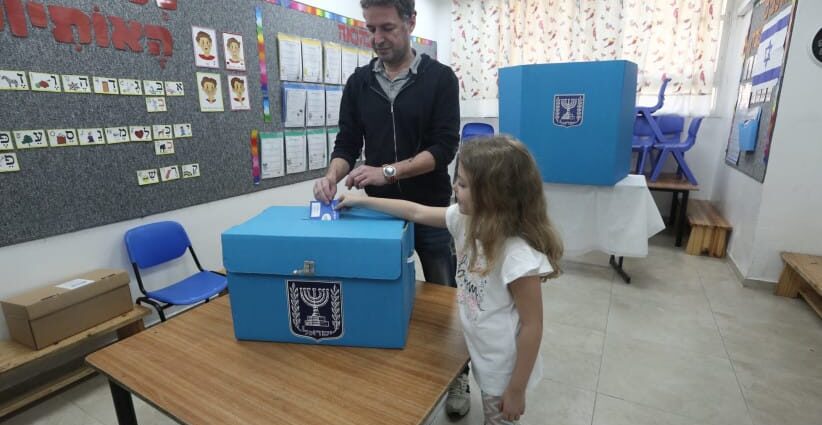
A record 595,000 Israelis between the ages of 18 and 22 are expected to cast ballots for the first time in the election for the 26th Knesset, according to an analysis published Wednesday by geographic and demographic data firm Points Location Intelligence.
First-time voters are expected to account for about 8.7% of all eligible voters in the upcoming election, the largest such wave since the establishment of the state. This unusually large share could affect the political balance of power in several parts of the country.
The election will mark the entry of a new and significant generation into Israel’s political arena. According to the Points analysis, the number of eligible voters is expected to reach approximately 6.8 million, an increase of about 9.4% from the November 2022 election for the 25th Knesset, when approximately 6.2 million Israelis were eligible to vote.
Jerusalem is expected to record the country’s largest increase in voters, with approximately 60,000 people eligible to cast ballots for the first time.
That is three times the number expected in Tel Aviv-Jaffa, which ranks second with about 20,000 new voters.
Bnei Brak follows with approximately 19,000 new voters, followed by Haifa with about 15,000, Petah Tikva with about 14,000, Rishon Lezion with about 13,500, Ashdod with about 13,000, and Beersheba with about 12,000.
In the 2022 election, the parties that later formed the governing coalition received approximately 75% of the vote in Jerusalem. United Torah Judaism was the city’s largest party, receiving about 24% of the vote.
Israel’s youngest community members
Kfar Kesef leads the list of communities with the highest proportion of new voters, at 69%, followed by Beit Berl at 64%, Migdal Oz at 53%, and Kerem B’Yavneh at 50%.
Most are small communities characterized by educational institutions, young populations, or rapid population growth.
Among Israel’s major cities, Elad stands out, with new voters accounting for about 24% of all eligible voters, an unusually high share compared with other cities.
Established communities see slower electoral renewal
The analysis also found a link between socioeconomic status and the rate at which new voters are joining the electorate. In communities ranked in the middle and upper socioeconomic clusters, new voters generally account for only 7% to 8% of eligible voters.
By contrast, the highest rates of electoral renewal were recorded in areas with large haredi and Arab populations, most of which are concentrated in the lower socioeconomic clusters.
The data also show that women make up a slight majority of new voters. Approximately 303,000 women, or 50.9% of all new voters, are expected to cast ballots for the first time, compared with about 292,000 men, or 49.1%.
Haredi population drives electoral growth
The analysis found that the haredi population is Israel’s primary driver of electoral growth. Approximately 105,000 new voters come from the haredi sector, which accounts for about 16% of all eligible voters, nearly twice the national average.
In other words, one in every six eligible voters in the haredi sector is a new voter.
By comparison, new voters account for approximately 12.2% of eligible voters in the religious-Zionist sector, about 10.6% in the Arab sector, and only about 7% in areas without a dominant sectoral affiliation.
More than 118,000 young Arab Israelis are expected to vote for the first time in the upcoming election, the highest number of new voters among all sectors. The religious-Zionist sector also recorded a relatively high number of new voters, with approximately 35,000.
Women make up a significant proportion of new voters across all sectors. In the haredi sector, they account for about 54% of new voters, while in the Arab and religious-Zionist sectors, they account for about 52%. In areas without a dominant sectoral affiliation, women make up about 50% of new voters.
“The upcoming election is expected to be significantly influenced by the entry of hundreds of thousands of new voters into the voting population. The data show that the haredi and Arab publics continue to display the highest rates of electoral renewal in Israel, while in the larger and more established cities, the rates at which new voters are joining are significantly lower,” said Yafit Ben Haim, CEO of Points, which specializes in collecting and analyzing geographic and demographic data for businesses.
“Ahead of the election, we are seeing that the parties have adopted a model from the business world, which involves analyzing data while understanding its demographic impact. In other words, determining which communities, sectors, and socioeconomic groups the new voters come from,” she added.
“This data helps provide an understanding of what motivates them, which issues are important to them, and how they can be influenced. This will be one of the decisive factors in the October 2026 election.”