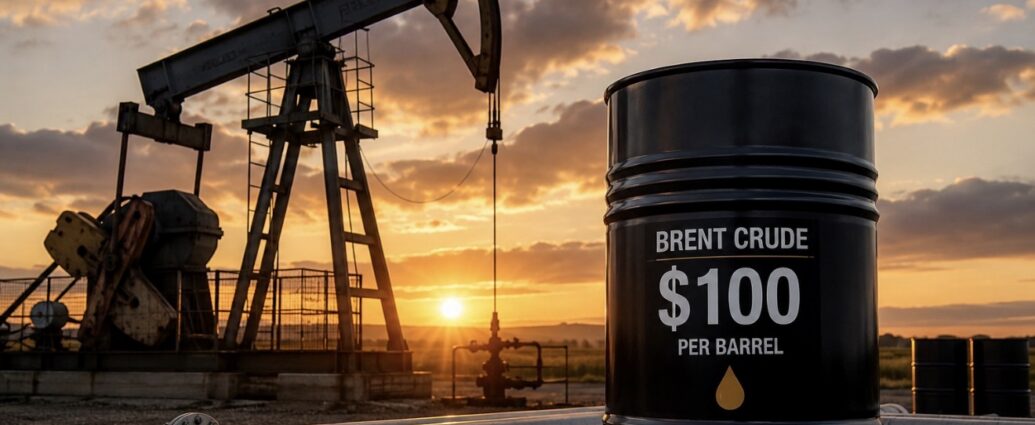
LONDON — Thursday, July 23, 2026: Global oil prices climbed toward $100 a barrel on Thursday as renewed military tensions involving Iran and continued attacks on commercial shipping in the Red Sea disrupted energy markets, raising fresh concerns that inflation could accelerate again and delay interest-rate cuts by central banks. The latest move in crude prices rippled through financial markets, lifting government bond yields, pressuring equities and increasing costs for businesses that rely heavily on transportation and fuel.
Brent crude traded near the $100-per-barrel mark during European trading, while U.S. benchmark West Texas Intermediate also posted sharp gains. The rally follows growing concerns over the security of one of the world’s most important energy shipping corridors after additional attacks on vessels transiting the Red Sea and continued military operations involving Iran. Energy traders increasingly fear prolonged disruptions could tighten global supplies during the peak summer demand season.
The surge in oil immediately spread beyond commodity markets. U.S. Treasury yields climbed as investors reduced expectations for lower interest rates, reflecting concerns that higher energy prices could feed into broader inflation. Equity markets moved lower as rising fuel costs threatened corporate profit margins, particularly across airlines, transportation companies, manufacturers and consumer-focused businesses. Technology shares also remained under pressure as investors simultaneously weighed record artificial intelligence spending by major technology companies.
For businesses, sustained increases in crude oil prices often extend well beyond the energy sector. Higher diesel and jet fuel costs raise shipping expenses, increase airline operating costs, elevate manufacturing input prices and can eventually push consumer prices higher. Industries dependent on global supply chains are particularly exposed as ocean freight, trucking and air cargo become more expensive.
Central banks are also facing renewed challenges. Policymakers had been watching for further evidence that inflation was moderating before considering additional interest-rate reductions. A prolonged rise in oil prices could complicate those plans by increasing inflation expectations and keeping borrowing costs elevated for businesses and consumers alike. European government bond yields moved higher Thursday as investors reassessed monetary policy expectations following the latest energy market developments.
The impact was evident across financial markets. Energy producers outperformed while airlines, retailers and other fuel-sensitive sectors traded lower. Market volatility also increased as investors balanced stronger corporate earnings from industrial and defense companies against mounting geopolitical risks and higher commodity prices.
Investors will continue monitoring developments in the Middle East, tanker traffic through regional shipping lanes and any additional changes in global oil inventories. With crude approaching the psychologically important $100-per-barrel threshold, businesses across multiple industries are preparing for the possibility that elevated energy costs could persist through the second half of the year, influencing everything from transportation budgets to consumer inflation.
JBizNews Desk | Wall Street
© JBizNews.com All Rights Reserved. Reproduction or distribution without written permission is prohibited