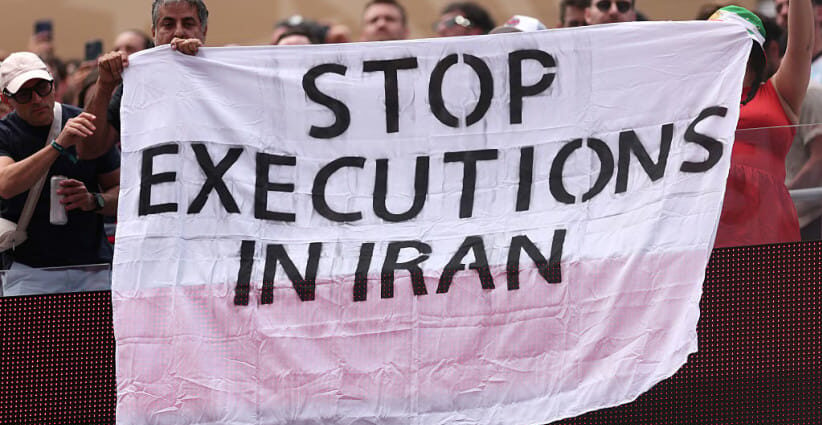
Individuals who allegedly participated in the January protests have continued to receive death sentences from Iranian courts, with at least three such sentences carried out this past week, according to the judiciary’s media outlets and human rights organizations.
Mehdi Khaneki was executed on Wednesday for “operational actions” that benefited Israel, the United States, and hostile groups, as well as what the judiciary described as crimes committed during the January protests. He was alleged to have both produced and collected weapons.
I don’t know how to stop these executions anymore.
I woke up again to the news that another young protester had been hanged.
Yes, every morning I wake up wondering whose name I’ll have to write next, and whether anyone will care enough to read it.
Today, right after the call… pic.twitter.com/fzsFnZ1J4R
— Masih Alinejad (@AlinejadMasih) July 22, 2026
The Paris-based National Council of Resistance of Iran (NCRI), the political arm of the People’s Mojahedin Organization of Iran, said Khaneki was executed for his alleged involvement in the organization.
The NCRI said that Khaneki, a 26-year-old law graduate, “had been subjected to months of physical and psychological torture.”
Erfan Esfandiari and 24-year-old Afghan refugee Gol-Mohammad Mohammadi were also executed for their alleged participation in the demonstrations. Both were hanged on Sunday at Isfahan Central Prison.
🔴The death sentences of 19-year-old #ErfanEsfandiari and 23-year-old Afghan national #GolMohammadMohammadi were executed secretly at dawn on Sunday, July 19, 2026, in Dastgerd Prison, Isfahan. The Mizan News Agency, affiliated with the Islamic Republic’s judiciary, has confirmed… pic.twitter.com/WjpqT4Lk05
— Abdorrahman Boroumand Center (@IranRights_org) July 19, 2026
Only 19, Esfandiari was one of the 12 people sentenced to death over unrest in Isfahan’s Ali Khani Square during the nationwide protests, and there are immediate concerns that the 10 still alive are at imminent risk of execution. Sources told Iran International that Esfandiari’s family were forced to pledge that they would not hold a funeral, and his body was reportedly buried in Buin Miandasht without his family present or any ceremony commemorating his life.
The judiciary’s Mizan News Agency claimed the pair were responsible for killing four security personnel, as well as arson and vandalism. However, Masih Alinejad, an Iranian-American journalist and activist, said the two men were executed for sheltering demonstrators from regime attacks and offering them refuge in their homes.
Mojtaba Dehbandi, 23, and Kianoush Hamzehei Kazerouni, 27, were also both recently handed death sentences for helping wounded protesters in January, though the regime has accused them of burning public buildings and Qurans.
Alleged Iranian protesters continue to receive death sentences
Other alleged protesters have also continued to receive death sentences in Iran. Iranian rapper Mahnam Navab Safavi was sentenced to death on Thursday by Branch 5 of Isfahan’s Revolutionary Court for allegedly committing the “destruction of public property, propaganda against the system, gathering and collusion, and encouraging people to kill each other,” according to the legal advocacy network Dadbaan.
صدور حکم اعدام علیه مهنام نواب صفوی، از معترضان دی ۱۴۰۴ در اصفهان
مهنام نواب صفوی، خواننده رپ و از بازداشتشدگان اعتراضات سراسری دیماه ۱۴۰۴ و زندانی محبوس در زندان دستگرد اصفهان، از سوی شعبه ۵ دادگاه انقلاب اصفهان به اعدام محکوم شده است.
بر اساس گزارش منتشرشده، این حکم به… pic.twitter.com/fEdo4DUJCQ
— دادبان (@dadban4) July 23, 2026
The network also reported that Ahad Shekouhian, a 38-year-old who provides for his disabled brother and elderly mother, was handed a triple death sentence by Branch 26 of the Tehran Revolutionary Court on charges including “participation in two counts of premeditated murder,” “acting against national security,” “assembly and collusion against national security,” and “destruction of public property with the intent to oppose the Islamic Republic system” in connection with the protests. He was reportedly denied a lawyer, and it was claimed that evidence submitted during the appeal stage was not properly reviewed.
گزارشها از صدور حکم ۳ بار اعدام علیه احد شکوهیان از معترضان دی ۱۴۰۴ در پاکدشت
گزارشها از صدور حکم ۳ بار اعدام علیه احد شکوهیان، از بازداشتشدگان اعتراضات دیماه ۱۴۰۴، حکایت دارد. به گزارش کمپین حقوق بشر ایران این حکم از سوی شعبه ۲۶ دادگاه انقلاب تهران به ریاست قاضی ایمان… pic.twitter.com/dAdEirBiVZ
— دادبان (@dadban4) July 23, 2026
Religious minorities have also continued to face persecution in Iran, with religious sites confiscated by the regime and individuals from minority sects sentenced on charges relating to their faith.
Shideh Tavakoli, a Baha’i citizen residing in Tehran, was sentenced to 11 years in prison by Branch 15 of the Tehran Revolutionary Court on charges of membership in groups opposed to the regime and engaging in proselytizing activities contrary to Sharia law. Her personal property was also seized.
@Hengaw_English reports that Shideh Tavakoli, a Baha’i woman from Tehran, has been sentenced to 11 years in prison, a substantial fine, permanent disqualification from public employment and the confiscation of her personal property.
The verdict was issued by Branch 15 of the… pic.twitter.com/wEA9qc5YKh
— Bahá’í International Community – Human Rights (@BahaiBIC_Rights) July 23, 2026
Detained Iranians at risk due to lack of medical attention
Multiple human rights organizations have said that detainees are being denied appropriate medical attention, which puts their lives at risk.
Afshin Albandi, a former boxing champion, died in Isfahan Prison on Saturday after being denied adequate medical care, according to the Hengaw Organization for Human Rights. Poor sanitary conditions inside the prison and delays in receiving necessary treatment were said to have led to his death.
زندان اصفهان؛ گزارشی از جانباختن افشین البندی از قهرمانان رشته بوکس بدلیل عدم رسیدگی پزشکی#افشین_البندی، زندانی اهل فولادشهر و محبوس در زندان اصفهان و از قهرمانان سابق رشته بوکس در سطح ایران و همچنین کاپ اروپا بدلیل وخامت بیماری ناشی از شرایط نامناسب بهداشتی زندان و نبود رسیدگی… pic.twitter.com/FujY4dqZAO
— 👑 Serena (@Serenaazadi) July 23, 2026
Beyond the executions, the Islamic Republic has continued to crack down on whistleblowing efforts. On Saturday, Iran’s judiciary claimed to have opened files against 300 Iranians accused of speaking with Iran International, the Manoto Network, or individuals affiliated with the two diaspora media outlets.