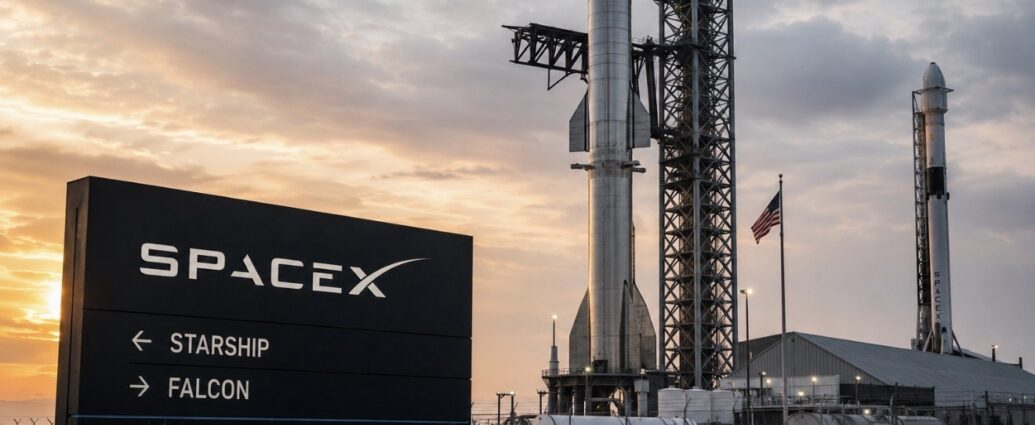
WASHINGTON, Thursday, July 23, 2026 — SpaceX has begun turning away some customers seeking future launches on its workhorse Falcon 9 rocket as the company accelerates its transition to Starship, marking one of the clearest signs yet that Elon Musk intends for the next-generation vehicle to become the backbone of the company’s launch business. People familiar with the company’s plans said SpaceX is no longer accepting certain Falcon launch reservations beyond 2028 and has also slowed production of some non-reusable Falcon components.
For businesses that rely on launching satellites, the shift could reshape the commercial space industry over the next several years. Falcon 9 has become the world’s dominant commercial launch vehicle because of its proven reliability and predictable pricing. If customers are increasingly directed toward Starship before it has established a comparable operational record, satellite operators may face difficult decisions about launch timing, risk and fleet planning.
The move highlights just how aggressively SpaceX is betting its future on Starship.
The fully reusable rocket is designed to carry dramatically larger payloads than Falcon 9 while reducing launch costs over time. Musk has repeatedly described Starship as essential not only for expanding the Starlink satellite network but also for lunar missions, Mars exploration and eventually deploying large-scale infrastructure in orbit.
Yet that future is still under development.
Starship remains in its flight-test program and has not yet achieved the operational consistency of Falcon 9. Earlier this month, SpaceX scrubbed another Starship launch attempt after multiple Raptor engines failed to ignite properly during the countdown, underscoring the technical hurdles that remain before the vehicle enters routine commercial service.
That creates a balancing act for the industry.
On one hand, satellite operators want access to Starship’s unprecedented lift capacity, which could allow larger satellites, multiple spacecraft and entirely new business models. On the other, many customers also value the certainty that Falcon has delivered through years of successful launches.
Falcon 9 has become one of the most active launch systems ever built, completing dozens of missions annually with an exceptionally strong reliability record. That reputation has helped SpaceX dominate the global commercial launch market and secure government contracts from NASA, the Pentagon and international customers.
The company’s reported decision to stop accepting some long-term Falcon reservations suggests executives believe Starship will eventually replace much of that business rather than operate alongside Falcon indefinitely.
For the broader space economy, the implications extend well beyond rockets.
Satellite manufacturers, insurers, telecommunications companies, Earth-observation firms and governments all build long-term plans around launch availability. Any significant transition between launch systems can affect production schedules, financing decisions and insurance costs.
Investors are also watching closely because Starship represents one of the largest technology bets in SpaceX’s history. While Falcon generates steady commercial revenue today, Starship is expected to unlock entirely new markets if it succeeds, including massive satellite deployments, deep-space logistics and lower-cost cargo transportation.
Industry observers note that replacing Falcon before Starship reaches full operational maturity would represent an unusually ambitious transition for a company already leading the global launch market.
What happens next may determine the pace of the commercial space industry’s next decade.
If Starship successfully completes its remaining flight-test milestones and enters reliable commercial service, SpaceX could further widen its lead over competitors by offering capabilities no other launch provider currently matches.
If development takes longer than expected, however, customers may continue relying on Falcon while evaluating alternative launch providers for critical missions.
For now, SpaceX appears committed to shifting its business toward Starship—even if that means limiting future access to the rocket that helped transform the commercial space industry.
JBizNews Desk | Washington
© JBizNews.com All Rights Reserved. Reproduction or distribution without written permission is prohibited.