Moldova is a destination that rewards travelers who enjoy discovering places before the crowds arrive. It’s a country where monastic traditions, deep Jewish history, world-class wine culture, and modern café life exist side by side, often within the same afternoon.
Spend a few days beyond the boulevards of Chisinau, and you quickly realize Moldova is less about famous landmarks and more about atmosphere, encounters, and stories that linger long after the journey ends.
One of the most striking places to begin is the vast Jewish cemetery complex on the outskirts of the capital, which doubles as an open-air museum. Ornate headstones stand beside more modest family graves. Among them are the dilapidated graves of the 45 victims of the 1903 Kishinev pogrom and a grave with a propeller belonging to an airman who is believed to have died in either Korea or Kazan. There are rumors of KGB involvement in the downing of the plane.
Hidden within the cemetery grounds is a crumbling prayer hall, which is due to be stabilized with financial assistance from the US Embassy, and a genizah, which contains four Torah scrolls desecrated during the pogrom, and the grave of Rabbi Yehuda Leib Tsirelson, former chief Rabbi of Bessarabia, executed by the Nazis in 1941.
Jewish heritage remains woven throughout the country. Before the Holocaust, Moldova was home to large and vibrant Jewish communities, and traces of that history remain visible in synagogues, cemeteries, memorials, and family stories. Today, Jewish life in Chisinau is modest but increasingly visible again. Spending Shabbat with the local Chabad community, on the appropriately named Chabad Lubavitch Street, offers visitors a very different perspective on Moldova. Conversations over dinner move naturally between local traditions, family histories, and hopes for Moldova’s future. The warmth of the welcome leaves a lasting impression.

Exploring Old Orhei’s landscapes and spiritual heritage
Outside the capital, the landscape changes dramatically around Orhei, one of Moldova’s most important historic and spiritual sites. The drive itself is part of the experience, winding through rolling green hills and limestone cliffs. Nearby is a stunning cave restaurant complex called Epoca di Piatra, where traditional Moldovan food is served inside atmospheric stone chambers carved into the hillside. It feels almost theatrical.
The nearby Belvedere Point offers one of Moldova’s defining panoramas. Fields, cliffs, and the curving Raut River stretch into the distance, creating scenery that feels far removed from the rush of modern Europe. Not far away lies the Old Orhei Monastery itself, partially built into the rock. The walk up is memorable not only for the scenery but for the goats casually wandering along the path, grazing as visitors pass. At the monastery, silence is taken seriously. The sole monk is known for quietly hushing tourists throughout the day, preserving the calm atmosphere of a site that remains an active place of worship rather than simply a tourist attraction. Look out for a Hebrew inscription in the chapel.
Back in Chisinau, the city feels youthful and energetic, particularly during festival season. Throughout the warmer months, street concerts, wine festivals, and cultural events fill the parks and public squares. It’s Eurovision final weekend, with a family music festival and a drone festival in the central parks. The city comes alive in the evening as Moldova anticipates a great performance from local rapper and singer-songwriter Satoshi.
For everyday life, few places capture the spirit of the city better than the Central Market. The noise, color, and smell can feel overwhelming at first, but a wander through the myriad stalls reveals everything from homemade cheese and pickles to household tools and herbal remedies. Vendors proudly offer samples, often insisting visitors try local pastries or wine.
Modern Chisinau also has its quirks. One evening can easily involve drinking in a cat café, surrounded by sleeping felines providing a calm break from the bustling streets. It perfectly reflects the city’s slightly eccentric but welcoming personality. A two-minute walk leads to a chandelier in the middle of a park above a pop-up outdoor café, a people watcher’s paradise.
Moldova’s wine industry blends tradition and kosher production
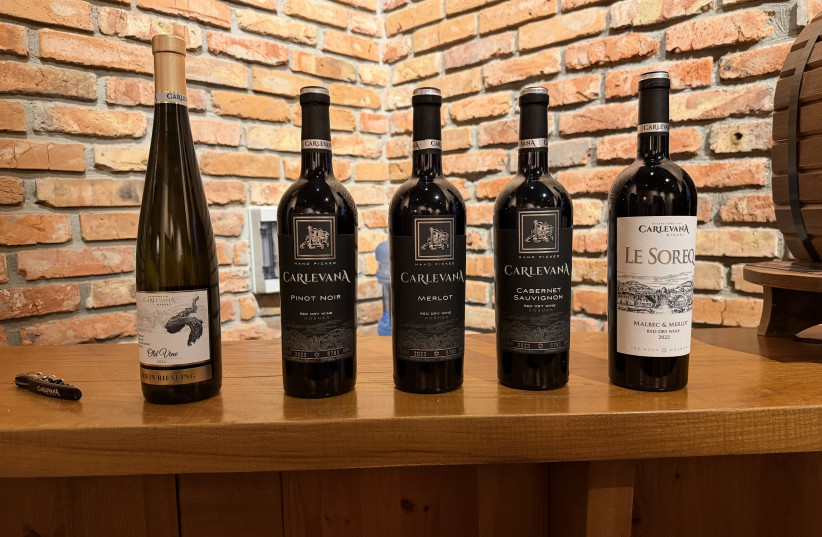
Wine, however, remains Moldova’s defining experience. At Carlevana, the story of Moldova’s wine industry comes vividly to life. Once a state-run producer, the winery later moved into private ownership and has since expanded internationally. Today, kosher production represents around 15% of its output, with exports heading to Israel, the US, and beyond.
The winery balances tradition with experimentation. An orange kosher wine is being developed using white grapes left with their skins for more than 40 days, creating deeper flavors and hues. Visitors can also learn about the mevushal process, in which wine destined for kosher production is heated after being transferred to a juice facility in Orhei. Deep underground are collections of mature wines, including carefully preserved kosher vintages. Elsewhere in the tunnels are reminders of another era: an old passageway to a hidden sauna and a fascinating exhibition of vintage wine artifacts.
There is a plethora of wineries to visit in Moldova. Château Vartely is another great example of the region’s booming wine tourism. The modern complex pairs curated tasting experiences of its award-winning vintages with distinct gastronomy. For tourists looking to extend their stay, the estate features picturesque, stone-crafted guest villas, cementing its status as a premier Eastern European getaway.
No Moldovan wine experience is complete without visiting the legendary underground city of Milestii Mici. The scale is extraordinary. According to the Guinness World Records certificate displayed at the winery, the cellars contain more than 1.5 million bottles stored across 55 km. of underground galleries carved from former limestone mines. The first bottles were stored in 1968, and new vintages continue to be added every year. Driving through the tunnels in golf carts feels surreal, with underground streets named after grape varieties stretching endlessly beneath the earth.
A hugely popular attraction in Moldova is a journey to the Transnistrian region. For many travelers, the journey begins with uncertainty. Leaving Chisinau behind, the road east towards the Dniester River gradually feels like stepping backwards in time. Checkpoint formalities are calm but noticeably different from elsewhere in Europe, and within an hour the atmosphere changes completely. Monumental architecture, hammer-and-sickle imagery, and vast boulevards dominate the landscape.
Locally, many people prefer the name “Pridnestrovie,” while “Transnistria” remains the term most international visitors recognize.
Hotel Russia in Tiraspol is a classic-era property whose imposing exterior contrasts with warm hospitality. Internet access can be patchy and international roaming unreliable, so downloading maps and information in advance is highly recommended.
Money is another curiosity. The region uses its own currency, the rouble, complete with colorful banknotes and unusual plastic coins that have become collectors’ items. International credit cards are not universally accepted, so carrying Moldovan lei or euros to exchange is wise.
The most authentic culinary immersion in the region lies in the stolovaya, the traditional canteen-style eateries that still form part of daily life. Diners slide trays along metal rails, choosing from steaming soups, buttery mashed potatoes, meat patties, and glasses of sweet kompot. A full meal at Stolovka USSR costs very little, yet offers a genuine glimpse into the rhythms of local life, all washed down with a selection of nostalgic Soviet style beer and soft drinks.
Bender Fortress reveals centuries of imperial history
History looms large in nearby Bender, also known as Bendery. The great fortress overlooking the Dniester has passed between Ottoman, Russian and imperial powers for centuries. Inside its walls are monuments linked to military victories and figures including Sultan Suleiman the Magnificent, Stephen the Great, and King Charles XII of Sweden. From the ramparts, the strategic importance of the site becomes instantly clear.
Back in Tiraspol, the atmosphere remains distinctive. Lenin statues still stand proudly, wide avenues are lined with memorials, and public spaces retain an unmistakably old-world character. Catherine the Great Park offers a softer side of the city, with families strolling beneath trees while children play around fountains and statues celebrating the city’s imperial heritage. At the bustling Green Market, traders sell fresh produce, cheeses, pickles, and homemade preserves, providing a vivid glimpse into everyday life.
One of the most fascinating local institutions is Sheriff. The name appears everywhere, on supermarkets, petrol stations, soccer shirts, and even bottles of brandy. The conglomerate dominates much of commercial life, and visitors quickly realize they encounter it almost constantly.
No visit is complete without tasting the products of Tiraspol’s celebrated Kvint distillery. Its specialty is Divin, an excellent brandy-style spirit produced throughout the former Soviet world. Tours reveal aging cellars and decades of winemaking tradition. Some bottles are also produced with kosher certification for export markets, another reminder of the region’s long Jewish connections and continuing trade with Israel.
For souvenir hunters, nostalgia dominates the shelves: Medals, military caps, and retro memorabilia sit alongside locally produced chocolates and spirits. Leaving town by bus provides one final reminder that comfort is not always the priority here, the ride was decidedly spartan but it somehow felt entirely fitting. Even more surreal is being followed and filmed by a local television crew, curious about Israeli visitors exploring their rarely seen corner of Europe.
The Transnistrian region may occupy only a narrow strip of land along the Dniester, but it delivers an experience unlike anywhere else in Europe: part living museum, part functioning dominion, and wholly unforgettable.
Moldova may not yet dominate European travel brochures, but that is precisely its appeal. It remains authentic, affordable, and full of unexpected experiences, where monasteries, Jewish heritage, kosher wineries, and underground wine cities all somehow fit naturally together.
Mark and David were assisted by the National Tourism Office of Moldova (moldova.travel/en/) and Visit Pridnestrovie (pridnestrovie-tourism.com/en/). The authors host The Jerusalem Post Podcast Travel Edition jpost.com/podcast/travel-edition.