
July 26, 2026
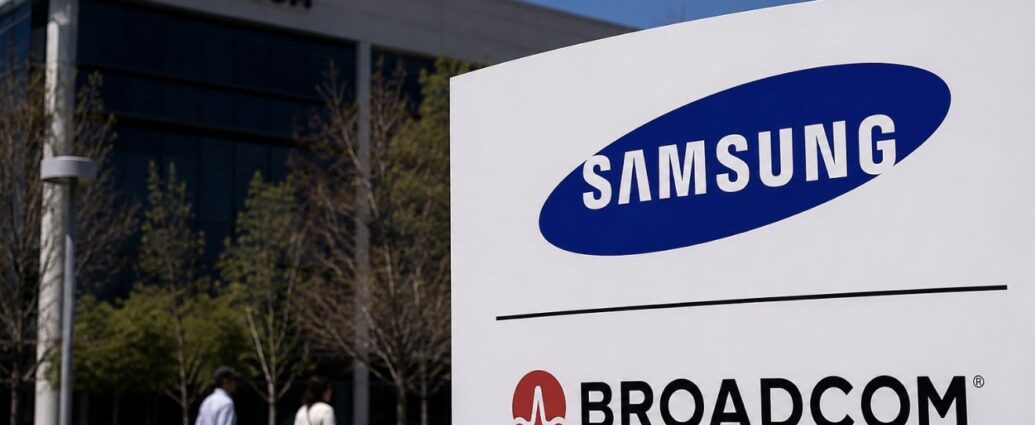
Samsung Electronics and Broadcom are expanding a long-running supplier relationship into a five-year alliance that could exceed $200 billion through 2030, bringing memory, advanced chip manufacturing and semiconductor packaging together as the race to build custom artificial-intelligence systems moves deeper into the supply chain.
Announced Saturday at an AI summit in San Francisco, the agreement calls for Samsung to provide high-bandwidth memory for Broadcom’s future AI accelerators while manufacturing additional products using processes measuring two nanometers and below. Advanced packaging will form another part of the collaboration, allowing memory and computing components to operate closer together with less power loss and heat.
Until now, much of the AI competition has centered on which company could design the fastest processor. That calculation is changing as cloud providers discover that performance depends just as heavily on memory, packaging, manufacturing capacity and the electricity required to keep the equipment running.
Broadcom has benefited from the shift toward custom chips designed around the specific workloads of large technology companies. Turning those designs into working products, however, requires access to manufacturers capable of producing increasingly complex components at scale—an opening Samsung has been investing heavily to capture.
For Samsung, the opportunity reaches across several businesses at once. Its memory division would supply one of the most valuable components inside an AI system, while its foundry operations would gain a major customer for leading-edge manufacturing technology. Packaging those parts within the same organization could also shorten production timelines and reduce Broadcom’s dependence on separate suppliers.
Power consumption may ultimately determine how quickly the partnership grows. Data centers are already competing for limited electrical capacity, making chips that can move more information without sharply increasing energy use especially valuable to operators, utilities and businesses trying to control the cost of deploying AI.
The $200 billion estimate is not a guaranteed purchase commitment. It reflects the scale Samsung and Broadcom believe the collaboration could reach if customer demand continues and future products move successfully into mass production.
Even with that uncertainty, the agreement marks a broader change in the AI market. Winning the next phase will require more than designing a powerful processor; companies will need reliable access to memory, manufacturing, packaging and power-efficient infrastructure at the same time. Samsung is betting that its ability to supply several of those pieces will move it closer to the center of the global AI buildout.
JBizNews Desk | Wall Street
© JBizNews.com All Rights Reserved. Reproduction or distribution without written permission is prohibited.




