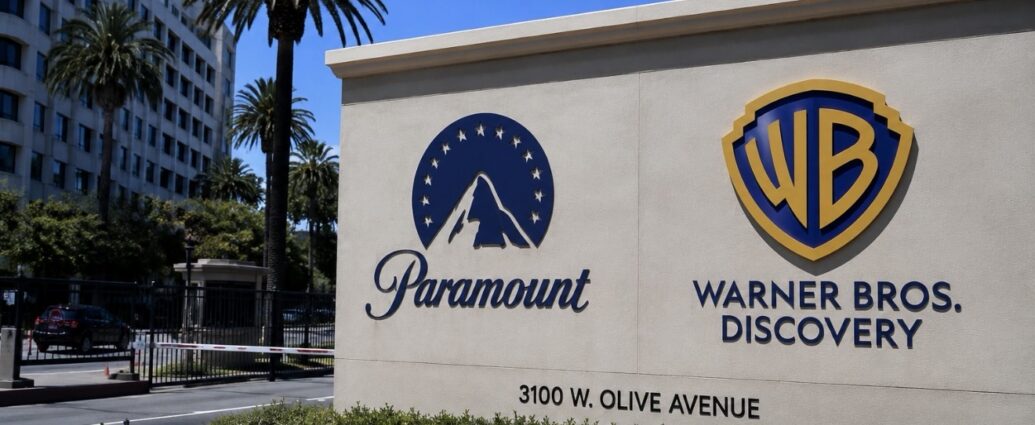
Paramount Skydance’s planned takeover of Warner Bros. Discovery is moving into a prolonged court fight after California and 11 other states sued to block the $110 billion merger, arguing that combining two of Hollywood’s five remaining major studios would give the new company too much control over films, television programming and streaming content.
Filed July 13 in federal court in Northern California, the case reaches far beyond the two studios’ movie businesses. Paramount brings CBS, Showtime, Paramount+, Nickelodeon, MTV and Comedy Central, while Warner Bros. Discovery controls HBO, CNN, TNT, TBS, Discovery and one of the industry’s largest film and television libraries.
Bringing those assets together would create a company with extraordinary influence over what theaters show, what television distributors carry, what advertisers buy and how much rival streaming services pay to license popular programs.
State attorneys general contend that the transaction would reduce competition between studios for scripts, directors, actors and production workers while giving the combined company greater leverage over theaters and distributors. Fewer major buyers for creative work could also weaken bargaining power across an industry already dealing with layoffs, shrinking cable revenue and pressure to make streaming profitable.
Paramount and Warner Bros. agreed in February to a transaction valued at roughly $110 billion, including debt. The companies have presented the combination as a way to compete more effectively with larger technology-backed streaming platforms, where scale determines how much can be spent on programming, advertising and international expansion.
That argument now faces a different calculation in court. Becoming large enough to challenge Netflix, Amazon and Apple may strengthen the combined company, but regulators must decide whether the same scale would leave filmmakers, theaters, advertisers and viewers with fewer meaningful alternatives.
Uncertainty surrounding the deal is likely to stretch well beyond the courtroom. Integration plans cannot move forward normally while the merger remains contested, leaving employees unsure which divisions may be combined, sold or eliminated. Suppliers and production partners must also make decisions without knowing whether they will eventually negotiate with two studios or one.
Debt adds another layer of pressure. Large media mergers are often justified through cost savings, yet those savings typically depend on quickly combining operations and cutting duplication. A delayed closing postpones those benefits while financing commitments, legal expenses and strategic uncertainty continue to build.
For competitors, the pause creates an opening. Rival studios and streaming services can pursue talent, licensing agreements and advertising relationships while Paramount and Warner Bros. remain focused on winning approval.
No court has yet decided whether the transaction violates antitrust law, and the states still must prove that the merger would cause the competitive harm described in their complaint. What was initially presented as a scale-building answer to Hollywood’s financial pressures has nevertheless become a broader test of how much consolidation regulators will allow before the industry’s remaining major players become too powerful to combine.
JBizNews Desk | Wall Street
© JBizNews.com All Rights Reserved. Reproduction or distribution without written permission is prohibited.