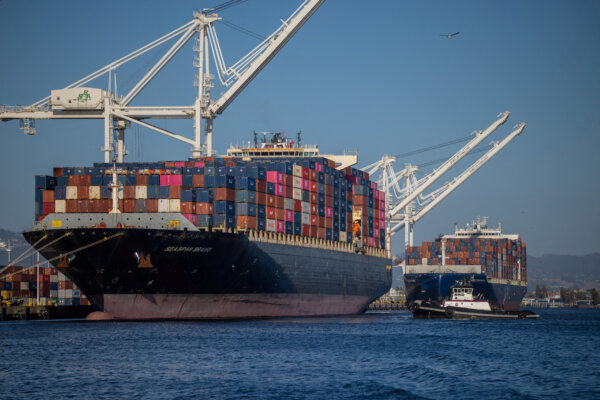
The Trump administration’s new tariffs on nearly all U.S. imports took effect at 12:01 a.m. Friday, yet Wall Street barely reacted. The Office of the U.S. Trade Representative formally implemented the long-anticipated duties after weeks of signaling the policy, leaving investors largely unfazed. For consumers and businesses, however, the biggest effects may not become visible until higher-priced goods begin reaching store shelves later this year.
That stands in sharp contrast to April 2025, when the administration’s surprise “Liberation Day” tariffs triggered a broad market selloff. The policy is similar. The reaction is not.
Investors had months to prepare for Friday’s move. The administration previewed the framework in June, and importers had been racing to adjust supply chains before the previous temporary 10% tariff expired on July 24. By the time the new duties arrived, financial markets had already priced them in.
Markets respond to surprises. Businesses pay for reality.
That difference explains why a quiet trading day should not be mistaken for a painless policy change.
Analysts say this round of tariffs enters a far different economic environment than last year’s measures. Inflation has already reaccelerated following higher energy prices tied to the Iran conflict, leaving businesses with less flexibility to absorb additional costs.
The legal foundation has also changed. Rather than relying on the authority used for the 2025 tariffs, the administration is pursuing these duties under Section 301 of the Trade Act of 1974, citing alleged forced labor practices among trading partners. Officials have indicated they intend for the new tariffs to remain in place for the long term, giving companies less reason to assume they can simply wait for them to disappear.
For importers, that changes planning decisions. Temporary tariffs can often be managed through delayed purchases or short-term sourcing adjustments. Permanent tariffs become part of every pricing calculation.
The impact reaches nearly every major supplier to the United States.
According to administration figures, the affected countries account for roughly 99.4% of U.S. imports. Most goods will face tariffs between 10% and 12.5%, depending on whether exporting countries have adopted or committed to specific labor standards.
That broad coverage is what makes this round different.
During earlier tariff disputes, companies often shifted production from one country to another to reduce costs. Manufacturers moved orders from China into Vietnam, Mexico or other lower-cost markets. This time, many of those same alternative suppliers—including Canada, Mexico, India, Indonesia, Malaysia, Bangladesh, Cambodia, Sri Lanka, the United Kingdom, Taiwan and the European Union—are also covered.
With only a narrow difference between the two tariff levels, businesses have far fewer opportunities to avoid higher import costs simply by changing suppliers.
For consumers, the effects typically arrive weeks after the headlines disappear.
Tariffs are paid when imported goods clear customs, but retailers often pass those higher costs through gradually as existing inventory is sold and new shipments arrive. That means households may not immediately notice higher prices, even though businesses begin paying the additional costs right away.
The timing is particularly difficult because transportation expenses have already been climbing as higher fuel prices work their way through shipping contracts. As freight costs and tariffs converge over the coming months, businesses could face two cost increases arriving almost simultaneously.
More trade measures are also on the horizon. The administration recently imposed 25% tariffs on most Brazilian imports, while separate 50% tariffs on many Canadian goods are scheduled to begin next month. Because those actions arise from different legal authorities, some importers could face multiple tariff regimes depending on the products they bring into the United States.
For distributors, retailers and manufacturers, that means more complicated compliance requirements alongside higher costs.
The calm response on Wall Street reflects one simple fact: investors expected Friday’s announcement. Consumers, however, experience tariffs differently. They encounter them only after higher import costs move through factories, warehouses, transportation networks and retailers before finally reaching the checkout counter.
April 2025 demonstrated how tariffs can shake financial markets overnight. July 2026 may ultimately be remembered for something different: a tariff policy that barely moved Wall Street but steadily worked its way into household budgets across America.
JBizNews Desk | New York
© JBizNews.com All Rights Reserved. Reproduction or distribution without written permission is prohibited