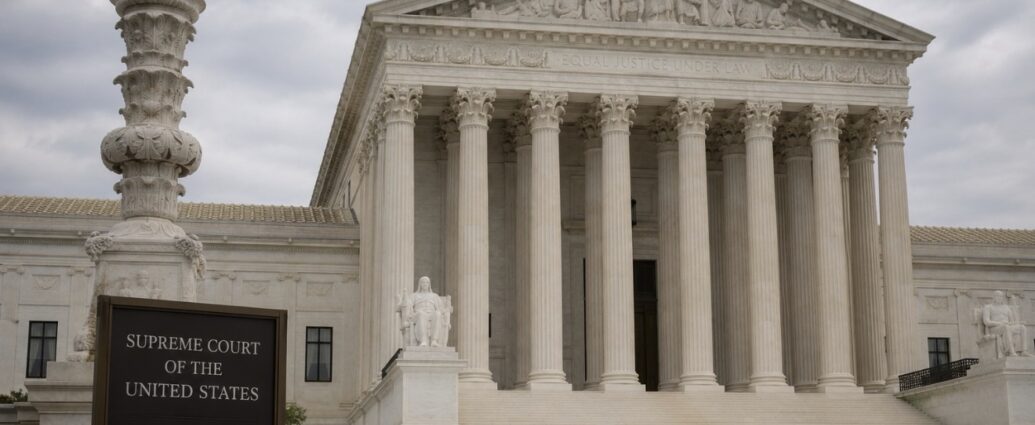
NEW YORK — The U.S. Justice Department asked the Supreme Court on Monday to revive President Donald Trump’s executive order restricting mail-in voting, launching an emergency appeal that could reshape election procedures in nearly half the country less than 100 days before voters decide control of Congress.
Solicitor General D. John Sauer requested that the justices temporarily lift a lower-court injunction while litigation continues. The challenged order is currently blocked in 23 states and the District of Columbia. The Supreme Court directed those states to respond by August 3, setting up a fast-moving legal timetable ahead of the November elections.
At the center of the dispute is who controls the rules governing federal elections.
Signed on March 31 under the title “Ensuring Citizenship Verification and Integrity in Federal Elections,” the executive order directs the Department of Homeland Security to work with the Social Security Administration to develop a citizenship verification system for voter eligibility. It also instructs the U.S. Postal Service to deliver mail ballots only to individuals appearing on that verified list.
Twenty-three states and the District of Columbia challenged the order, arguing that the Constitution gives primary authority over election administration to the states and to Congress—not the President. A federal district judge agreed and blocked key portions of the directive from taking effect.
The administration argues the injunction improperly limits the President’s authority to direct executive agencies. In Monday’s filing, Sauer told the Court that delaying implementation could interfere with election preparations because states begin voter verification and absentee ballot processing well before November. The Justice Department also emphasized that the Postal Service has not yet finalized any operational procedures under the order.
The legal battle rests on competing concerns about election integrity and voter access.
Supporters of the administration point to recent cases involving improper voting, including several hundred non-citizens identified by New Jersey officials as having participated in elections. Opponents counter that documented cases of non-citizen voting remain extremely rare compared with the total number of ballots cast and argue that existing evidence does not demonstrate fraud capable of changing election outcomes.
The citizenship verification system itself also remains a central point of disagreement. Opponents contend that federal databases can generate false matches that could mistakenly affect eligible voters, while the administration argues that stronger verification measures are necessary to improve confidence in federal elections.
Monday’s filing marks the administration’s 35th emergency application to the Supreme Court during President Trump’s current term. Supporters view the filings as necessary responses to nationwide injunctions issued by lower courts, while critics argue they reflect an unusually aggressive use of emergency appeals.
For businesses across New York, New Jersey and Connecticut, the case carries practical implications beyond election law.
If the executive order ultimately takes effect before November, employers could see increased demand for in-person voting accommodations should mail-ballot availability become more limited in affected jurisdictions. Retailers, manufacturers, logistics companies and hospitality businesses that depend on full staffing during the election period may want to review scheduling policies and applicable state voting-leave requirements before peak absentee and Election Day activity begins.
The broader policy stakes are even larger. Control of Congress will shape tax policy, federal spending, tariff legislation, regulatory priorities, SBA programs and government contracting over the next two years. Any Supreme Court ruling that changes how millions of ballots are processed could have indirect consequences for the policy environment businesses will face through 2028.
The next major milestone arrives on August 3, when the responding states must file their arguments with the Supreme Court. Given the administration’s stated goal of implementing any changes before election preparations accelerate later in August, a decision from the justices could follow quickly.
JBizNews Desk | New York
© JBizNews.com All Rights Reserved. Reproduction or distribution without written permission is prohibited.