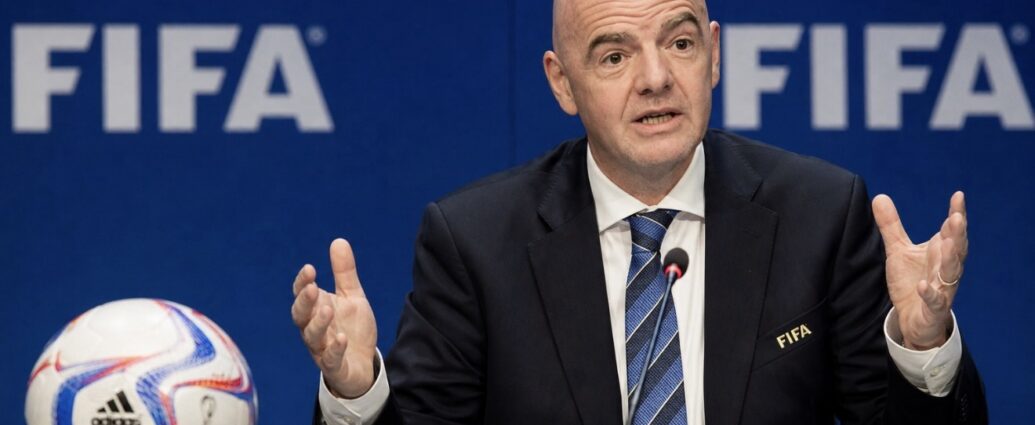
FIFA unveiled plans Tuesday to create a new commercial subsidiary valued at approximately $20 billion, opening the door for private investors to acquire minority stakes in one of the world’s most valuable sports businesses. The proposal, announced by soccer’s global governing body, would mark the first time FIFA has invited outside capital into the commercial engine that powers the FIFA World Cup and its other premier competitions.
At the center of the transaction is FIFA Forward Enterprise (FFE), a newly formed company that would house FIFA’s commercial rights and event operations. FIFA is seeking to raise up to $4.2 billion while maintaining majority ownership and complete control over the governance of international soccer.
Leading the transaction is JPMorgan, which has been retained as financial adviser, while Joshua Kushner’s Thrive Eternal is expected to serve as the lead investor. Former Liberty Media CEO Greg Maffei helped shape the proposed structure, underscoring the growing role of American financial firms in the business of global sports.
Rather than selling ownership of the sport itself, FIFA says the new company would manage the commercial side of its business, including global broadcasting rights, sponsorship agreements, ticketing, licensing, hospitality, and tournament operations for events such as the FIFA World Cup, Women’s World Cup, and Club World Cup.
FIFA stressed that investors would receive minority, non-controlling interests. The organization would continue to oversee every sporting and regulatory decision, including tournament rules, scheduling, competition formats, and governance, while retaining majority representation on the company’s board.
One of the proposal’s biggest selling points is additional funding for national soccer associations. FIFA says proceeds from the capital raise would help launch a voluntary development initiative allowing each of its 211 member federations to access up to $20 million for projects such as stadium improvements, training facilities, youth academies, and other long-term infrastructure investments.
The timing reflects the financial momentum created by the recently completed 2026 FIFA World Cup, hosted across the United States, Canada, and Mexico. FIFA reported record tournament revenues, while growing television audiences and sponsorship demand—particularly in the United States—have significantly increased the value of future broadcasting and commercial rights.
For investors, the attraction extends well beyond one tournament. Long-term ownership in FIFA’s commercial business provides exposure to recurring revenue generated by global media rights, worldwide sponsorships, licensing agreements, hospitality, and future World Cups that continue to attract billions of viewers around the globe.
Not everyone is convinced the plan serves the sport’s long-term interests. UEFA, European soccer’s governing body, quickly voiced concerns about introducing private investment into FIFA’s commercial operations, questioning the proposal’s transparency and warning that football’s global governance should not become tied to outside financial interests.
Several reports also indicate some FIFA Council members were surprised by the announcement, suggesting additional discussions and approvals will be required before the proposal can move forward. FIFA has not announced a timetable for a formal vote, and the restructuring must still receive approval from both its member associations and governing bodies.
For JPMorgan, the mandate represents one of the largest sports-finance assignments ever undertaken. For Thrive Eternal, it expands a strategy focused on acquiring long-term stakes in iconic sports and cultural assets rather than pursuing traditional private equity exits.
Businesses should pay close attention because the transaction signals a broader shift in how major sports organizations may finance future growth. As media rights become increasingly valuable and institutional investors search for stable, long-duration assets, governing bodies could look beyond sponsorships and broadcasting agreements to unlock capital while retaining operational control.
If approved, FIFA’s proposal could reshape not only the economics of international soccer but also the future relationship between global sports organizations and private capital.
JBizNews Desk | New York
© JBizNews.com All Rights Reserved. Reproduction or distribution without written permission is prohibited.