Israel’s tourism industry suffered another setback in the first half of 2026, with nationwide hotel occupancy falling to 44%, the lowest level since the October 7 war outside the immediate wartime period, as international visitors remained largely absent despite hopes for a recovery. The figures were released Tuesday by the Israel Hotel Association, underscoring the prolonged economic toll on one of the country’s largest service industries.
Rather than rebounding after last year’s slowdown, the sector faced renewed pressure following the conflict with Iran earlier this year and the temporary suspension of many international flights. Those disruptions delayed the return of overseas travelers, leaving hotels that depend on foreign tourism operating far below normal capacity.
Foreign tourists accounted for just 1.29 million overnight stays between January and June, down about 5% from the same period in 2025. While that was an improvement over the depths of 2024, it remains roughly 75% below the nearly 5 million overnight stays recorded during the first half of 2023 before the October 7 attacks.
Domestic tourism also softened. Israelis recorded approximately 7.2 million hotel overnight stays, a decline of about 9% from a year earlier. Although domestic travel has remained stronger than before the war as many Israelis vacation closer to home, it has not been enough to replace the disappearance of international visitors.
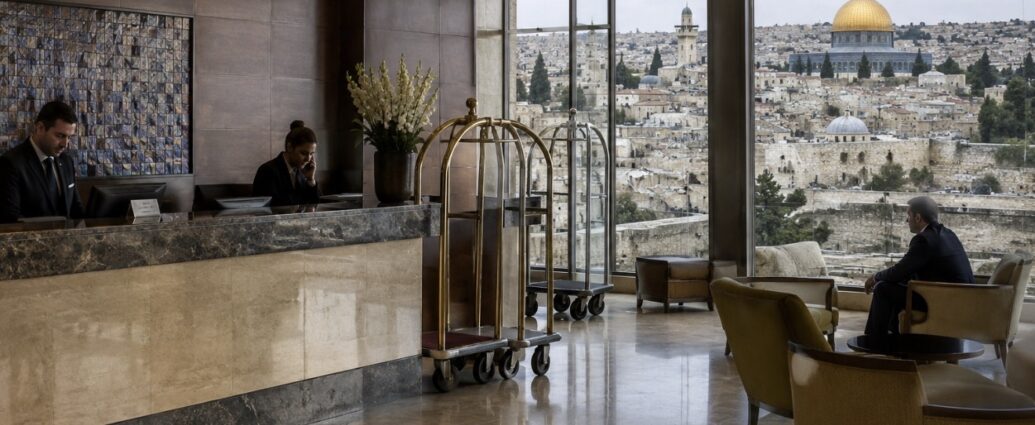
Regional performance highlighted the uneven recovery. Herzliya led the country with a 70% occupancy rate, followed by Eilat at 66% and the Dead Sea region at 48%. Jerusalem, traditionally one of Israel’s most tourism-dependent cities, averaged just 31%, while Nazareth recorded only 19%, reflecting the severe decline in pilgrimage and international group travel.
Industry leaders warned that hotels serving overseas visitors continue to face extraordinary financial pressure. The association said inbound tourism has “almost completely disappeared” since October 7 and urged the government to provide additional support to help hotels survive until international travel normalizes.
For Israel’s broader economy, the tourism slowdown extends well beyond hotels. Airlines, restaurants, tour operators, retailers, transportation companies and thousands of small businesses depend heavily on foreign visitors. A sustained recovery will likely require not only improved security conditions but also the restoration of airline capacity and traveler confidence.
JBizNews Desk | Jerusalem
© JBizNews.com All Rights Reserved. Reproduction or distribution without written permission is prohibited.