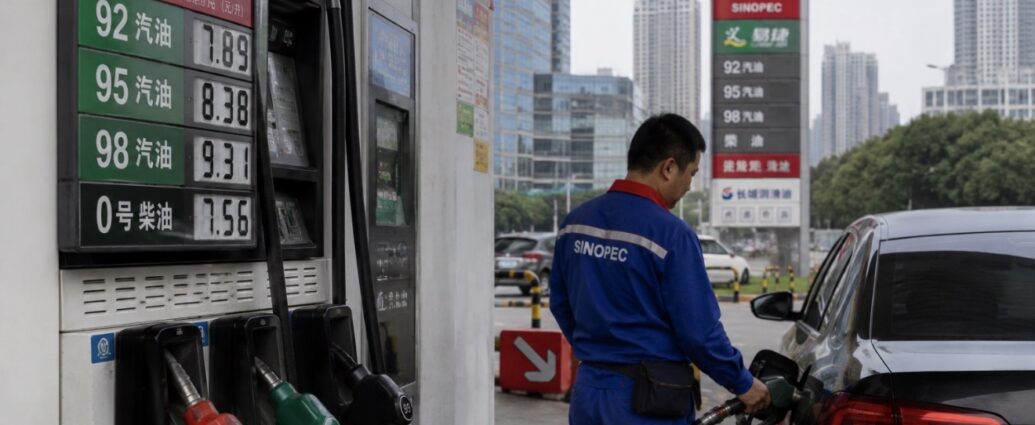
China will raise regulated gasoline and diesel prices for the second time in two weeks beginning Saturday, passing more of the global oil-market shock directly to drivers, trucking companies and businesses that depend on road transportation.
The National Development and Reform Commission said gasoline price ceilings will increase by 685 yuan per metric ton, while diesel ceilings will rise by 655 yuan. The adjustment takes effect at midnight on August 1 and reflects the recent increase in international crude-oil prices.
For motorists, the national per-ton increase will be converted into new retail price ceilings that vary by province and fuel grade. Individual gas stations may charge less than the maximum, but the government’s decision gives retailers permission to raise pump prices across the country.
The move comes just two weeks after China increased gasoline prices by 300 yuan per ton and diesel prices by 290 yuan. Together, the two July adjustments represent a sharp reversal from the large fuel-price reduction implemented at the beginning of the month.
China regulates retail fuel prices through a system that reviews international crude-oil movements every 10 working days. When global prices change enough to trigger an adjustment, the government revises maximum domestic gasoline and diesel prices rather than allowing stations to respond independently each day.
That system can temporarily delay the impact of global oil volatility, but it does not fully insulate consumers. Sustained increases in international crude eventually reach households through higher driving costs and reach businesses through the price of transporting goods.
Renewed fighting involving Iran and the United States, combined with continuing restrictions on shipping through the Strait of Hormuz, has driven oil prices higher and made energy markets more volatile. The strait is one of the world’s most important routes for crude oil and petroleum products, leaving Asian importers particularly exposed when traffic is interrupted.
China is the world’s largest crude-oil importer. Although the country buys oil from a wide range of suppliers and maintains strategic reserves, a prolonged disruption raises the cost of replenishing supplies and increases pressure on domestic refiners.
Gasoline prices directly affect families commuting by car or traveling during the summer holiday period. Even modest per-liter increases can become significant for households filling several tanks each month, particularly outside major cities where public transportation may be limited.
Diesel carries a broader inflation risk because it is widely used by trucks, construction equipment, farms and industrial machinery. When diesel becomes more expensive, businesses can face higher costs moving food, packages, raw materials and manufactured products across the country.
Those transportation expenses may eventually appear in consumer prices. Retailers and manufacturers do not always raise prices immediately, but persistent fuel increases can narrow profit margins and make delivery surcharges or product-price adjustments more likely.
Demand has already shown signs of weakening under elevated energy costs. Gasoline consumption declined during the peak summer travel period compared with a year earlier, while diesel use remained restrained by slower construction activity, heavy rain and extreme heat in several regions.
Lower consumption may limit how much fuel retailers can charge below government ceilings. Stations competing in areas with weak demand sometimes offer discounts, but operators face less room to do so when their wholesale acquisition costs rise rapidly.
Electric-vehicle owners are largely shielded from direct gasoline increases, strengthening the operating-cost advantage of battery-powered cars. China already leads the world in electric-vehicle adoption, and another period of high fuel prices could reinforce consumer interest in vehicles that depend less on imported oil.
Electricity prices, however, are also influenced by broader energy costs, and charging expenses can vary substantially by location and time of day. Drivers comparing vehicles must still consider purchase price, insurance, battery range, charging availability and resale value rather than fuel savings alone.
The government has previously intervened when its normal pricing formula would have produced unusually large increases. In March, regulators limited the amount of a fuel-price adjustment to reduce the immediate burden on consumers and businesses after the Middle East conflict intensified.
Friday’s announcement did not include a similar extraordinary cap. That suggests officials are allowing more of the current international increase to flow through the domestic pricing system, even as policymakers attempt to support household spending and stabilize economic growth.
Chinese refiners may benefit from higher regulated selling prices, though the effect depends on the cost of crude oil and the profitability of converting it into gasoline and diesel. A price increase at the pump does not necessarily mean refiners are earning more if their raw-material costs are rising even faster.
The adjustment also has implications beyond China. As the country manages domestic demand, refinery production and fuel exports, its decisions can influence gasoline and diesel supplies elsewhere in Asia and the global market.
Consumers will now watch whether international oil prices stabilize before the next 10-working-day review. Continued disruption in the Middle East could produce another increase, while a meaningful decline in crude would allow the government to begin reversing the latest rise.
For households and businesses, the immediate message is clearer: the global energy crisis is no longer confined to financial markets or shipping lanes. It is again reaching the price of an ordinary tank of fuel and the cost of moving everyday goods.
JBizNews Desk | Beijing, China
© JBizNews.com All Rights Reserved. Reproduction or distribution without written permission is prohibited.