Dexcom raised its full-year sales outlook after demand for continuous glucose monitors continued expanding among people seeking a simpler alternative to repeated finger-prick testing.
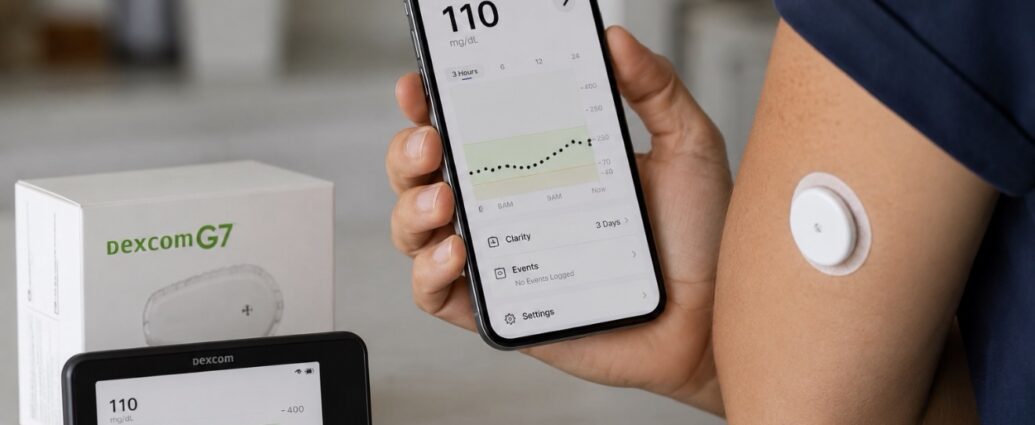
Continuous glucose monitors use a small wearable sensor to measure glucose levels throughout the day and send readings to a smartphone, receiver or compatible insulin device. Unlike traditional testing, users do not need to puncture a fingertip each time they want a reading.
That convenience is helping CGMs move from a specialized product for insulin-dependent patients toward a more common tool across diabetes care. Rising awareness, broader insurance coverage and new devices aimed at people who do not use insulin are expanding the number of potential users.
Dexcom now expects 2026 revenue of $5.18 billion to $5.25 billion, lifting the low end from its previous range of $5.16 billion to $5.25 billion. The revised outlook represents anticipated growth of approximately 11% to 13% from 2025.
For consumers, stronger demand can create a mixed outcome. Higher sales may support more production, wider pharmacy availability and continued investment in smaller or longer-lasting sensors, but it does not guarantee lower out-of-pocket prices.
Insurance coverage remains one of the biggest factors determining access. Some plans cover continuous monitors broadly for people using insulin, while requirements can be stricter for patients with Type 2 diabetes who manage their condition through medication, diet or exercise.
Coverage rules have gradually expanded as research has shown that real-time glucose information can help patients understand how meals, activity, stress and medication affect their blood sugar. Seeing those changes immediately can make the information easier to act on than a small number of isolated finger-stick readings.
Dexcom has been targeting that larger population through Stelo, its over-the-counter glucose sensor designed for adults who do not use insulin. Because it can be purchased without a prescription, Stelo gives consumers another path to glucose monitoring outside the traditional insurance and physician-approval process.
That broader access also shifts more of the cost directly to consumers. Over-the-counter availability can remove prescription barriers, but buyers may still need to pay the full retail price if their insurance plan does not cover the device.
A redesigned Stelo app introduced this year uses artificial intelligence to help users identify patterns in their glucose readings. The company is positioning those insights as a way to make large amounts of health data more understandable rather than leaving consumers to interpret every spike and decline on their own.
Such features could make glucose monitors more useful for people who are new to the technology, though automated insights do not replace medical advice. Users still need to understand the device’s instructions, limitations and safety warnings before making treatment decisions.
Competition is intensifying as Dexcom, Abbott Laboratories and Medtronic seek a larger share of the growing market. Rivalry could encourage longer sensor life, simpler insertion, better smartphone integration and lower manufacturing costs.
Price competition has been slower because reimbursement systems differ by insurer, pharmacy benefit manager and country. Consumers can face sharply different costs for the same device depending on their health plan, deductible and eligibility requirements.
Dexcom’s G7 platform remains central to its growth. The wearable sensor provides readings without routine finger-stick calibration and is designed to connect with compatible smartphones and diabetes-management systems.
Longer-lasting sensors are becoming particularly important because each replacement creates additional cost and inconvenience. Extending wear time can reduce the number of sensors a patient needs annually, although total savings depend on how manufacturers and insurers price the product.
Profitability also improved during the quarter. Dexcom reported net income of $249.1 million, up from $179.8 million a year earlier, while adjusted earnings reached 70 cents per share.
Higher margins give the company more room to fund manufacturing expansion, product development and clinical studies. Dexcom ended June with approximately $1.95 billion in cash, cash equivalents and marketable securities.
The company is also studying whether continuous monitoring can benefit people with Type 2 diabetes who do not take insulin. Positive results could influence physicians, insurers and government programs deciding how broadly the devices should be covered.
That reimbursement decision may ultimately matter more to consumers than quarterly sales growth. A monitor that is available but unaffordable offers limited value, particularly for patients already paying for medications, physician visits and other diabetes supplies.
Employers and health plans are also watching whether expanded CGM use lowers long-term medical spending by helping users avoid emergency treatment, hospitalization and complications associated with poorly controlled blood sugar.
Proving those savings could accelerate coverage. Without strong evidence, insurers may continue restricting access to patients considered at highest medical risk.
The next major consumer test will be whether rising competition and production scale begin reducing the cost of continuous monitoring. Until then, Dexcom’s higher forecast shows that demand is growing faster than the system’s ability to make the technology equally affordable for every patient who could benefit.
JBizNews Desk | San Diego, California
© JBizNews.com All Rights Reserved. Reproduction or distribution without written permission is prohibited.