By Julia Parker – JBizNews Desk
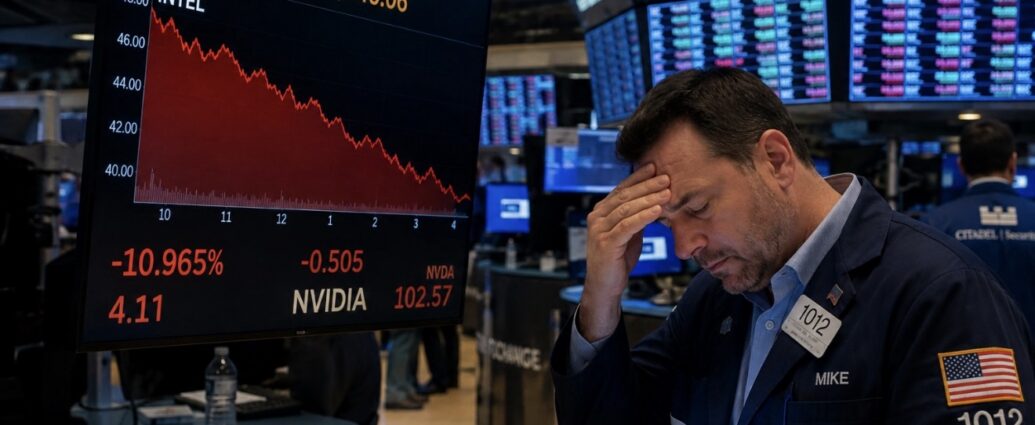
NEW YORK — Semiconductor stocks suffered their steepest monthly decline since the global financial crisis, with the Philadelphia Stock Exchange Semiconductor Index tumbling 21% in July as investors pulled back from one of Wall Street’s most crowded artificial-intelligence trades. The reversal hit chipmakers, technology funds and broader equity benchmarks, underscoring how dependent market gains have become on expectations for AI spending.
The drop in the SOX index was its worst month since October 2008 and marked a sharp break from the momentum that had made chip shares a preferred bet for hedge funds, growth managers and retail investors. The selloff swept across companies tied to data centers, memory, networking equipment and advanced processors, including Nvidia Corp., Advanced Micro Devices Inc., Broadcom Inc., Intel Corp. and Micron Technology Inc.
The decline matters beyond the chip sector. Semiconductor shares have carried a large share of the market’s gains as investors priced in years of heavy spending on AI infrastructure by cloud-computing companies and corporate customers. When the group weakens, it can pressure exchange-traded funds, retirement portfolios and the valuations of companies whose growth stories depend on AI adoption.
The July rout reflected a shift from enthusiasm about long-term AI demand to concern over near-term execution, pricing and returns on investment. Investors have been questioning whether the largest technology companies can keep expanding capital spending at the current pace without compressing margins or delaying shareholder returns.
That marks a change from the tone earlier this year, when executives framed AI infrastructure as a multiyear investment cycle. “The next industrial revolution has begun,” said Jensen Huang, Nvidia’s chief executive, in a company earnings release in May, describing demand for accelerated computing and AI data centers.
The market is now testing how much of that growth is already reflected in share prices. Chipmakers entered the summer with elevated valuations, leaving them vulnerable to any sign of slower orders, tighter export rules, softer pricing or a less aggressive data-center buildout by major customers.
For business owners and corporate technology buyers, the selloff does not immediately mean lower chip prices or weaker AI demand. Supply remains tight in parts of the market tied to advanced graphics processors and high-bandwidth memory. But falling equity values can affect supplier financing, acquisition activity and the appetite of venture-backed AI companies to expand payrolls or commit to long-term infrastructure contracts.
The reversal also raises the stakes for upcoming earnings reports. Investors will be watching management commentary on order backlogs, gross margins, customer concentration and capital spending plans. Companies that can show firm demand and disciplined costs may be rewarded, while those with uncertain visibility could face sharper scrutiny.
The semiconductor sector has long been cyclical, but the latest decline is notable because it came after investors treated AI-related chip demand as more durable than past hardware cycles. July’s losses suggest markets are no longer willing to pay almost any price for AI exposure without clearer evidence that spending is translating into revenue and profits across the technology supply chain.
The pressure on chip stocks may also influence broader market sentiment in August. With semiconductor companies embedded in major indexes and widely held ETFs, continued volatility could affect risk appetite across growth stocks, cloud software and hardware suppliers.
JBizNews Desk | New York
© JBizNews.com All Rights Reserved. Reproduction or distribution without written permission is prohibited.