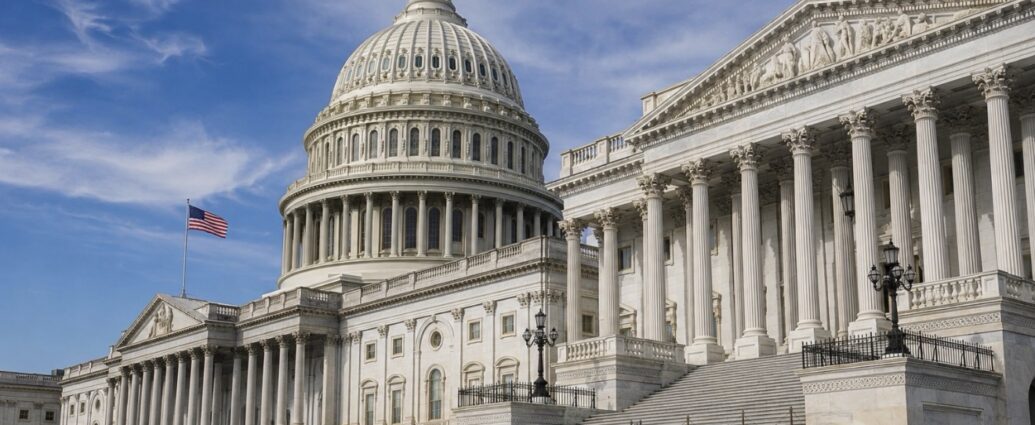
The Senate returns Monday with just five working days remaining before its August recess, and the Digital Asset Market Clarity Act still has no scheduled floor vote. For XRP, that countdown matters more than for almost any other major cryptocurrency because the legislation would permanently establish in federal law the token’s regulatory status.
The Senate begins its state work period on August 10. While lawmakers could still consider the bill after returning in September, appropriations battles and the election calendar leave little floor time, making early August the practical window for action. H.R. 3633 has already passed the House, cleared the Senate Banking Committee and been placed on the Senate Legislative Calendar as General Orders Calendar No. 423, making it eligible for floor consideration without another committee vote. No cloture motion has been filed.
Senate Majority Leader John Thune indicated in late July that the chamber would likely miss its preferred timetable, with a bipartisan Russia sanctions and tariff package taking priority. Congressional negotiators and industry groups had viewed August 7 as the last realistic opportunity to advance the legislation before the legislative calendar becomes significantly more crowded.
The biggest hurdle remains vote counting. The bill requires 60 votes to overcome a filibuster, meaning at least seven Democrats would need to join a unified Republican conference. Committee support suggests only two Democrats are currently committed. Those senators conditioned their support on ethics provisions prohibiting senior government officials, including the president, from maintaining financial ties to cryptocurrency businesses. Senate Republicans responded by releasing a revised draft on July 22 that merged the Banking and Agriculture Committee proposals while incorporating ethics language negotiated with the White House.
For XRP holders, the issue is less about whether the token is legal today than whether that status becomes permanent. XRP is already treated in the United States as a digital commodity following a federal court ruling and a joint SEC-CFTC interpretive release issued on March 17, 2026, classifying XRP alongside Bitcoin, Ether and Solana. An interpretive release, however, is not statutory law and can be reversed by a future administration. The CLARITY Act would codify that classification, providing regulatory certainty that many banks, custodians and institutional asset managers have said they need before expanding participation.
Ripple’s legal battle with the SEC formally concluded in August 2025 when both sides withdrew their appeals and the company agreed to a $125 million settlement—far below the SEC’s original $2 billion demand. Spot XRP exchange-traded funds followed in November 2025, with products from Grayscale, Franklin Templeton, Bitwise, 21Shares and Canary Capital collectively attracting roughly $1.44 billion in assets.
Those milestones have not translated into sustained price appreciation. XRP has traded largely between $1.30 and $1.50 despite resolving its SEC litigation, receiving a joint federal commodity classification and launching multiple ETFs. Ripple has continued signing institutional partnerships, but broader adoption of Ripple’s technology has not automatically created corresponding demand for XRP itself.
Forecasts remain divided. Standard Chartered analyst Geoffrey Kendrick has maintained a 2026 price target of $8 and estimated that statutory clarity could attract between $4 billion and $8 billion of ETF inflows. A more cautious interpretation is that the legislation removes a regulatory barrier rather than guarantees new investment. The bill would eliminate legal uncertainty but would not, by itself, determine whether financial institutions ultimately increase their use of XRP.
The legislation reaches far beyond one token. As of late July, the cryptocurrency market was valued at roughly $2.28 trillion, including approximately $1.29 trillion in Bitcoin and $305 billion in stablecoins. That leaves nearly $680 billion in digital assets whose regulatory treatment under securities or commodities law could be shaped by the CLARITY Act, along with the compliance framework governing exchanges, brokers, market makers and other participants. Payment stablecoins are already regulated under the GENIUS Act, which took effect in July 2025. The CLARITY Act addresses much of the remaining digital asset market.
Industry executives argue that regulatory certainty remains one of the largest obstacles to institutional adoption. Kristin Smith of the Solana Policy Institute has said many asset allocators continue evaluating digital assets but are delaying major commitments until Congress establishes a permanent framework. Galaxy Research estimates the bill’s chances of passing in 2026 at roughly even, while prediction markets have reduced the probability from about 74% a month earlier to approximately 48%.
Even if the Senate approves the legislation this week, additional House action would still be required before it reaches the president’s desk. With Congress returning for only a brief September session before campaign season dominates the calendar, the next five Senate working days may determine whether years of crypto market structure negotiations finally become law—or slip into another legislative cycle.
JBizNews Desk | Washington
© JBizNews.com All Rights Reserved. Reproduction or distribution without written permission is prohibited.