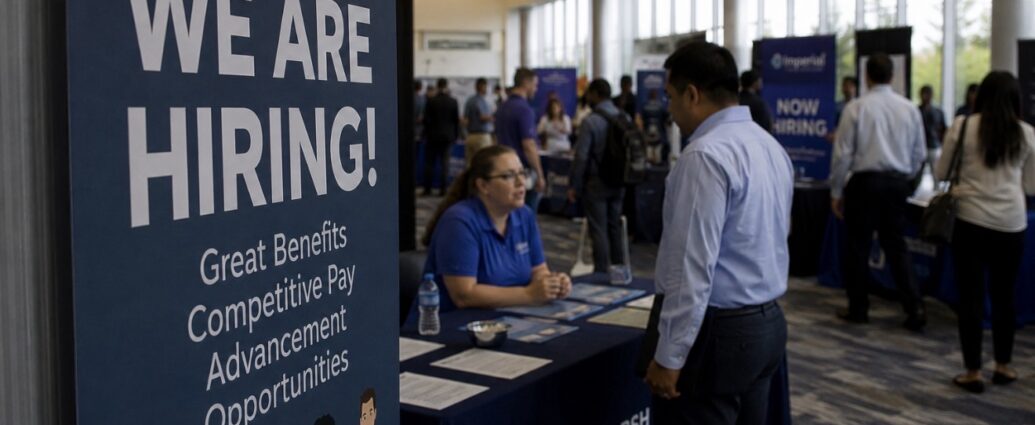
U.S. employers pulled back on new job postings in June while increasing hiring and keeping layoffs near historic lows, giving businesses a less competitive labor market without the loss of income and consumer spending that accompanies widespread job cuts.
Openings fell by 178,000 to 7.36 million, the Labor Department reported Tuesday, led by a 147,000 decline in healthcare and social assistance. Hiring moved in the opposite direction, rising by 96,000 to 5.35 million, while layoffs and discharges held at roughly 1.77 million.
The combination shows that companies are eliminating positions they no longer expect to fill rather than retreating from staffing altogether. Employers remain willing to hire for necessary roles, but the days of posting vacancies broadly and competing aggressively for available workers are continuing to fade.
That shift strengthens the position of business owners who have spent years dealing with wage pressure, turnover and persistent vacancies. A larger pool of applicants and fewer competing openings can reduce recruitment costs and make it easier to retain workers without repeated raises or signing incentives.
The weakness was concentrated rather than economywide. Openings increased in transportation, warehousing and utilities, while construction and durable-goods manufacturing recorded stronger hiring rates. Those gains suggest that infrastructure, factory and data-center investment is still supporting labor demand even as service-sector employers become more cautious.
Workers are feeling the change differently. Jobs remain relatively secure for those already employed, but fewer openings make it harder to switch companies, negotiate higher pay or quickly replace lost work. Quits remained near 3.2 million, well below the elevated levels reached when employees had greater confidence that another job was waiting.
For the Federal Reserve, the report offers no clear reason to rescue the labor market. Hiring remains intact and layoffs are restrained, but reduced demand for workers could gradually limit wage growth and help ease service inflation.
The next test comes Friday with the July employment report. The issue is no longer whether employers are posting fewer jobs; it is whether that caution is beginning to slow payroll growth enough to weaken consumer spending.
JBizNews Desk | Wall Street
© JBizNews.com All Rights Reserved.
Reproduction or distribution without written permission is prohibited.