The Federal Communications Commission said Thursday that its expanding restrictions on Chinese-made robots, power inverters, drones and routers are intended not only to address national-security risks but also to encourage more of the technology to be produced inside the United States.
FCC Chairman Brendan Carr said the agency is trying to reduce American dependence on equipment that could give foreign adversaries access to communications networks, critical infrastructure or industrial systems. Since December, the FCC has progressively blocked new models of several categories of foreign-produced equipment from receiving the authorizations they need to enter the U.S. market unless they receive a government waiver.
The latest expansion reaches beyond familiar telecom hardware.
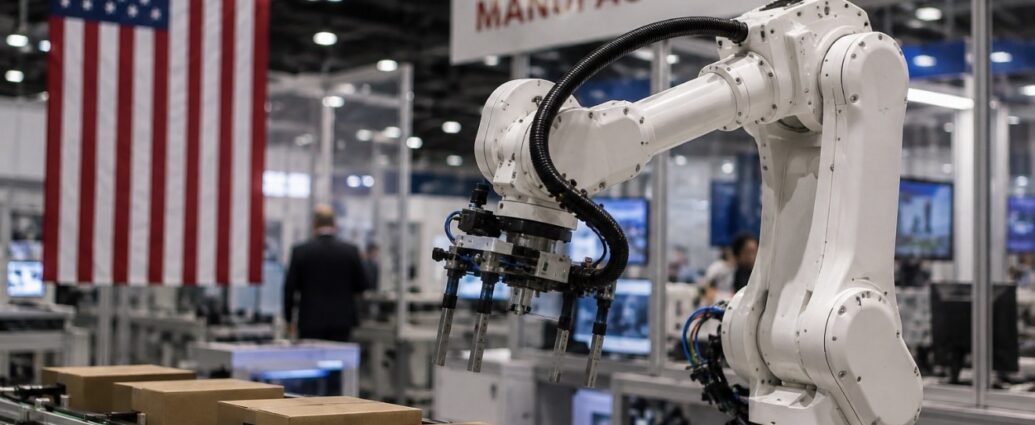
Last month, the FCC added certain foreign-produced mobile ground robots — including connected humanoid and quadruped machines — and grid-connected power inverters to its Covered List. Power inverters are the electronic systems that convert electricity from solar panels, batteries and other sources into power usable by the electric grid.
The business significance is that Washington is beginning to treat robotics and energy hardware the way it previously treated strategic telecom equipment: supply-chain origin itself is becoming a competitive factor.
For Chinese manufacturers, the restriction effectively closes the door to introducing many new covered products into the U.S. unless they qualify for an exemption. For American and allied manufacturers, it can remove some of the lowest-cost foreign competition from a market expected to grow rapidly as warehouses, factories, data centers and utilities automate.
The policy could also accelerate investment in U.S. production.
If companies want reliable access to the American market, manufacturing and supply-chain decisions that once centered largely on cost may increasingly be influenced by whether regulators consider the equipment domestically produced or sufficiently insulated from foreign-security concerns.
The tradeoff is higher near-term costs. Chinese manufacturers have become major suppliers of inexpensive robots, electronics and energy equipment, meaning restrictions can reduce purchasing choices for U.S. companies before domestic alternatives reach comparable scale.
Democratic FCC Commissioner Anna Gomez has supported the security objective while criticizing the rollout as insufficiently transparent, warning that poorly defined restrictions risk looking more like industrial policy than narrowly targeted national-security regulation.
The direction, however, is becoming increasingly clear: Washington is using access to the U.S. technology market as leverage to reshape where strategically important hardware is built.
JBizNews Desk | Washington
© JBizNews.com All Rights Reserved. Reproduction or distribution without written permission is prohibited.