
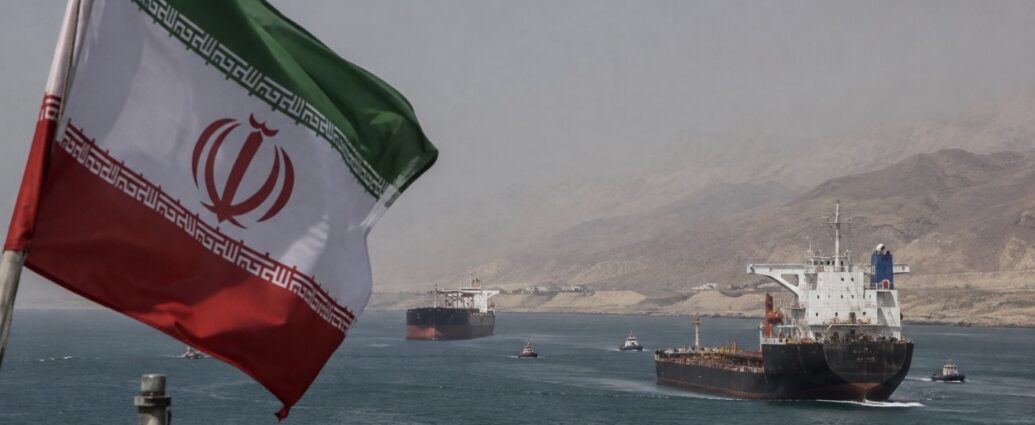
The Gulf’s biggest oil and gas exporters are confronting an arrangement they spent months trying to avoid: reopening the Strait of Hormuz under a system that would give Iran control over ships entering the Persian Gulf — while Tehran separately moves to prohibit U.S.- and Israeli-linked vessels from passing through.
That distinction is critical. Gulf governments have not publicly endorsed an Iranian ban on American or Israeli shipping. But they are increasingly willing to negotiate around a framework that gives Tehran a formal role in managing traffic because the alternative — continued closure, attacks on energy infrastructure and potentially another round of war — could cost them considerably more.
The framework taking shape between Iran and Oman would establish a temporary traffic system for 60 days, with the possibility of an extension. Under the proposal reported by Reuters, inbound vessels would enter the Persian Gulf through a northern lane in Iranian territorial waters, while outbound vessels would use a southern lane in Omani waters. Iran and Oman would oversee traffic through their respective sides.
That changes the practical balance in Hormuz.
Before the war, commercial shipping moved through an internationally recognized transit system in one of the world’s most important energy corridors. Under the emerging arrangement, vessels entering the Gulf would be routed through Iranian waters, placing Tehran in a powerful position over inbound traffic.
And Iran is making clear how it wants to use that leverage.
Iranian lawmakers are considering legislation that would prohibit vessels belonging to the United States, Israel and other countries Tehran considers hostile from transiting the strait. The proposed restrictions would also cover Israeli-linked cargo and could impose substantial financial penalties for violations.
That does not mean the Oman-Iran agreement itself automatically gives Iran internationally recognized authority to exclude American or Israeli ships. The parliamentary proposal and the Oman negotiations are separate tracks.
But put together, they reveal what Tehran wants the postwar order in Hormuz to look like: commercial traffic resumes, Iran gains a formal role in managing passage, and Tehran retains the ability to discriminate against countries it considers enemies.
That is precisely why the emerging arrangement is so consequential.
Iran has already demonstrated during the conflict that it can discriminate between ships in practice. Some vessels associated with countries Tehran considers non-hostile have been permitted through, while vessels perceived as linked to the United States or Israel have faced the greatest restrictions and security risks.
The Gulf states therefore face an uncomfortable choice.
Saudi Arabia, the United Arab Emirates, Qatar, Kuwait and Bahrain depend heavily on secure access through Hormuz for energy exports, imports and basic commercial traffic. They would prefer the old system of unrestricted navigation. But months of military pressure have not removed Iran’s ability to threaten shipping through missiles, drones, mines and other weapons.
The result is a compromise Gulf governments may dislike but increasingly have reason to tolerate: get commercial traffic moving again even if the mechanism leaves Iran with substantially more influence over the strait.
The toll issue adds another layer.
Iran has pushed proposals under which commercial vessels could eventually be charged for passage. The temporary Oman framework reportedly would not impose tolls, but that only postpones the larger dispute. If Tehran’s role over the northern lane survives into a permanent arrangement, Iran would already possess the enforcement mechanism necessary to impose future conditions on traffic.
For Washington, that is a very different outcome from restoring freedom of navigation.
For Israel, the implications are even more direct. If Iran succeeds in turning its proposed restrictions into an enforceable part of the postwar reality, Israeli-linked vessels could find themselves formally excluded from a waterway through which a major share of global energy trade passes.
And for the Gulf states, accepting the broader framework would create an awkward contradiction: countries that rely heavily on American security guarantees would be conducting their commerce through a system in which Iran seeks the right to decide that American vessels cannot enter.
The Gulf governments have not said they accept that condition.
But their willingness to continue negotiating around an Iranian-controlled inbound lane shows how dramatically their calculations have shifted.
The alternative remains expensive. Gulf energy infrastructure has been exposed to Iranian retaliation, shipping insurance costs have surged, crude exports have been disrupted and alternative routes cannot fully replace Hormuz.
Saudi Arabia can push additional crude west through its East-West pipeline to the Red Sea, while the UAE can move barrels through its pipeline to Fujairah on the Gulf of Oman. Those routes reduce dependence on Hormuz but cannot eliminate it.
So the Gulf’s calculation is increasingly pragmatic: reopening under imperfect terms may be preferable to keeping the strait closed while waiting for Iran to surrender control it has demonstrated it can enforce militarily.
That does not make the Gulf states comfortable with Iranian control. It means they may be learning to live with it.
And that is the real new reality in Hormuz: Iran is no longer simply threatening to close the strait. It is trying to establish the rules for who gets to use it — including potentially saying no to American and Israeli ships.
Whether Washington will accept a reopening on those terms remains the biggest unresolved question.
JBizNews Desk | New York
© JBizNews.com All Rights Reserved. Reproduction or distribution without written permission is prohibited.




