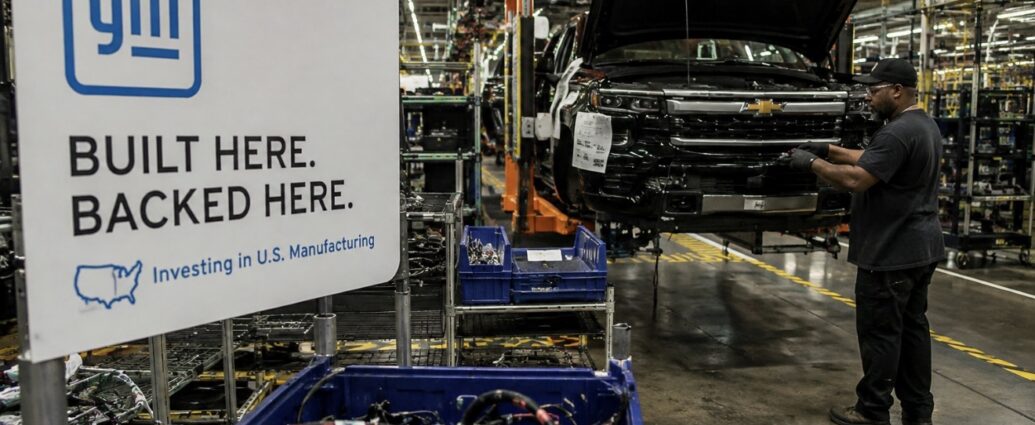
General Motors has arranged for someone else to buy its parts before it needs them. In a securities filing made public Tuesday, the automaker disclosed a purchasing agreement worth up to $4.5 billion with a firm called Procura Auto Parts, which specializes in sourcing rare or critical components. Procura is funded by a bank syndicate led by JPMorgan Chase and Banco Santander, and it will pay select suppliers upfront on General Motors’ behalf. In exchange, General Motors issues formal payment undertakings to repay Procura once it pulls those parts into production, with a final backstop date of July 31, 2029.
The practical effect is straightforward. Components that General Motors is worried about — the ones with one supplier, long lead times, or a fragile source country — get bought and paid for now, before a disruption hits, without General Motors laying out the cash or carrying the inventory on its own balance sheet. The parts sit reserved. The company draws them down as needed and settles up afterward.
That convenience is not free. General Motors pays interest, an agreed premium on the parts it actually uses, and a customary annual fee on whatever portion of the facility sits unused during the year. On the accounting side, the prepayments register as an asset, each purchase is booked as unsecured debt, and the cash flows are presented as though the company had paid its suppliers directly. In plain terms, this is a financing arrangement wearing a procurement label — General Motors is renting balance-sheet capacity from a bank syndicate to hold physical parts.
The agreement with Procura and the banks was put in place Friday.
The timing is not accidental. The automotive supply chain has been through a punishing stretch. General Motors held an urgent call with suppliers earlier this year over its exposure to the bankruptcy of First Brands Group, a manufacturer whose product range covers brakes and brake parts, towing equipment, lubricants, filtration, spark plugs, and fuel and water pumps. A fire at an aluminum plant in New York — the largest domestic source of automotive-grade aluminum — created problems for Ford and Jeep, and semiconductor supply has remained uneven. Layered on top is tariff policy. The deal follows a broad reevaluation of sourcing by General Motors and its rivals in response to U.S. tariffs and a deliberate push away from Chinese suppliers.
Every one of those events shares a pattern: a single point of failure that stops an assembly line, and once a line stops, the lost trucks and SUVs are the most profitable vehicles the company builds. The chip shortage earlier this decade left General Motors holding tens of thousands of nearly finished vehicles waiting on components. Prepaying to secure inventory ahead of a shortage is expensive insurance, but the cost of the alternative has already been demonstrated.
This is one piece of a larger repositioning. General Motors expects to spend $9 billion on U.S. manufacturing this year and is lining up an additional $1 billion to $1.5 billion to support onshore production in 2027, which Chief Executive Mary Barra has said will bring domestic capacity to 2 million units and cut the company’s tariff exposure. The company most recently committed $275 million to expand truck production and build a future Cadillac model at its Spring Hill plant in Tennessee. On memory chips, executives have pointed to supplier relationships with Micron and Samsung dating to 2022, with General Motors working to align on next-generation memory technology ahead of a new vehicle computing architecture due in 2028.
Investors will watch two things. The first is whether the debt treatment draws scrutiny — the structure keeps inventory off the books while creating unsecured obligations, and analysts will want the disclosure of how much of the $4.5 billion is actually drawn at any point. The second is cost. Interest plus premium plus standby fees on an unused facility is a real drag on a business already absorbing tariff expense, and the payoff only materializes if a shortage that would have idled plants gets averted.
The fix General Motors has chosen accepts a known cost today to eliminate an unknown one later. Rather than waiting to discover which part goes missing next, the company is paying banks to place the bets in advance and hold the goods until the line calls for them. Whether that proves cheap or expensive depends entirely on how the next three years of supply chains behave.
JBizNews Desk | Detroit
© JBizNews.com All Rights Reserved. Reproduction or distribution without written permission is prohibited.