Since the 21st Century ROAD to Housing Act became law on July 11, the conversation about removing the permanent chassis requirement for manufactured homes has shifted. Before it was all about advocacy. Now, it’s all about the realities of implementation and execution risk.
On earnings calls since the bill’s passage, executives at Cavco Industries and Champion Homes, two of the largest publicly traded manufactured housing builders in the United States, discussed the potential impact they believe the change could have on the industry and the affordable housing supply.
While much of the reporting on the chassis removal has focused on potential cost savings, Cavco Industries’ and Champion Homes’ business leaders view greater design flexibility and broader access to urban and infill markets as the bigger opportunity.
However, while removing the permanent chassis could unlock a new growth era for manufactured housing, both operators view the change as a long-term opportunity that will likely take 12 months or more to translate into operational and business results, rather than a quick business boon.
Broadly, expanding access to manufactured housing could provide a meaningful source of attainable housing for Americans struggling to afford homeownership or rent, particularly in high-cost markets. A Harvard Joint Center for Housing Studies report, for example, estimates that CrossMod homes cost 27% less than comparable site-built homes, while double-section and single-section homes cost 40% and 65% less, respectively.
The opportunity for product innovation and expanded reach
According to the Niskanen Center, eliminating the permanent steel chassis requirement will reduce manufactured home construction costs by $5,000 to $10,000 per home. These widely reported savings make for good headlines, but executives from Cavco Industries and Champion Homes both indicated that it is misleading.
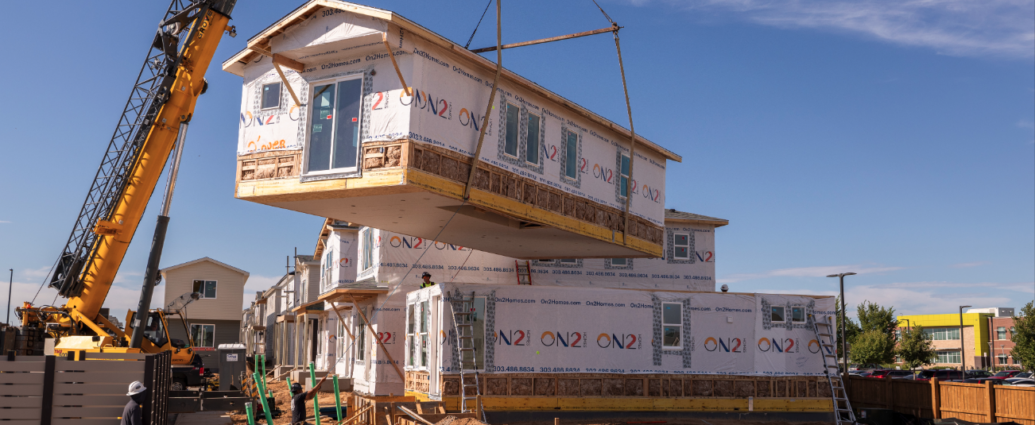
Cavco Industries CEO William Boor, during a Q1 2027 earnings call on July 31, noted that savings from eliminating the permanent steel chassis will be partly offset by the need for additional structural materials, such as wood. Boor also expects higher installation costs because more homes will require cranes rather than simply being rolled into place. These factors would greatly offset at least some cost savings from removing the permanent chassis.
“For us, we’re not really viewing it as a big cost savings element, as we are viewing it as a product innovation element and something that’s going to allow us to make products that will continue to help break down those zoning barriers and get into urban areas and things like that,” Boor said.
Champion Homes CFO Dave McKinstray struck a similar note during a Q1 2027 earnings call on August 5.
“We don’t really see it as much as a cost play being the primary driver. It’s really more about how this changes the aesthetic of our homes to be at priority with site-built at the local level,” McKinstray said.
Removing the permanent chassis requirement, in combination with a proposed HUD rule to allow upper-level sections to be transported and assembled without a permanent chassis, would make building multi-story manufactured homes much easier.
Manufactured housing developers, including Cavco Industries and Champion Homes, see this as a new opportunity to enter high-cost urban infill markets that often require multi-story density because land is expensive.
Clayton Homes, a private subsidiary of Berkshire Hathaway and another large producer of manufactured housing, sees the opportunity in a similar light. In a recent press release following the housing bill’s passing, Clayton Homes praised the regulatory change and released conceptual renderings of two-story manufactured homes without a permanent chassis.
Kevin Clayton, CEO of Clayton Homes, praised the regulatory change in the release, referring to the “greater flexibility to design homes that better meet the needs of today’s home buyers.”
How the change could dispel stigma
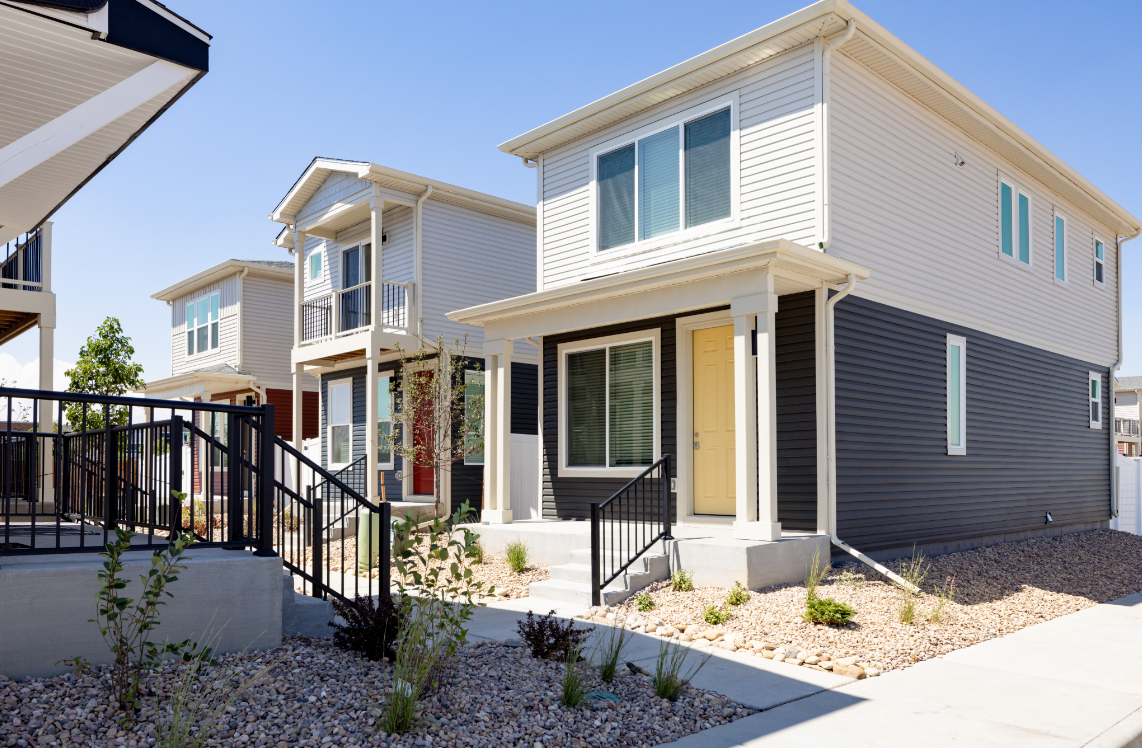
The change also lets manufactured homes sit lower on their foundations, eliminating their raised profile and allowing more architectural flexibility. As a result, manufactured homes without a chassis will likely look more like conventional site-built homes and blend into existing neighborhoods.
As a result, manufactured homes could attract more buyers while also winning over municipalities and planning boards that still hold outdated perceptions of the product. As manufactured housing becomes increasingly indistinguishable from traditional site-built homes, more states and municipalities may view it as a viable, attainable housing solution.
This shift was already underway before the changes to the permanent chassis requirement.
Florida, for example, passed a bill in March that will require local governments to allow modular and manufactured homes by right in any single-family zoning district.
Texas Senate Bill 785, which is set to take effect on September 1, will require cities with zoning laws to allow manufactured homes by right in at least one residential district.
Kentucky House Bill 160, which took effect on July 1, requires local and county governments to treat qualified manufactured housing equally with site-built family homes. Virginia, Montana, Maine and other states have passed similar laws recently.
These state-level reforms could advance further, as manufactured housing continues to innovate and is set to take advantage of the permanent chassis removal.
“As I’ve commented in the past, pay attention to what’s happening at the state level as well, where more states are engaged in lowering unnecessary barriers to our homes being placed where they are needed,” Boor said.
Are the factories ready for this change?
When asked whether Cavco Industries has thought through the logistics of adding chassis-free products to its factories, Boor said the company believes its manufacturing facilities are ready because they already build modular homes, which don’t have a chassis.
“If you’ve got a factory that’s making both [manufactured] and modular, they already do it, right? It’s not a big technological leap for that factory,” Boor said. “If a factory’s constrained, it’s due to some physical limitations in their factory.”
Cavco Industries has also invested in building homes independently of the chassis and placing them on it at the end of the production line.
“Any factory that’s set up that way is in great shape to build this product, because we’ll just be picking it up and setting it on a chassis it won’t forever be tied to, versus the next home coming down the line that might be built to stay on that chassis,” Boor said.
“We think that from a manufacturing perspective, we can adapt to this pretty readily,” Boor added.
Champion Homes CEO Tim Larson said on the company’s Q1 2027 earnings call that his company’s factories are ready for this change because they already have the operational flexibility to produce various product types. The company will likely introduce the removal of the permanent chassis as another product configuration within existing factories rather than an entirely new manufacturing process.
“As you’ve seen in our product portfolio, we can make an entry-level home and a multi-section home. We can make park models, cabins and various variants of those homes. The agility of the team is a key part of that,” Larson explained.
Additionally, both firms said they see the removable chassis as an opportunity to offer optionality for customers who prioritize a permanent chassis and those willing to invest in foundations and installation for a lower-profile home. They will continue to make homes with a permanent chassis, while adding chassis-free models to expand their product offerings.
“Our teams are excited to implement this change while also remaining focused on our traditional HUD product that is built on a permanent chassis. We envision over time that both types of construction will be utilized throughout the industry,” Larson explained.
Change will come, but when?
Even though Cavco Industries and Champion Homes operate factories that can quickly adapt to chassis-free designs, executives at both companies acknowledged that it will take some time for the industry to fully take advantage of the change.
This is because, for the industry to adapt, the biggest changes must happen on the regulatory side rather than within manufacturers’ factories. HUD must first implement the regulatory change by revising the manufactured housing code to permit chassis-free construction through its advisory committee, public comment and final rulemaking process. States will need to follow suit and update their own definitions to recognize chassis-free manufactured homes.
Once those changes are in place, manufacturers can submit chassis-free designs to HUD-approved third-party agencies for review and approval before beginning production. As a result, the key hurdle is getting the regulatory framework updated to allow chassis-free homes to be built and sold.
“It’ll just take a little bit of time to get through that process, and it’ll be kind of an upward curve, right? We’re not sitting on this end, sitting here doing projections about how much incremental volume this stuff will add over what time period, but directionally, I know it’s going to be helpful, and it’s going to help us break down some of the zoning barriers,” Boor explained, while also conceding that he is realistic in his “expectations about how quickly we see actual volume come from it.”
“The benefits of this law will show themselves over time,” Boor added.
McKinstray explained that Champion Homes doesn’t expect any impacts over the next few quarters, and will be working with HUD in the interim on implementation.
“In the past with HUD…impact has been a year-plus. This may happen faster just given the focus on affordable housing, but we don’t anticipate immediate impact. It’s going to be gradual over time,” he said.