For many years, Oman was a country that rarely appeared in news about the Middle East. It didn’t have a conflict. There were no terrorist threats or extremism.
It was a friend of the West and a neutral country in the region. But in the last seven months, the US and Israeli war on Iran has plunged Oman into the spotlight.
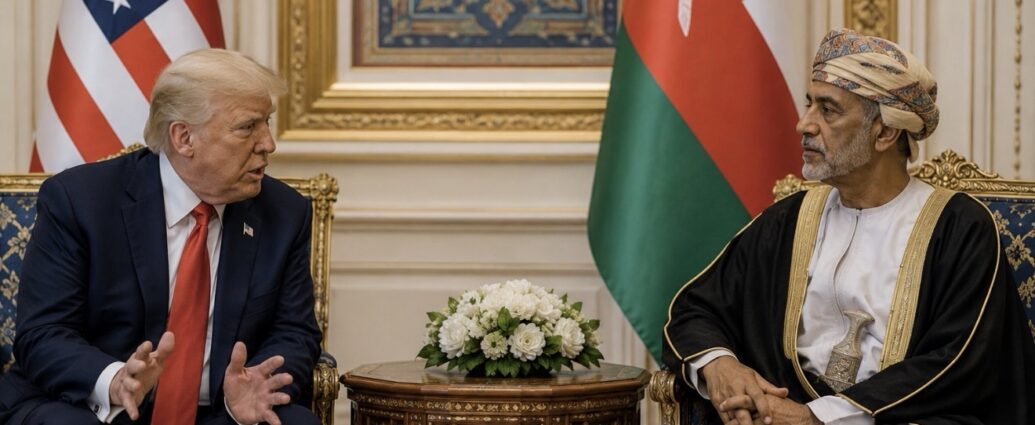
Now US President Donald Trump has threatened to bomb the sultanate if it “gets in the way” of US policy regarding the Strait of Hormuz.
This is the second time that Trump has threatened Oman. It has not appeared fazed by these threats. It knows that it has to navigate a changed regional and international landscape.
The US war on Iran has accelerated changes to regional security and the world order. Many countries are now wary of unpredictable US behavior and threats.

Oman, which has been a US ally, is now also in the crosshairs of US threats. This is similar to how the US has threatened NATO allies and downgraded military drills with South Korea.
Oman knows that it can’t escape the Middle East. It is on the southern side of the Strait of Hormuz. It has to deal with the Iranians. Oman has had amicable relations with Iran in the past.
Oman’s quiet diplomacy has long shaped its foreign policy
The sultanate has pursued one of the Middle East’s most unique and pragmatic foreign policies.
Since Sultan Qaboos bin Said Al Said came to power in 1970 with British support, Muscat has maintained close security ties with the United Kingdom and the US. Rather than aligning itself fully with any one bloc, Oman developed a reputation as the region’s quiet mediator, facilitating negotiations that others could not.
It played a key role in US-Iran talks that paved the way for the 2015 nuclear agreement and has repeatedly hosted discussions on Yemen and other regional crises.
Oman has also maintained that it could improve its relationship with Israel. It has hosted Israeli officials in the past. For instance, it hosted Prime Minister Benjamin Netanyahu in Muscat in 2018, for talks with Sultan Qaboos.
Although Oman has not joined the Abraham Accords, it has consistently argued that dialogue with Israel can contribute to regional stability, while continuing to support a two-state solution. As such, it was once believed that Oman might be a key to the Accords.
However, over the last few years, Oman has become more concerned about conflicts in the region, such as the war set off by the Hamas October 7 attack.
Under Sultan Haitham bin Tariq, Oman has largely continued a balanced approach. However, its role as a mediator has increasingly placed it under pressure as tensions between Washington and Tehran have grown. Most recently, Trump’s threats have turned a spotlight on Oman.
The Strait of Hormuz remains at the heart of the dispute
What may happen next: It is unlikely that the United States will actually attack Iran. After the attack on Iran, the US can ill afford new conflicts and wars.
The goal of the threats is to try to put Oman on notice that it shouldn’t do any backroom deals with Iran. Iran wants Oman to basically charge fees for ships using the Strait of Hormuz. The goal of Iran is to rope Oman into this process so that Iran can claim it has an excuse to control the Strait.
Countries in the region and the world don’t want this approach to be finalized because it would mean many strategic waterways would become dominated by the countries that border them.
The US has backed freedom of navigation for over a century. As such, ships need to be free to navigate the Strait of Hormuz. Iran wants to use pressure over the strait to bring America to the table to make a deal, or at least get it to stop threatening Iran.
This has now dragged the US into a war in the Middle East in which there is no easy out. The White House has lashed out at Oman, rather than trying to work with Muscat toward a solution.
The theory is that Oman can be threatened to stop talking to Iran.
US pressure could have wider consequences in the Gulf
This is unlikely to work. Oman can’t change its geography. It is near Iran and the Strait of Hormuz. It will always play a role in the area. Oman has been a responsible country in the past, working with the West and the region. It has important cultural and historic ties around the Indian Ocean.
These ties existed long before the US began to get involved in the Middle East.
The threats against Oman may put other US partners in the Gulf on notice. It is not clear whether the threats will succeed in getting those countries to shift their policies or serve to make them view the US as a less reliable partner. On the other hand, the threats may prevent Iran from advancing its push to control the Strait of Hormuz.