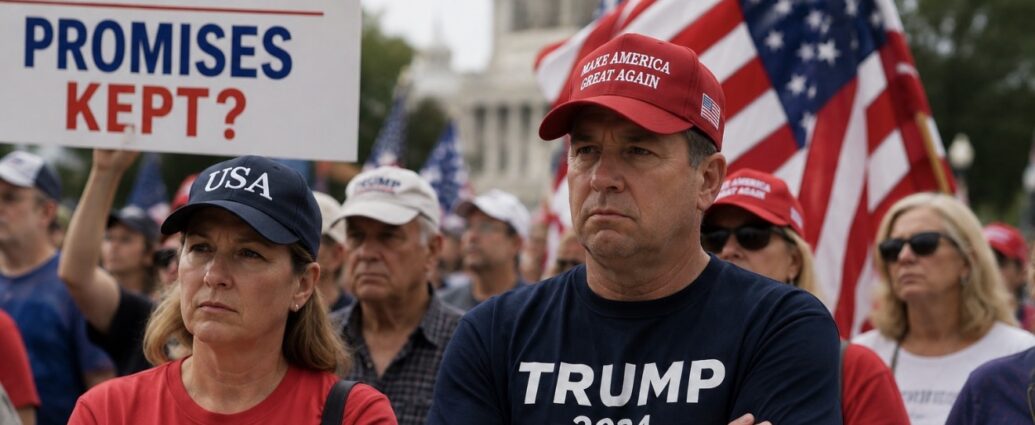
Roughly one in four Republicans now say their own household finances are worse than they were before President Trump returned to the White House — and more than half of all registered voters say the same. The poll, conducted by London-based research firm Focaldata, found that more than 53 percent of registered voters said their finances had deteriorated since Trump returned to the White House in January 2025. Nearly 57 percent of independents and almost a quarter of self-identified Republicans said the same. The online poll was conducted by London-based, nonpartisan Focaldata from August 7 to 10 among 1,913 registered voters, with a margin of error of plus or minus 2.9 percentage points.
The reason sits in the two numbers most families actually feel: what they pay at the pump and what their paycheck buys. As of July 2026, the annual inflation rate was 3.4%, higher than what Trump inherited from the Biden administration. This rise is largely attributed to the ongoing U.S. conflict with Iran, which sharply increased gasoline prices from around $2.98 to over $4.17 per gallon within weeks, with peaks reaching $4.52 in May. That is a jump of well over a dollar a gallon — on a 15-gallon fill, close to $18 more every time a driver stops for gas.
Wages have not kept pace. Real wages dropped by 0.1% from June to July and declined 0.2% compared to the same month the previous year, meaning workers’ incomes are failing to keep up with rising costs. When prices climb faster than pay, the household budget shrinks even if nobody’s hours changed — which is exactly what voters are describing when they say they are worse off.
The mood extends past personal budgets to the broader picture. Nearly two-thirds said the US economy was moving in the wrong direction, while just 25% said it was heading in the right direction. That works out to about two voters worried for every one who is not. Voters also gave Democrats an advantage over Republicans on inflation and the cost of living, as well as jobs and the economy — traditionally the strongest ground for the GOP.
Support inside the president’s own party is showing cracks. The poll found 55 percent of Americans disapprove of the job he’s doing, and his support among Republicans is slowly beginning to crack. One in five now disapprove of his performance so far through his second term. His approval rating among Republicans dropped eight points between this latest poll, released Sunday, and the Financial Times’ previous survey in July.
The White House pushed back on the findings. White House spokesperson Kush Desai defended Trump’s record, saying, “The Trump administration continues to deliver on the President’s affordability agenda by lowering drug prices, reshoring American jobs, and cutting taxes” while pointing to falling crime and border enforcement.
For business owners, the practical read is straightforward. Consumers who believe they are losing ground spend cautiously, trade down to cheaper brands, and delay big purchases — and those habits show up in retail receipts long before they show up in economic data. Fuel costs also travel straight into freight, delivery and any business that runs a truck.
The pressure point ahead is energy. If the Iran conflict winds down and fuel prices retreat toward where they started, the inflation number eases and paychecks stretch further on their own. If it does not, the affordability squeeze that produced these numbers stays put through November’s midterms, now less than three months away.
JBizNews Desk | New York
© JBizNews.com All Rights Reserved. Reproduction or distribution without written permission is prohibited.