Prescription drug prices in the United States are doing something consumers almost never see in health care: moving sharply lower.
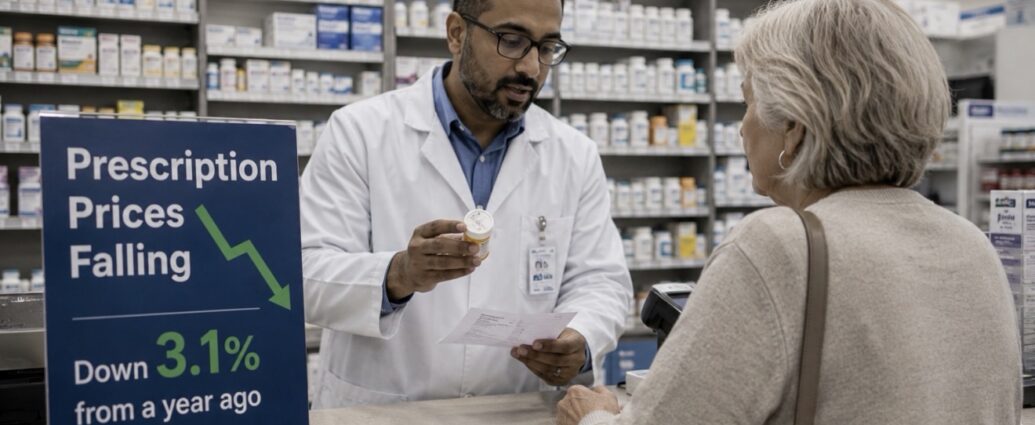
Prices fell 0.8% in July and 3.1% from a year earlier, according to the latest Consumer Price Index, marking the steepest annual decline in prescription-drug prices in more than six decades. Prices have not risen in any month so far this year, an unusually persistent stretch of flat or declining costs. (Axios)
The decline matters because prescription drugs have historically moved in the opposite direction. Consumers are accustomed to paying more each year for medication, while insurers, Medicare and employers absorb even larger increases behind the scenes.
This time, several forces are pushing the other way.
One is Medicare’s new negotiated pricing system. The first negotiated prices for 10 high-cost drugs took effect in January, with reductions reaching as much as 79% below previous list prices for some medications. Because Medicare Part D payments are included in the government’s prescription-drug inflation calculation, those reductions can show up directly in the CPI. (Axios)
Another is the steady arrival of cheaper generic drugs as patents expire on blockbuster medicines. When a branded drug loses exclusivity and multiple generic competitors enter the market, prices can fall quickly enough to pull the broader index lower.
The Trump administration has also pointed to TrumpRx, its program designed to connect consumers with discounted cash prices for certain medications, as contributing to the decline. Health economists, however, say the program likely explains only part of the movement because many of those discounts already existed and TrumpRx primarily makes them easier to find. (Axios)
The White House and supporters of the Biden-era Inflation Reduction Act are now competing over who deserves credit.
That political argument is separate from what consumers are actually paying, and the answer there is more complicated than the headline number.
The Bureau of Labor Statistics does not simply measure the sticker price printed on a drug. Its prescription-drug index tracks the total reimbursement received by the pharmacy from the patient and eligible payers, including private insurance and Medicare Part D. That means a lower CPI reading can reflect savings captured by Medicare or insurers even if every patient does not immediately see a 3.1% reduction at the pharmacy counter. (Bureau of Labor Statistics)
Insurance design still matters enormously.
A patient with a fixed $20 copay may see no change at all even if the underlying cost of the medication falls. Someone paying coinsurance based on the drug’s price could benefit more directly. A patient with a large deductible or paying cash could see something different again.
And not every medicine is getting cheaper.
The 3.1% figure is an average across the prescription-drug market. Individual branded medicines can still increase in price even while falling costs for generics and negotiated Medicare drugs pull the overall index lower.
That makes this a meaningful shift, but not yet a universal one.
Prescription drugs were also one of several categories helping hold overall inflation down in July. The broader Consumer Price Index rose just 0.1% for the month, while prescription medication costs moved lower alongside gasoline and hotel prices. (Reuters)
For consumers, the bigger question is whether this turns into a lasting change rather than an unusual six-month stretch.
More Medicare-negotiated prices are scheduled to enter the system over time, additional major drugs will lose patent protection, and competition from generics and biosimilars continues to expand. If those forces keep pushing in the same direction, prescription drugs could become one of the few major household expenses providing meaningful relief instead of adding to inflation.
But the pharmacy counter remains the ultimate test.
A historic decline in the national price index is significant. For millions of Americans taking medication every day, what matters is whether that decline eventually reaches the number they are actually asked to pay.
JBizNews Desk | Washington
© JBizNews.com All Rights Reserved. Reproduction or distribution without written permission is prohibited.