
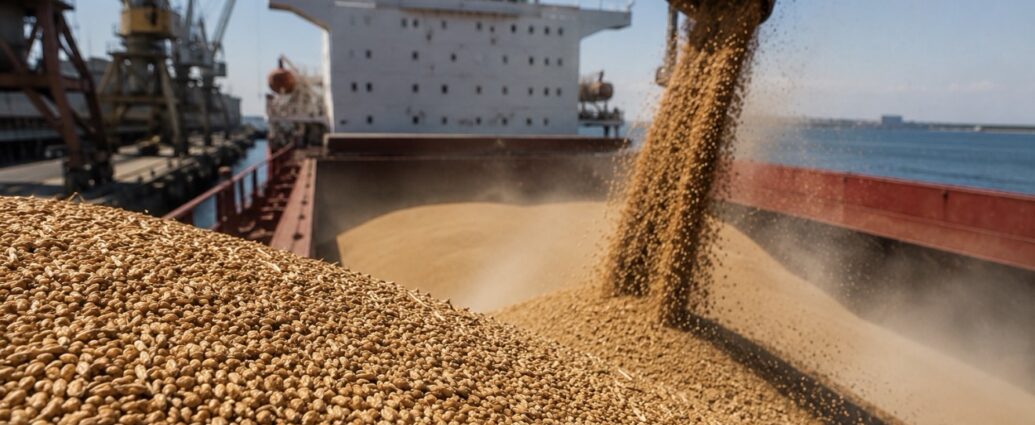
Wheat prices are climbing again as escalating attacks on Russian and Ukrainian Black Sea ports begin choking one of the world’s most important grain-export routes.
Chicago wheat futures have risen more than 17% since early July, as attacks on ports, ships and grain infrastructure delay cargoes during the peak export season. Russia and Ukraine are among the world’s largest wheat suppliers, which means disruption in the Black Sea can quickly reach food markets far beyond the region.
The pressure is already showing up in shipping.
Ukraine has lost roughly one-third of its Black Sea grain-export capacity, while attacks around Russia’s Novorossiysk port have disrupted another major outlet. Importers expecting cargoes this summer are now facing delays, cancellations or the need to buy grain elsewhere.
That replacement wheat is often more expensive.
Black Sea wheat has recently been offered around $260 to $280 a metric ton, while some Australian supplies have been quoted as high as $320. Buyers in Asia, the Middle East and North Africa are among the most exposed because many rely heavily on Russian and Ukrainian grain.
Egypt illustrates the dependence. More than 82% of its wheat imports in the first half of 2026 came from Russia and Ukraine.
For American consumers, the impact is less immediate but still important.
Wheat is not only flour. It sits inside bread, pasta, cereal, crackers, baked goods and animal feed. When the commodity rises sharply, food manufacturers eventually face higher input costs. Whether those costs reach supermarket shelves depends on how long the disruption lasts and how much cheaper grain can be sourced elsewhere.
The United States, Canada, Argentina and Australia can replace some lost Black Sea supply, but rerouting millions of tons of wheat across longer distances increases freight costs and puts additional demand on alternative exporters.
Global inventories provide some protection, so a 17% increase in wheat futures does not translate into a 17% increase in a loaf of bread. Wheat itself is only one part of the retail price; labor, packaging, transportation and store margins often matter more.
But the direction matters.
Consumers are already dealing with elevated energy and transportation costs. If Black Sea grain disruptions persist into the fall, another major commodity could begin pushing in the same inflationary direction.
The Black Sea has therefore become more than a battlefield.
It is again becoming a pressure point for the global grocery bill.
JBizNews Desk | Chicago
© JBizNews.com All Rights Reserved. Reproduction or distribution without written permission is prohibited.




