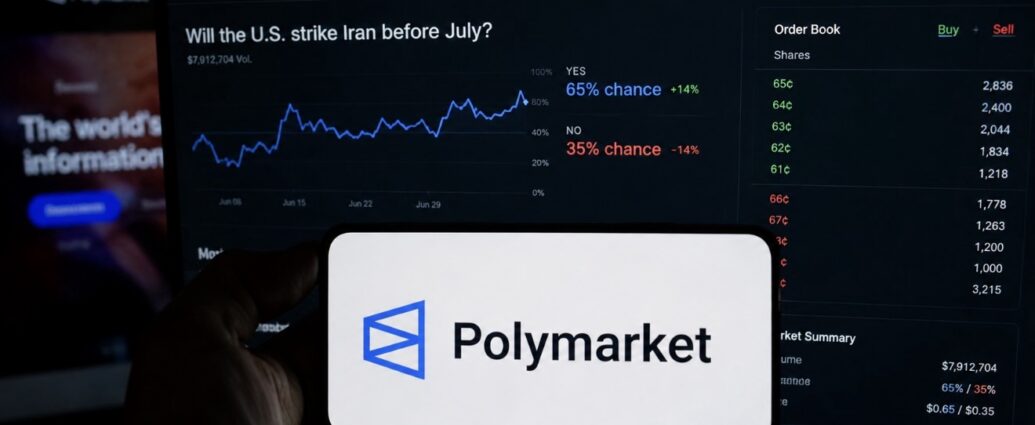
A new analysis has identified 152 Polymarket wallets that collectively made about $8 million betting on U.S. military and defense outcomes with an average win rate of 97.2%, raising a disturbing question for the rapidly growing prediction-market industry: what happens when a profitable trade may also reveal a government secret?
The findings were published Thursday by the nonprofit Anti-Corruption Data Collective, which analyzed settled markets on Polymarket International and looked for unusually successful bets placed on low-probability outcomes.
The researchers focused on what they called “long-shot” wagers — at least $2,500 placed within an hour on outcomes priced at odds of 35% or less.
They identified 556 wallets with unusual trading patterns and labeled them “Orcas.” Among them were 152 particularly successful accounts concentrated in military and defense markets.
Those 152 wallets earned about $8 million combined.
Their average winning rate: 97.2%.
That number is extraordinary, but it is not proof that all of the traders possessed classified information.
The researchers explicitly acknowledged that some patterns could have other explanations, including luck, sophisticated analysis or information obtained legally. Wallets on Polymarket are also anonymous, making it difficult to determine who was actually behind individual trades.
But the concern becomes more serious when the trading patterns are considered alongside recent real-world cases.
A U.S. soldier was charged earlier this year with allegedly using classified information to make roughly $400,000 betting on the removal of Venezuelan President Nicolás Maduro. He has pleaded not guilty.
The new research suggests the potential problem may extend far beyond a single trader.
Prediction markets allow users to buy contracts tied to whether future events will occur. Prices function almost like probabilities: a contract trading at 30 cents broadly implies the market sees roughly a 30% chance of that event happening.
That makes them useful for forecasting.
It can also make them valuable intelligence signals.
Because Polymarket International records trades publicly on a blockchain, outsiders can watch anonymous wallets place unusually large bets in real time.
If a wallet with an exceptional record suddenly places a large wager that a military strike will occur within hours or days, other traders can copy the position.
According to the researchers, that is already happening.
Large investors and automated trading bots sometimes follow unusually successful wallets, meaning a trade potentially based on confidential information can rapidly influence the broader market price.
That creates a problem far larger than unfair betting.
Foreign intelligence services can watch those same markets.
A sudden surge in betting on a specific military operation, target or date could theoretically provide clues about activity that governments intended to keep secret.
Polymarket says it has controls for suspicious trading and has referred dozens of wallets to authorities. The company has also argued that the transparency of blockchain trading makes questionable activity easier to identify than it might be in less transparent markets.
The Department of Defense declined to comment on the findings.
The regulatory question is becoming increasingly important because prediction markets are moving rapidly into the financial mainstream.
Billions of dollars now trade on political elections, economic data, government decisions, wars and other events that can be influenced by information known to a relatively small number of people before the public learns it.
Traditional stock markets have established insider-trading rules for corporate information.
Prediction markets are now forcing regulators to confront a different version of the same problem: what rules should apply when the inside information belongs to the government — and the event being traded is a military operation?
The 97.2% winning rate does not answer that question.
But it makes it increasingly difficult to ignore.
JBizNews Desk | Washington
© JBizNews.com All Rights Reserved. Reproduction or distribution without written permission is prohibited.