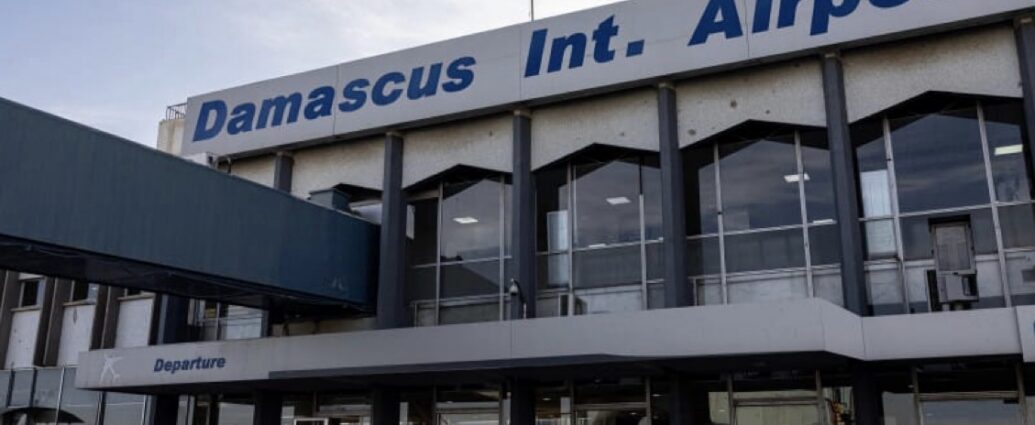
From the start of the 14-year civil war in Syria until the fall of the Assad regime in 2024, the country’s airspace was essentially a no-fly zone for the vast majority of the world’s airlines.
The International Civil Aviation Organization (ICAO) declared Syrian airspace as high risk, warning in 2013 of potential missile fire directed at commercial aircraft during their approach to landing. That same year, the United States Federal Aviation Administration (FAA) issued a Notice to Airmen (NOTAM), advising US aircraft to stay at least 200 miles (about 322 kilometers) from Damascus due to the fear of missile fire.
The FAA went so far as to prohibit the operation of any US-registered aircraft in the Damascus area with limited exceptions, a regulation extended in December 2023 to December 2028, according to the agency’s Code of Federal Regulations (CFR).
The European Union Aviation Safety Agency (EASA) was less severe than the FAA and did not enact a legally binding ban, but has continually advised air carriers against operating in Syria’s airspace, according to the agency’s website.
Despite these restrictions remaining in effect, recent regional developments have given the war-torn nation an opportunity to renew its aviation industry, with a particular emphasis on the US-Israeli war with Iran.

The war-torn nation began its revival effort soon after the ousting of former president Bashar al-Assad, with Turkey providing new radar and navigation systems to Syrian airports in 2025, according to Turkish Transport Minister Abdulkadir Uralogl. In addition, the EU lifted sanctions on Syria in February 2025, which included those on national carrier Syrian Airlines.
The airline signed a $250 million agreement in August 2025 to acquire 10 Airbus A320 jets as part of an effort to overhaul its fleet, according to a report by The National. On January 20, the national carrier returned to scheduled international operations, beginning with a weekly flight between the Syrian capital and Saudi Arabia’s Medina, which resumed on August 11 after a war-related hiatus.
Iran war shifts overflights to Syrian airspace
The Iran war began on February 28, which forced airlines to consider transiting through Syrian airspace instead of neighboring countries. Given the Syrian government‘s decision around that time to impose a flat $499 fee on all flights transiting through its airspace, this arrangement was particularly beneficial for the redeveloping nation.
Notably, the war did have negative effects as well, with Syrian Airlines advising passengers of flight cancellations in March over safety concerns, though these internal flights were not related to the overflights of non-Syrian air carriers.
Even after the US-Iran ceasefire was signed in April, the overflight traffic did not stop, with airlines recognizing the time and fuel savings permitted by utilizing Syrian airspace over that of Iraq, specifically for flights between Europe and the major Gulf hubs of Dubai, Abu Dhabi, and Doha.
The increased fuel costs linked to the war further drove up the demand for Syrian overflights, with flight-tracking services Flightradar24 and AirNav showing that the majority of Gulf flights still preferred the route over nearby alternatives as late as June.
In May, Syrian Civil Aviation Authority chief Omar al-Hosari noted the “ongoing efforts to enhance operational readiness, strengthen air navigation systems, and apply recognized safety standards,” with Turkey’s state-run Anadolu Agency reporting that twelve airlines had resumed flights to Syria that same month.
Syrian Airlines, Turkish Airlines, flydubai, Royal Jordanian, Air Arabia, flynas, Qatar Airways, Jazeera Airways, and AJet resumed operations to Damascus, while Syrian Airlines, Turkish Airlines, Fly Cham, Royal Jordanian, Dan Air, and AJet returned to Aleppo, according to Anadolu.
“We are working directly with international aviation safety organizations to reassess Syrian airports, in preparation for restoring this vital route in line with the highest safety and compliance standards,” said Hosari.
Syrian national carrier returns to Europe with Amsterdam flight
Syrian Airlines returned to Europe on July 9, beginning a weekly service from Damascus to Amsterdam that, as of today, runs three times weekly, according to the airline’s website. As of today, the airline further operates flights to Moscow and across the Gulf, with flights to Copenhagen planned for the future.
Syrian airspace remains risky, according to aviation risk monitoring advisory body OPSGroup, with overall air traffic levels still below half of those before the civil war, despite the increase in overflights.
However, Syrian authorities remain hopeful for the industry’s future, with Hosari telling Reuters that the development “reflects the beginning of a real shift in how airlines view Syrian airspace, as a viable and dependable route once again within the regional air traffic network.”
Reuters contributed to this report.