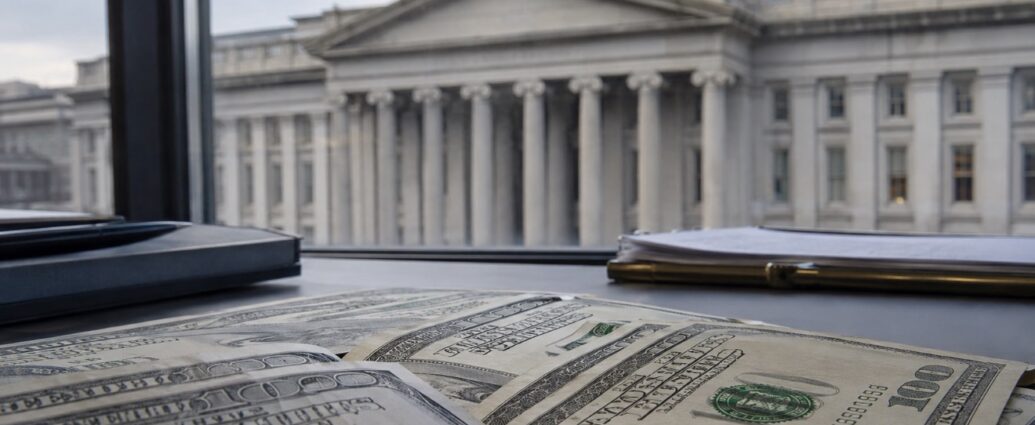
Hedge funds are increasing bets against the U.S. dollar as investors question whether the Trump administration’s coming fiscal plan will be strong enough to calm concerns over America’s growing debt and budget deficit.
Leveraged funds expanded their short-dollar positions during the week ended Aug. 18, according to the latest Commodity Futures Trading Commission data cited by Bloomberg. A short position allows traders to profit if the dollar falls.
The shift reflects growing pressure across U.S. financial markets.
The national debt has crossed $40 trillion, the federal deficit is on course to exceed $2 trillion this fiscal year and interest expenses have climbed to nearly $1.2 trillion. Those concerns recently pushed the yield on the 30-year Treasury bond to its highest level since 2007.
Treasury Secretary Scott Bessent attempted to stabilize the bond market by announcing that the government would at least double planned purchases of longer-dated Treasury securities. The buybacks will increase from approximately $2 billion to at least $4 billion per operation beginning in September, with Bessent saying they could grow further if necessary.
The announcement initially lowered Treasury yields, but much of that improvement quickly disappeared. The dollar also weakened as investors concluded that buying back bonds could improve market liquidity without solving the underlying deficit problem.
Bessent has promised a broader fiscal-consolidation plan, expected as early as this week, developed with President Donald Trump and White House budget director Russell Vought. The administration is expected to focus on spending reductions, stronger economic growth, fraud prevention and additional tariff revenue.
Markets will be watching for specific numbers.
Investors want to know how much spending the administration intends to cut, how quickly the deficit could decline and whether the government can reduce its reliance on increasingly expensive borrowing. A plan lacking firm targets could place additional pressure on both Treasury bonds and the dollar.
A weaker dollar carries mixed consequences. It can make American exports more competitive and increase the overseas earnings of U.S. multinational companies. But it also raises the cost of imported products, international travel and commodities priced in dollars, potentially adding to inflation.
For businesses and consumers, the more immediate concern is the bond market. Persistently high Treasury yields feed directly into mortgage rates, business loans, auto financing and the federal government’s own borrowing costs.
Hedge funds are not necessarily predicting a collapse in the dollar. Their positions show that some of the world’s most aggressive traders now believe the risks are tilted toward further weakness unless Washington delivers a credible plan for controlling its finances.
JBizNews Desk | Washington
© JBizNews.com All Rights Reserved. Reproduction or distribution without written permission is prohibited.