Eight Sleep, the startup behind the $2,999 mattress cover that puts both Elon Musk and Mark Zuckerberg to sleep, wants to stop being known for the celebrities who use it. Instead, the company is pursuing FDA clearance to detect and treat sleep apnea, a pivot it hopes will turn a bougie tech gadget into a business that insurers, not just billionaires, will pay for.
Matteo Franceschetti, Eight Sleep’s cofounder and chief executive, told Fortune the company’s filing with the FDA is progressing “fairly smoothly.” The company began pursuing clearance with the FDA for its sleep apnea detection and mitigation technologies in 2025 and is conducting clinical studies in support of its submissions.
Currently, the company has only published one independent study on the Pod’s benefits, alongside several study preprints that were both directionally positive but not yet independently verified. There are several studies, however, funded by Eight Sleep, on sleep apnea that have been published in scientific journals. Eight Sleep also collects and has a massive cache of user data that, when aggregated and de-identified, can be used to identify broader trends and support research, reports, and studies on sleep and health.
FDA clearance for sleep apnea detection would likely put Eight Sleep in more rigorous regulatory lane as Apple’s Watch and Samsung’s Galaxy Watch and Ring, both cleared by the FDA since 2024 to flag sleep apnea “risk.” The FDA has a lower bar for the detection of apnea—snoring so bad that the sleeper stops breathing—than diagnosis.
Eight Sleep is pursuing the more clinical prescription-based diagnostic aid of which there are also existing home sleep-testing devices. While the Apple Watch can tell users they have signs of apnea, Eight Sleep is hedging it will be able to quantify apnea events per hour.
In August 2026, Eight Sleep also began a clinical trial with Abu Dhabi’s Department of Health, testing whether its product, the Pod, can automatically reposition sleep apnea patients, and therefore become an alternative to a CPAP machine. U.S. consumer health-tech firms are increasingly using the emirate’s Department of Health as a springboard for medical credibility. Just weeks before Eight Sleep’s announcement, Oura signed its own joint research program with DoH on women’s health and cardiometabolic risk, while Whoop landed a $75 million investment and research partnership with Mubadala to validate its biomarker labs in what became its first market outside the US.
The goal, Franceschetti said, is to get insurers to treat the Pod like a medical device rather than an out-of-pocket luxury. The company told Fortune it’s actively working on making the Pod more affordable, though it isn’t yet clear how it gets there without a different cost structure.
Eight Sleep’s Pod already qualifies for HSA and FSA reimbursement through the fintech Truemed. Whether regulators ultimately agree it treats a condition, rather than merely tracking one, remains an open question.
The Pod sits atop your mattress and connects to a hub that pumps heated or cooled water through internal tubing, with each side of the bed running its own heat zone. Built-in sensors track heart rate, breathing, and movement, and an AI model adjusts temperature through the night and generates a sleep score. Automatic control and tracking require an ongoing $199-to-$399 annual subscription; without it, users get manual temperature buttons only.
Both billionaires are among executives, athletes, and celebrities who credit the company with transforming their sleep. Formula 1 driver Charles Leclerc is on its investor cap table and F1’s Aston Martin Aramco signed on as a team partner in February 2026 in a reportedly “eight-figure” deal.
In March, Eight Sleep raised $50 million from Tether, the company behind the world’s biggest stablecoin, at a $1.5 billion valuation. Last year, the company was profitable. Franceschetti’s ambition, he told Fortune, is to become “the biggest health technology company in the world.”
From Milan to San Francisco
Franceschetti is neither an engineer nor a doctor. He trained as a securities lawyer at a large Milan firm, in a family of lawyers, judges and doctors, and describes himself as “the bad guy” for straying into business; his father’s death at the end of 2008 pushed him toward something riskier. He calls himself part race car driver, bold and ambitious, and part lawyer, intellectually disciplined, a combination he credits for keeping a hardware startup alive against long odds.
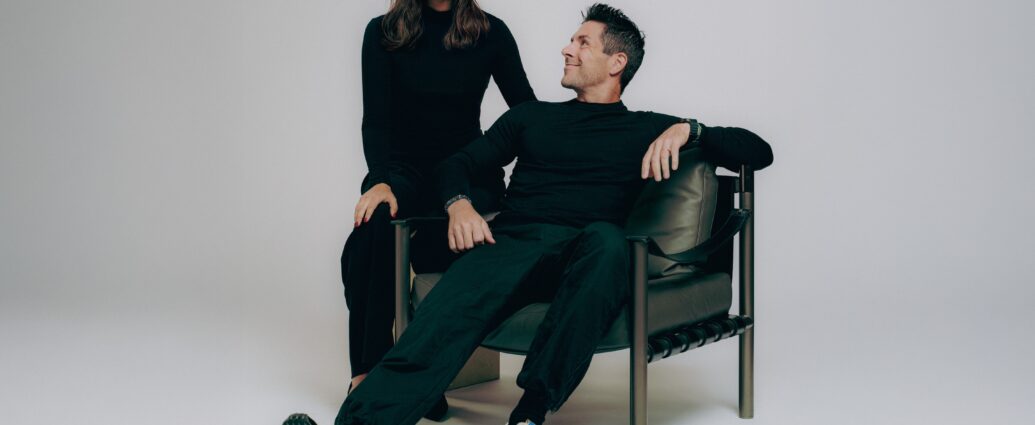
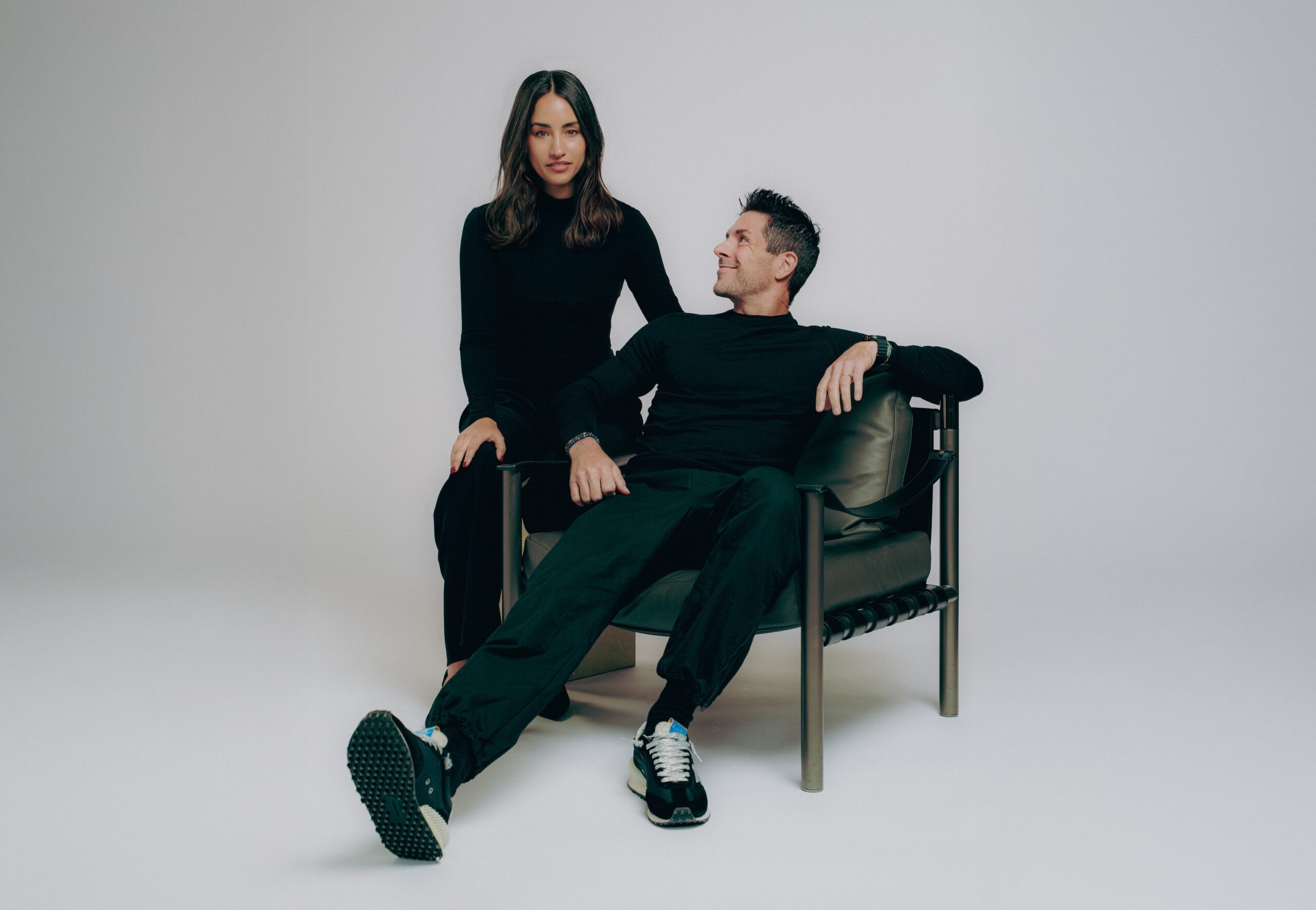
In 2014, Franceschetti, Massimo Andreasi Bassi, and Alexandra Zatarain started Eight Sleep out of a garage, where the team built its first prototype and threw a “pajama party” to demo it for investors. Zatarain, then 24, wrote the pitch deck in a few hours and joined that night; she is married to Franceschetti and now runs brand and marketing, while Bassi became chief technology officer. An Indiegogo campaign brought in more than $1.2 million (well over the $100,000 goal) and about 8,000 pre-orders before the product existed, proof of demand the founders used to get into Y Combinator’s 2015 class after two rejections.
The decade since has been a steady climb through funding rounds rather than one big break: a $14 million Series B in 2018 led by Khosla Ventures, an $86 million Series C in 2021 near a $500 million valuation, a $100 million Series D in August 2025 near $1 billion, and the Tether round in March 2026 that pushed the valuation to $1.5 billion. The company has raised more than $310 million total.
The numbers behind the hype
Eight Sleep has never disclosed revenue, and Franceschetti dodged specifics with Fortune. Third-party estimates pegged 2025 revenue at roughly $264 million, flat with 2024, though Franceschetti disputes that, saying revenue has grown “close to 30x” since the Pod’s 2019 launch, that the company was profitable in 2025, and that cumulative Pod sales exceed $500 million. Eight Sleep now sells in 35 countries, including a 2026 launch in China.
“If you look at the DNA of our people, the way we think, probably Oura, Whoop, Garmin, we’re probably in the same ballpark,” Franceschetti said, noting roughly 85% of Eight Sleep customers already own a wearable. His pricing analogy is Tesla: the Pod is the Model S, a premium flagship meant to fund cheaper models later. “We don’t want to be luxury at all,” he said.
The smart-mattress category Eight Sleep wants to escape just delivered a cautionary tale. Sleep Number, the unit-share leader, filed for Chapter 11 in June 2026 with $672 million in debt after net sales fell 16%; Sleep Country Canada bought its assets a month later for $701 million. Eight Sleep, direct-to-consumer with roughly 100 employees, says it has avoided that trap.
Market-size estimates vary widely, from a $1.87 billion global smart mattress category to nearly $5 billion by other counts. Franceschetti’s preferred comparison is wearable-health brands: Oura, valued around $11 billion, and WHOOP, valued at $10.1 billion. “We see ourselves as a completely different market that literally doesn’t exist,” Zatarain told Fortune.
The problem Eight Sleep is chasing is real regardless of which market number is right. Roughly 30.5% of American adults sleep fewer than seven hours a night, per the CDC, and RAND Europe estimates insufficient sleep costs the U.S. up to $411 billion a year. The American Academy of Sleep Medicine says undiagnosed sleep apnea alone costs the country nearly $150 billion a year, the exact condition Eight Sleep’s FDA filing targets.
From charity to business plan
Franceschetti said the most consequential part of Eight Sleep’s future has nothing to do with billionaires or race cars. He recalled a doctor at a major U.S. medical institution emailing him about an underage patient whose medical condition prevented her from regulating her own body temperature; her family couldn’t afford a Pod.
“Cancer will be a big market for us,” he said, describing patients whose hormone-related treatments disrupt temperature regulation.
This story was originally featured on Fortune.com