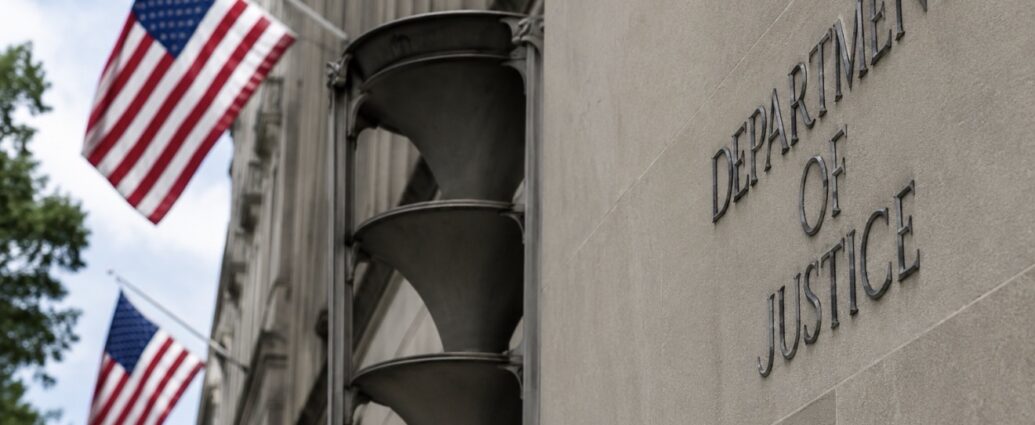
The Justice Department has formally launched a new national division dedicated to fraud, creating a roughly 500-person operation designed to consolidate major federal cases involving healthcare, taxes, trade, government programs and other large-scale financial schemes.
The National Fraud Enforcement Division officially takes effect Monday, giving the department a single structure for investigations that previously could be spread across multiple offices and jurisdictions.
The new division will handle major criminal fraud matters involving federal healthcare programs, tax schemes, customs and trade fraud, misuse of government funds and other cases where losses can reach into the millions or billions of dollars.
The change is largely about scale and coordination.
Fraud investigations often involve enormous amounts of financial data, multiple agencies and defendants operating across state lines. By placing more attorneys and staff under one national operation, DOJ is trying to identify patterns faster, share intelligence across cases and pursue organizations rather than treat each incident as an isolated prosecution.
The division is also expected to rely heavily on data analytics, including claims data, tax information, financial records and other government databases that can reveal suspicious patterns long before a whistleblower or victim comes forward.
That could be especially important in healthcare fraud.
Medicare and Medicaid fraud cases can involve false billing, unnecessary procedures, kickback arrangements or claims for services that were never provided. Individual transactions may look small, but repeated across thousands of patients they can generate enormous losses.
Tax and trade fraud are another major focus.
The division will be able to pursue schemes involving false tax filings, customs duties, tariff evasion and fraudulent claims tied to federal programs, while also seeking restitution, forfeiture and other financial penalties.
For consumers, the connection is indirect but significant.
Fraud against Medicare, Medicaid and other federal programs ultimately raises costs for taxpayers and can expose patients to unnecessary treatments or compromised personal information. Large tax and government-benefit schemes similarly drain money from programs funded by the public.
The creation of the division does not introduce a new crime or change the burden prosecutors must meet in court. It changes how the government organizes the people investigating and prosecuting those crimes.
DOJ says the operation will include approximately 500 attorneys and staff, making it one of the department’s largest concentrated anti-fraud efforts.
The practical test will be whether the new structure produces faster cases, larger recoveries and more coordinated prosecutions.
Fraud itself has become more sophisticated, increasingly moving through shell companies, digital payments, stolen identities and cross-border networks.
The Justice Department’s answer is to build an enforcement operation designed to operate at the same scale.
JBizNews Desk | Washington
© JBizNews.com All Rights Reserved. Reproduction or distribution without written permission is prohibited.