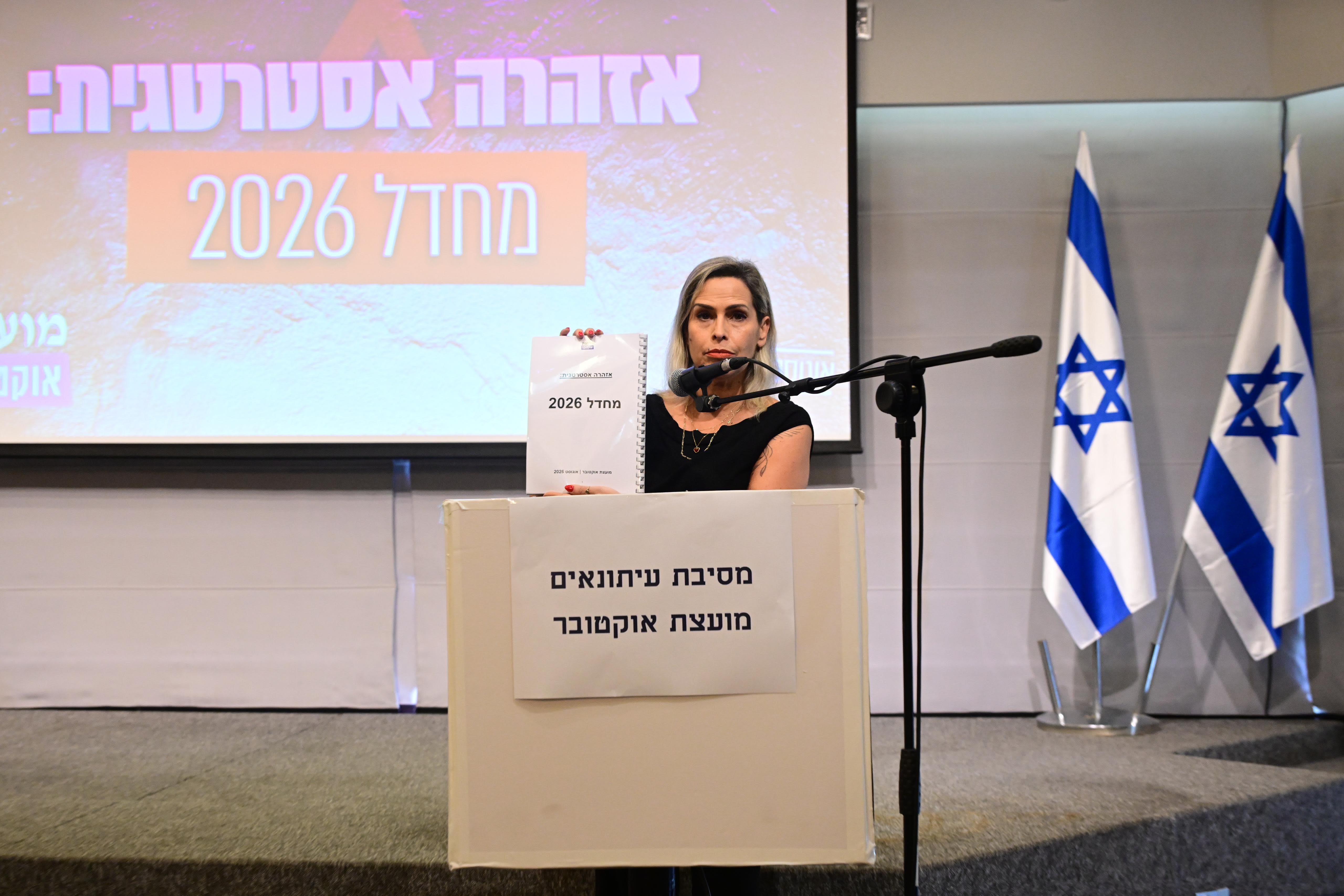
The IDF’s pre-October 7 conceptzia (military mentality of containment) is still prevalent across the military, the October Council warned in a report released on Monday.
The group, which represents hundreds of families affected by the October 7 massacre, argued that the conceptzia has rather “changed shape” since the attacks rather than disappearing.
ההתרעות החמורות של ההורים השכולים שהקימו את מועצת אוקטובר, לעניין ההפקרות והמחדלים של הממשלה, גם היום, שלוש שנים אחרי המחדל שגבה את חייהם של היקרים להם, צריכות לפלח את חומת האדישות הכללית.
הממשלה הזו ברחה מאחריותה למחדל, שיקרה לציבור לגבי הסכנות האורבות לכולנו והרחיקה מעצמה כל… pic.twitter.com/NxaOVPgBdl
— Efrat Rayten אפרת רייטן (@Efratrayten1) August 24, 2026
“Before October 7, Israel’s policy relied heavily on the assumption that Hamas was deterred and that the threat could be managed through force, deterrence, easing measures, and quiet,” the report, titled “Strategic Warning: Default 2026,” read.
“Today… the threat is once again being managed through agreements, the Yellow Line, future demilitarization, international forces, and diplomatic mechanisms that have yet to prove they can actually dismantle it,” it added.
The report cited warnings from anonymous IDF soldiers tasked with surveying the Gaza Strip, with audio published earlier in August noting the soldiers’ concern stemming from Hamas actions “testing” the military, including through the multitudes of terrorists who have recently crossed the Yellow Line in Gaza.
“[Prime Minister Benjamin] Netanyahu received more than ten warnings, but it did not move him,” a senior security official shared. “He claimed we were exaggerating. I am telling you from personal knowledge that some of the warnings Netanyahu received focused on the Tishrei holidays, and the question must be asked: what did the cabinet do about it?”
The October Council further noted the IDF’s manpower crisis and pressured defense systems amid an enemy that was “hit, but not defeated,” despite nearly three years of fighting.
“The decision to focus on the Iranian arena wasted billions on projects that were fantasies, while Hamas grew stronger in Gaza and did not receive the attention it deserved,” another senior security official said. “Even if the prime minister’s decision was legitimate, the minimum is to explain and justify it before a state commission of inquiry, in order to know whether the decision-making considerations are still correct today.”
IDF soldiers still fearful of alerting commanders to danger, October Council says
In addition, the council emphasized that many IDF soldiers still fear raising these dangers with their commander, as they did before October 7, 2023, worried they might be seen as a “nuisance.”
The mother of an IDF soldier described her daughter’s situation, saying that she still faces “threats and silencing” when reporting signs of danger in Gaza.
“How is it possible that commanders who are supposed to protect her and listen to her are the ones frightening her?” She said. “History is simply repeating itself before my eyes, and this time it is her who is there.”
Several additional anonymously sourced audio clips were published by the group, which monitors an active WhatsApp number where IDF soldiers, reservists, families, and border residents can report “what is really happening.”
Tropper discusses danger of IDF ‘evading’ security responsibilities
Zionist Home-The Reservists Party chairman Chili Tropper reacted to the October Council’s report later on Monday, noting the “price in human lives” of the IDF “evading” its responsibilities.
Tropper cited one of the IDF reservists who spoke anonymously to the organization, warning that his unit was “in a minimal reserve, looking for people to come and fill in the gaps.”
“They explained to us that if an incident happens, we are in trouble, and if there is an incident in two communities, one of them will have to manage alone at least for a certain period of time,” the soldier said.
The party chairman told the government ministers to “remember the soldier who said there are not enough soldiers to protect the communities” the next time they discuss “nationalism, Zionism and security.”
Sarah Ben-Nun contributed to this report.