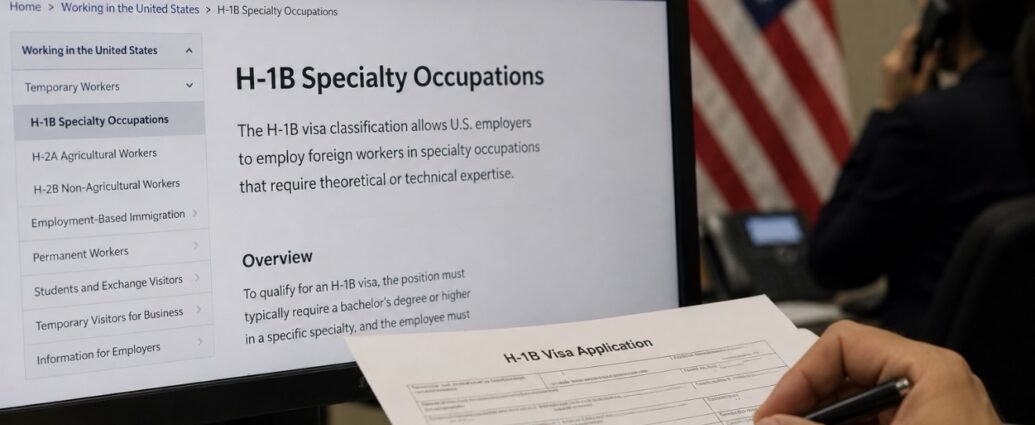
The Trump administration is moving to make a $103,265 fee for certain new H-1B visa petitions permanent, potentially turning what was once a several-thousand-dollar immigration expense into a six-figure hiring decision for employers seeking highly skilled foreign workers.
The Department of Homeland Security published the proposal Monday, targeting certain new H-1B petitions subject to the annual cap. The fee would not apply to renewals or to some applicants already in the United States, including certain students changing status.
The H-1B program allows U.S. employers to hire foreign workers in specialty occupations including technology, engineering, science, finance and medicine. Congress currently allows 85,000 new cap-subject H-1B visas each year, including 20,000 reserved for applicants with advanced U.S. degrees.
The proposed fee is extraordinary because it would radically change the economics of using the program.
Employers historically paid several thousand dollars in government and legal fees for many H-1B petitions. Under the new proposal, some companies would have to decide whether a particular foreign hire is valuable enough to justify an additional cost exceeding $100,000 before salary, benefits and relocation expenses are even considered.
That could have very different effects depending on the employer.
A large technology company hiring an engineer with unusually valuable artificial-intelligence expertise may decide the fee is manageable.
A smaller software company, laboratory, hospital, university-affiliated employer or startup competing for the same talent may not.
That difference is why the proposal could reshape more than immigration policy.
It could influence which companies are able to compete for specialized workers in the first place.
Supporters of the higher fee argue that the H-1B program has been used by some employers to bring in lower-cost foreign labor instead of hiring Americans and that making sponsorship more expensive would encourage companies to reserve the program for genuinely hard-to-fill, high-value positions.
Critics argue that the policy could instead make it harder for American companies to recruit scientists, engineers and other specialized workers who help build businesses and create jobs in the United States.
The proposal also arrives with significant legal history.
The administration previously imposed a temporary version of the six-figure charge, but a federal judge blocked it in June, finding that the government had exceeded its legal authority.
DHS is now attempting to establish the fee through the formal regulatory process before the temporary policy expires, potentially giving the administration a stronger legal foundation for defending it in court.
That distinction matters.
Monday’s action does not mean every new H-1B petition suddenly costs $103,265.
This is a proposed rule. It must move through the regulatory process before becoming final, and additional lawsuits are likely if the administration adopts it.
But employers now have to prepare for the possibility that the economics of skilled-worker sponsorship could change dramatically.
For companies that rely heavily on H-1B workers, even a modest number of hires could become expensive very quickly.
Ten qualifying employees could mean more than $1 million in additional government fees.
Fifty could exceed $5 million.
For a company sponsoring 100 qualifying workers, the added cost could top $10.3 million before paying any of those employees.
That is what makes this more than an immigration story.
It is a labor-cost story, a competitiveness story and potentially a major change in how American companies decide where to locate highly skilled work.
If finalized, the administration would effectively be telling employers that access to the H-1B program remains available — but only at a price high enough to force companies to decide which foreign hires they truly cannot operate without.
JBizNews Desk | Washington
© JBizNews.com All Rights Reserved. Reproduction or distribution without written permission is prohibited.