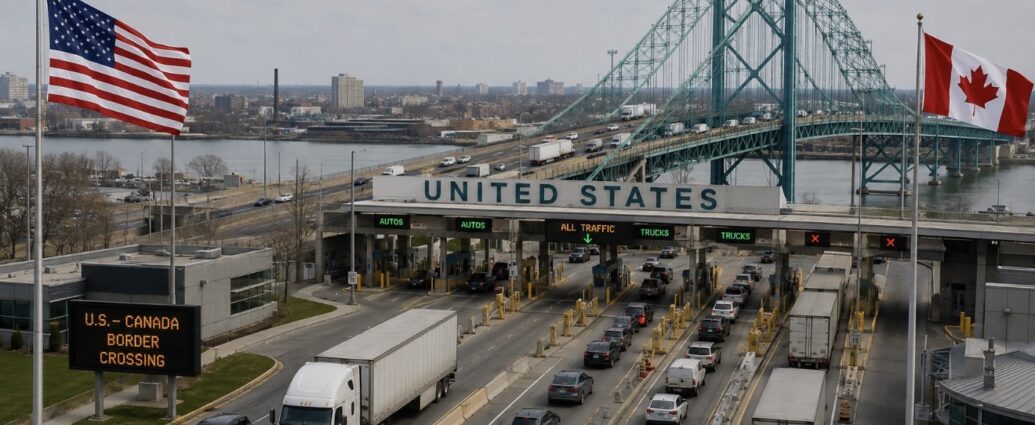
President Trump is preparing to retaliate against Canada after Ottawa announced new tariffs on nearly $20 billion in American goods.
The United States could respond with higher tariffs and other trade measures, according to a White House official. The administration has not yet disclosed what products could be targeted or when Trump will act.
The danger is a rapidly escalating cycle: Washington taxes Canadian products, Canada taxes American products, and Trump responds with still more tariffs. Businesses pay those charges at the border, but much of the cost can eventually reach families through higher prices.
Canada’s retaliation begins Sept. 8. Its new tariffs range from 15% to 50% and cover more than 700 American-made products, including steel, aluminum, milk, furniture, clothing, smartphones and video-game consoles.
Ottawa is also providing $7.5 billion in assistance to Canadian businesses and workers affected by the trade fight.
Trump already has another major escalation planned for Jan. 1, when he says tariffs on Canadian cars, trucks and automobile parts will double from 25% to 50%.
That could add thousands of dollars to the cost of some vehicles.
Take a $40,000 Canadian-built car containing $20,000 in American parts. If only its $20,000 in non-American content is taxed, the current 25% tariff equals $5,000. At 50%, it becomes $10,000.
The buyer may not pay that entire amount directly. Automakers, suppliers and dealerships could absorb portions of it. But the cost will still appear somewhere — through higher prices, smaller discounts, reduced production or lost jobs.
Trump announced the planned increase after accusing Canada of imposing excessive tariffs on American farmers and pointing to what he described as a $60 billion trade deficit.
“Not sustainable, and NOT ANYMORE!” Trump wrote, urging automakers to move production into the United States.
But North American manufacturing is deeply connected. Vehicle parts can cross the U.S.-Canada border several times before a car is completed. An American factory may therefore pay more for Canadian components even when the finished vehicle is assembled in the United States.
The two countries had been close to an agreement. Washington offered to reduce tariffs on Canadian steel, aluminum, automobiles and lumber. In return, it demanded greater access to Canada’s protected dairy market, the reopening of provincial liquor shelves to American products and changes to Canadian trade and media rules.
The negotiations collapsed after Canada said the United States introduced last-minute demands affecting Canadian sovereignty. U.S. Trade Representative Jamieson Greer said Canada simply demanded more than Washington would accept.
Now both governments are increasing the pressure.
For Trump, the tariffs are leverage intended to protect American farmers and bring manufacturing into the United States. For consumers and businesses, however, the immediate reality is simpler: everything from vehicles and building materials to electronics and groceries could become more expensive.
Canada’s tariffs take effect Sept. 8. Trump’s doubled auto tariffs are scheduled for Jan. 1. His next move could come much sooner.
JBizNews Desk | Washington, D.C.
© JBizNews.com All Rights Reserved. Reproduction or distribution without written permission is prohibited.