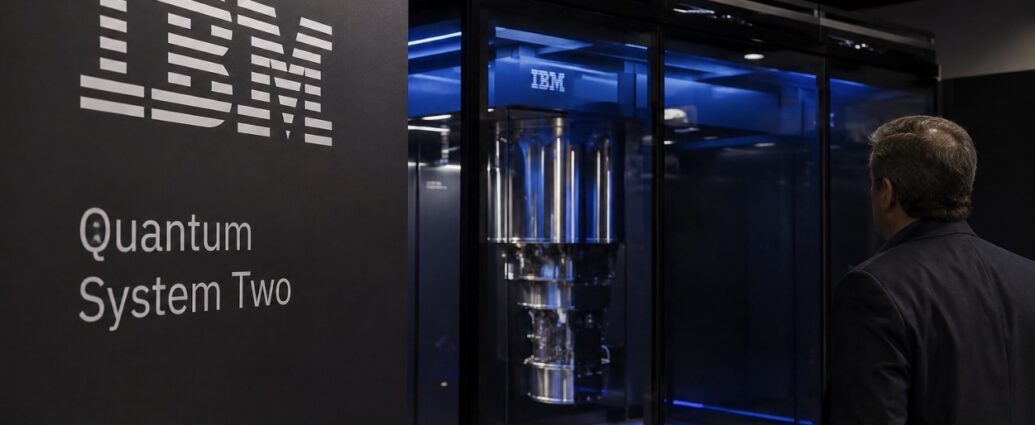
ARMONK, N.Y. — IBM has completed its acquisition of HRL Laboratories, the advanced research operation previously owned by Boeing and General Motors, giving IBM access to a second major technology that could help determine how future quantum computers are built.
Quantum computers work differently from ordinary computers.
Traditional computers process information through bits that are either 0 or 1. Quantum computers use qubits, which can handle information in more complex ways and could eventually solve certain problems that are extremely difficult for today’s computers.
That could matter for industries including drug development, finance, logistics, aerospace, manufacturing and energy.
IBM already builds quantum machines using superconducting qubits, tiny circuits kept at extremely cold temperatures.
HRL specializes in another approach called silicon-spin qubits, which use properties of electrons inside silicon.
That is important because silicon is already the foundation of the global semiconductor industry. If silicon-based qubits eventually prove easier to manufacture at large scale, they could become an important part of commercially useful quantum computers.
In simple terms, IBM is now pursuing two different ways of building the engine inside a quantum computer instead of relying entirely on one technology.
The biggest challenge in quantum computing is not simply building more qubits. Quantum systems are extremely sensitive and prone to errors. The industry is racing to develop machines capable of correcting those errors while performing millions of calculations reliably.
IBM says it remains on track to develop its Starling fault-tolerant quantum computer by 2029, designed to perform as many as 100 million quantum operations.
HRL could help IBM determine what comes next and how future quantum systems can eventually be manufactured at much larger scale.
For businesses, quantum computing is not expected to replace normal computers. Its potential is in tackling specialized problems that are currently extremely difficult to calculate — such as modeling new medicines, designing advanced materials or optimizing enormously complicated financial and transportation systems.
The acquisition therefore gives IBM more than another research laboratory.
It gives the company another technological route toward one of the technology industry’s biggest unanswered questions: how to turn quantum computing from experimental science into a commercially useful machine.
JBizNews Desk | Armonk, New York
© JBizNews.com All Rights Reserved. Reproduction or distribution without written permission is prohibited.