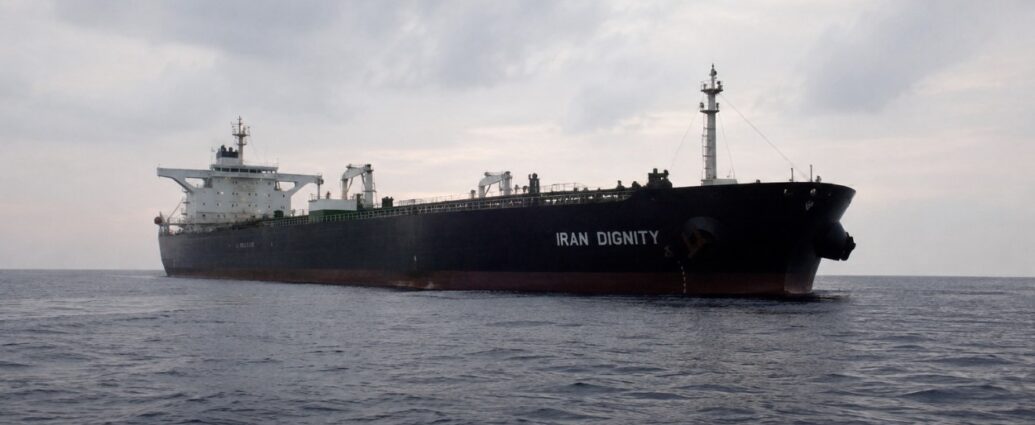
Capture an Iranian tanker at sea, sell the crude, and send the money to the U.S. Treasury.
That is what the Justice Department is preparing to make routine. According to three people familiar with the plans, the department is moving to activate a wartime court that has sat unused since World War II, so oil and cargo taken from ships running the American blockade of Iran can be declared U.S. property outright.
The court is called a prize court, and the word is literal. In 18th and 19th century naval warfare, a ship or its cargo captured from an enemy was a prize, and a judge ruled on whether the capture was lawful and who owned the goods afterward. Aaron Reitz, the U.S. attorney in Houston whose office is working with department headquarters on the initiative, confirmed the department is “now reviving” prize courts, which he described as an “ancient body of maritime law.”
“Our national security interests may require the United States military to seize vessels or cargo supporting the enemy during military conflict,” Reitz said in a statement. “If that happens, our federal courts must be ready to adjudicate the disposition of these captured vessels and cargo.”
The plans are not finalized. The venue under consideration is the federal trial court for the Southern District of Texas, and Houston is the practical pick: its 50-mile port serves the largest petrochemical complex in the country and can store large volumes of crude while a case runs.
The point of the change is speed. Washington currently takes captured ships through civil forfeiture, the same route used against sanctions violators, and it drags because anyone with a claim can step in. In the pending case of a supertanker seized in December carrying Venezuelan crude that supported Iran, the shipping company and families of Iranian terrorism victims holding court judgments have all intervened, bogging the sale down. Under prize law, shipowners could still appear and object, but on far narrower grounds, according to Holland & Knight maritime attorneys Allison Luzwick and Michael Frevola.
Supporters see two payoffs — cash and a signal. “It helps offset the price of the war,” said Eugene Kontorovich, an international law professor at George Mason’s Antonin Scalia School of Law. “It also shows Iran that America is really treating this as a serious international blockade and is willing to use all the tools at its disposal.”
The legal ground is untested. Prize courts have gone largely unused since the Spanish-American War in 1898, and challenges are expected over whether the conflict qualifies under the Prize Act at all and whether captures are lawful without congressional authorization of the war. Jill Goldenziel, a law professor at the National Defense University, warned in April that the same doctrine could be turned around, opening the door for China to apply prize law against American and neutral merchant ships in a future conflict.
For owners, charterers and insurers moving cargo anywhere near the Strait of Hormuz, the practical read is simpler: a ship stopped by the U.S. Navy may no longer be tied up in years of litigation before its oil is sold — it may just be gone.
JBizNews Desk | Washington, D.C.
© JBizNews.com All Rights Reserved. Reproduction or distribution without written permission is prohibited.