The country that helped build OPEC is now thinking about walking out, and the reason is sitting in Washington.
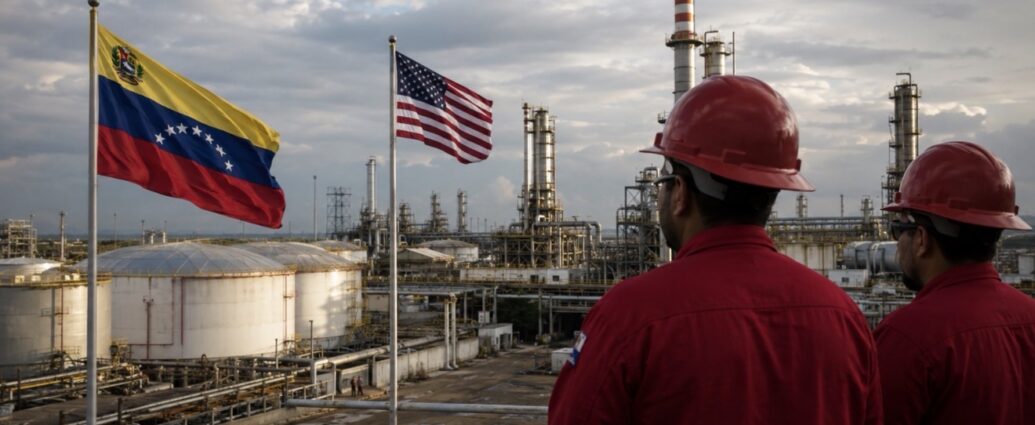
The Trump administration is negotiating with Venezuela’s interim government for an ownership stake in the country’s oil fields, two U.S. officials told Axios. The talks cover a set of high-yield producing fields holding roughly 90 billion barrels of proven crude — about one of every three barrels in Venezuela’s 300-billion-barrel reserve base, the largest of any country on earth. One official called the deal massive and said it would more than double American oil reserves.
OPEC is the obstacle. The cartel exists to set production ceilings for its members, and a country that has just handed drilling rights to American companies does not want a committee in Vienna telling it how fast it can pump. Venezuela is currently exempt from OPEC+ quotas — a courtesy extended because sanctions and broken infrastructure had already crushed its output — but any real ramp-up would run straight into those limits. Leaving solves the problem before it starts.
It would be a remarkable exit. Venezuela was one of the five countries that founded OPEC in 1960, alongside Saudi Arabia, Iran, Iraq and Kuwait. The United Arab Emirates already walked out effective May 1, and a second departure inside four months, this one by a founding member, would leave the group visibly weaker.
Washington’s urgency is easy to read. The wars in Iran and Ukraine have disrupted global supply and pushed prices up, and the U.S. Strategic Petroleum Reserve has fallen to a 40-year low. Heavy crude in the Western Hemisphere, under American control, is a hedge against both.
Getting the oil out is another matter. Venezuelan production has been stuck near 1.1 million barrels a day for three months, after climbing from about 920,000 at the start of the year, and early talk of a fast jump to 1.5 million has quieted as investment fails to show up. Analysts at Rystad Energy put the cost of meaningfully rebuilding capacity at around $180 billion over the next decade. Decades of neglect under PDVSA left pipelines, terminals and refineries in poor shape.
The politics shifted fast. Trump authorized the January 3 capture of Nicolas Maduro, who now faces narco-terrorism charges in New York, and said that same month that Venezuela was probably better off staying inside OPEC. That view has clearly moved.
Secretary of State Marco Rubio and Venezuelan acting president Delcy Rodriguez are leading the talks, with deputy White House chief of staff Stephen Miller heavily involved. Energy Secretary Chris Wright has discussed traveling to Caracas as soon as next week. No agreement has been reached and no timetable is set.
For American drivers, none of this changes the price at the pump this month. It is a bet on the next decade, and on who controls the barrels.
JBizNews Desk | Washington
© JBizNews.com All Rights Reserved. Reproduction or distribution without written permission is prohibited.