
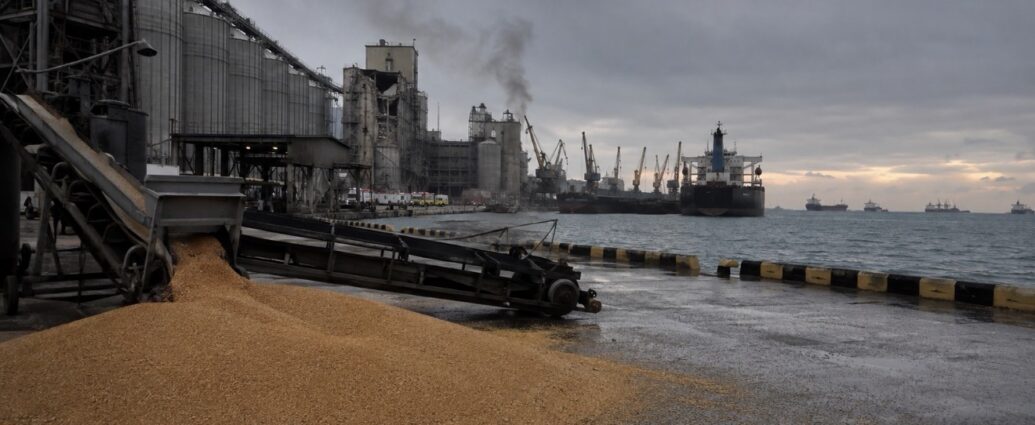
Attacks are disrupting the ports that load a major share of the world’s wheat, and prices are responding.
Chicago wheat futures closed Thursday at $7.60¾ a bushel, up 1.7% and their highest level since July 2023. The contract had surged to its daily trading limit Wednesday and has gained approximately 18% since the beginning of August.
The reason is straightforward. Russia and Ukraine normally account for nearly 30% of globally traded wheat, making the Black Sea one of the most important corridors in the international food system. Both countries are now struggling to move grain through that corridor.
Ukrainian attacks damaged two major grain terminals at Novorossiysk, Russia’s largest Black Sea grain-export port. The affected facilities have combined annual capacity exceeding 14 million metric tons.
Russian strikes have meanwhile sharply curtailed operations at Ukraine’s principal Black Sea ports, forcing exporters toward smaller Danube River routes. As many as 70 ships were recently waiting near the Sulina Canal, where air-raid interruptions, pilot shortages and limited capacity have slowed vessel movements.
The effect on Ukrainian shipments could be severe. Ukraine’s Agriculture Ministry reduced its projected agricultural exports for the 2026-27 marketing year to approximately 29.6 million metric tons—54% below its previous forecast. Its wheat-export projection was cut 53% to 8.3 million tons.
Russian shipments have also slowed, although estimates vary as analysts assess terminal damage and possible alternative routes. Agricultural consultancy SovEcon recently projected approximately 2.2 million tons of Russian wheat exports in August, compared with 4.5 million tons one year earlier.
American farmers are receiving the benefit of higher market prices, but that has not yet translated into stronger export volumes.
U.S. wheat export inspections totaled 425,668 metric tons during the week ended Aug. 20, down from 514,363 tons the previous week and approximately 1.05 million tons during the comparable week last year. Marketing-year inspections also remain well below last season’s pace.
For shoppers, the effect will be slower and less dramatic than the futures chart. Raw wheat accounts for only part of the cost of a loaf of bread, with labor, packaging, transportation and retail expenses making up much of the final price. A jump in wheat therefore reaches supermarket shelves gradually rather than overnight.
The wider concern is that wheat is not rising alone. The United Nations food-price index reached its highest level in more than three years in July, while its cereal component climbed 3.4% from June. Global wheat prices rose 5.8% during that month as Black Sea disruptions and difficult growing weather tightened expectations.
A restoration of safe shipping lanes or stronger harvests elsewhere could interrupt the rally. Ukraine has proposed an agreement protecting civilian grain vessels in the Black Sea, but Russia has demanded that any arrangement also restrict Ukrainian attacks on Russian energy infrastructure.
Until the ports and shipping routes become more dependable, grain buyers are likely to keep paying a premium for supplies that may not arrive on schedule.
JBizNews Desk | Chicago
© JBizNews.com All Rights Reserved. Reproduction or distribution without written permission is prohibited.




